

Who
Matthew Prince, co-founder, Executive Chairman, and CEO of tech gigantor Cloudflare and owner of the Park Record newspaper.
Date Recorded
Oct. 13, 2026
About Park City Mountain Resort
Owned by: Vail Resorts, which also owns:

Year founded:
Legacy Park City: 1963, as Treasure Mountain (name until 1966)
Legacy Canyons: 1968, as Park City West, then Park West from 1975 to ’95, Wolf Mountain from 1995 to ’97, and The Canyons from 1997 until Vail Resorts joined both legacy resorts with the Quicksilver gondola in 2015.
Pass affiliations:
Epic Pass: unlimited access
Epic Local Pass: unlimited access with holiday blackouts
Epic Tahoe Local Pass: up to 5 non-holiday days combined with Vail Mountain, Beaver Creek, Crested Butte, Keystone, Breckenridge
Epic Day Pass: all-mountain tier only

Base elevation:
Legacy Park City – bottom of Silver Star triple: 6,892 feet
Legacy Canyons – bottom of Orange Bubble Express: 6,911 feet
Summit elevation:
Legacy Park City
o Lift-served – top of Jupiter double: 9,998 feet
o Hike-to – Jupiter Peak: 10,026 feet
Legacy Canyons – top of Ninety-Nine 90: 9,990 feet
Vertical drop: 3,106 from top to bottom, actual per-run vert will vary depending upon route, but somewhere around 3,000 feet is possible with a lot of work
Skiable acres: 7,300
Average annual snowfall: 355 inches
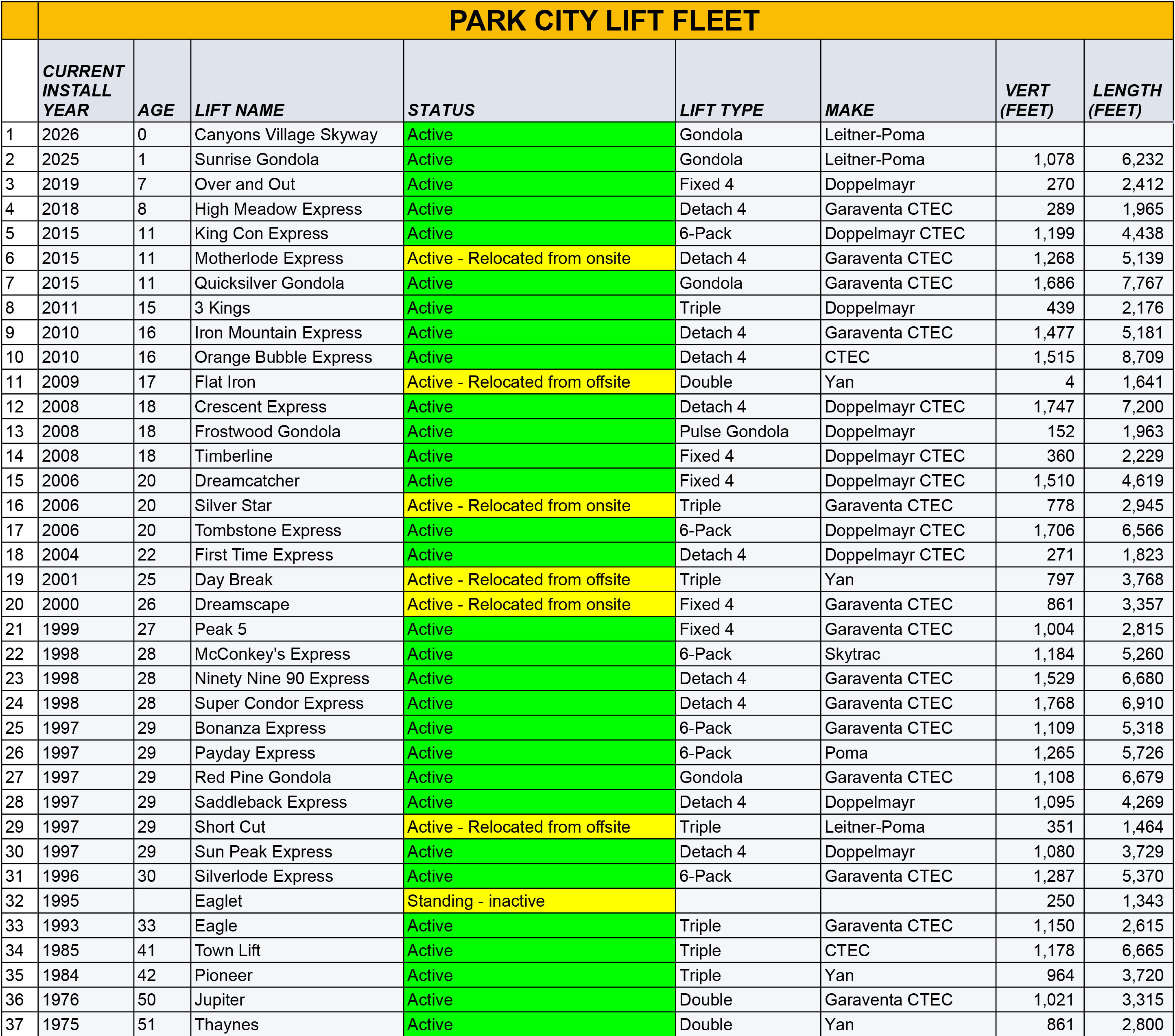
Lift count: 42 (2 ten-passenger gondolas, 2 eight-passenger gondolas, 1 pulse gondola, 6 six-packs, 10 high-speed quads, 5 fixed-grip quads, 8 triples, 3 doubles, 2 ropetows, 3 carpets)
Why I interviewed him
Check out Park City, circa 1974:
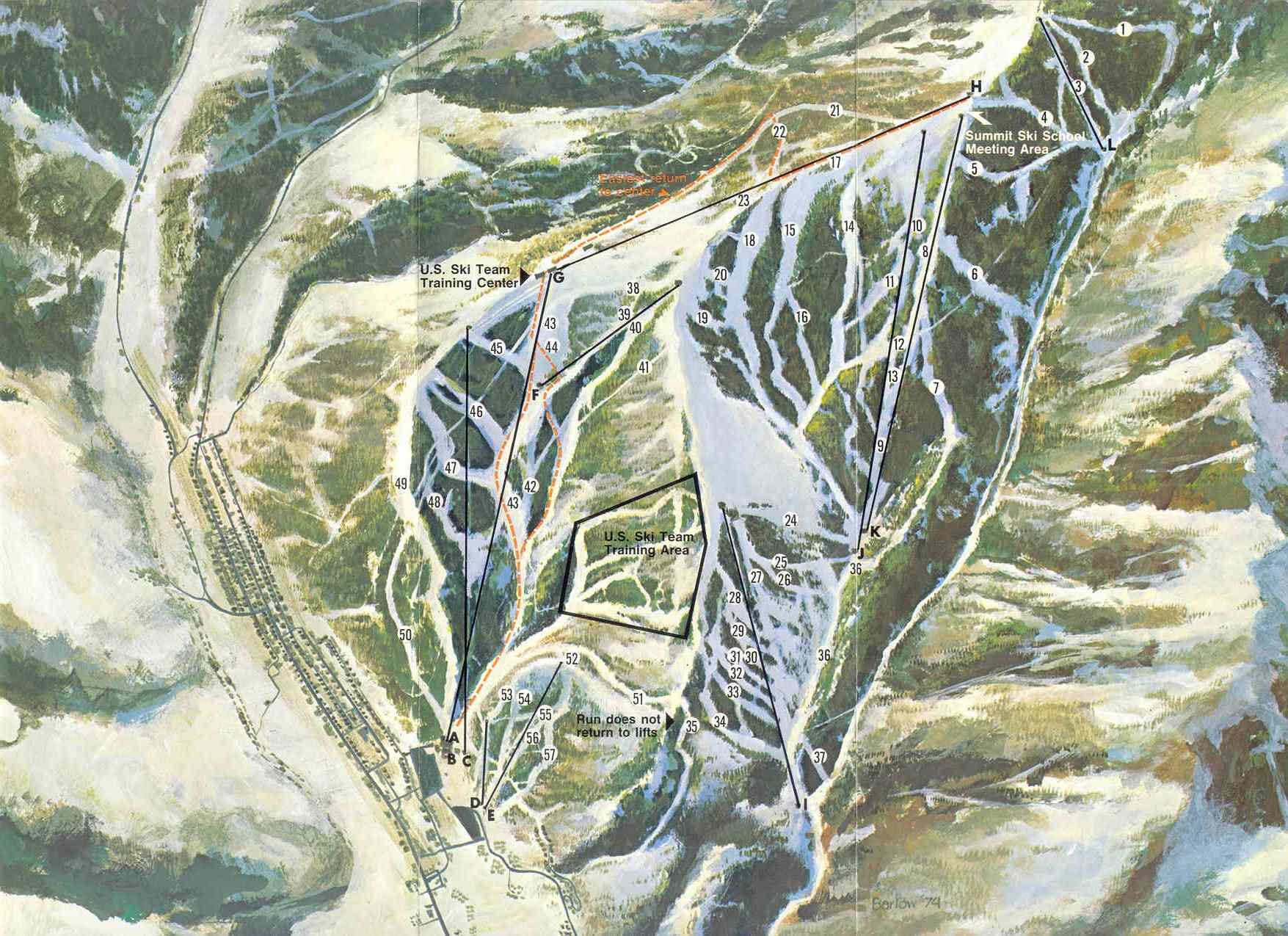
Sure, it’s a painting, not a photograph. But you can see it, right? The idyll. The stenciled historic mine-town street grid. Nothing new but the lifts and the parking lots to feed the freshly cut mountain. No traffic in or out. No hilltop mansions. No Deer Valley. Two thousand residents. Maybe. Vail was just a ski area in Colorado.
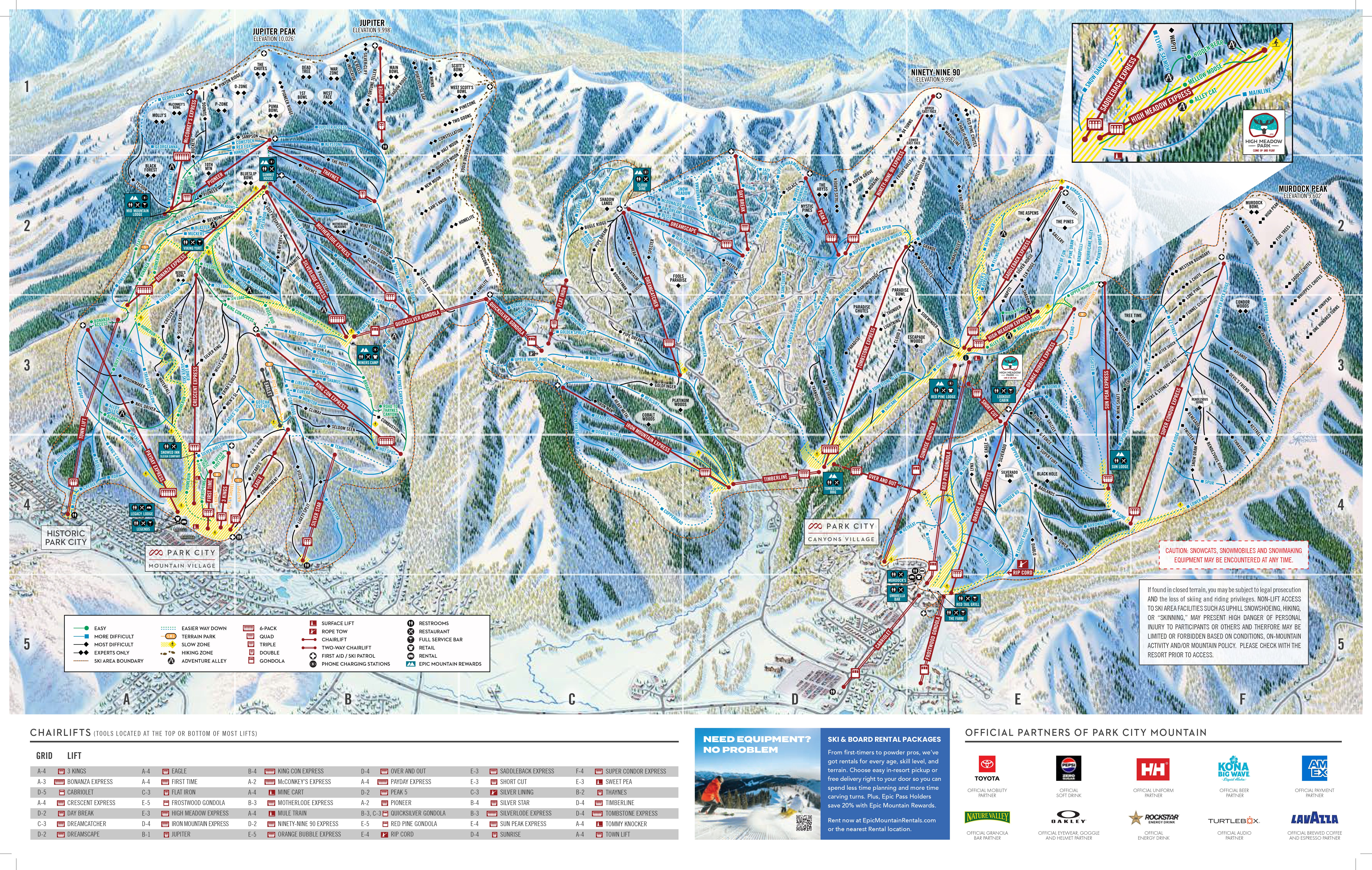
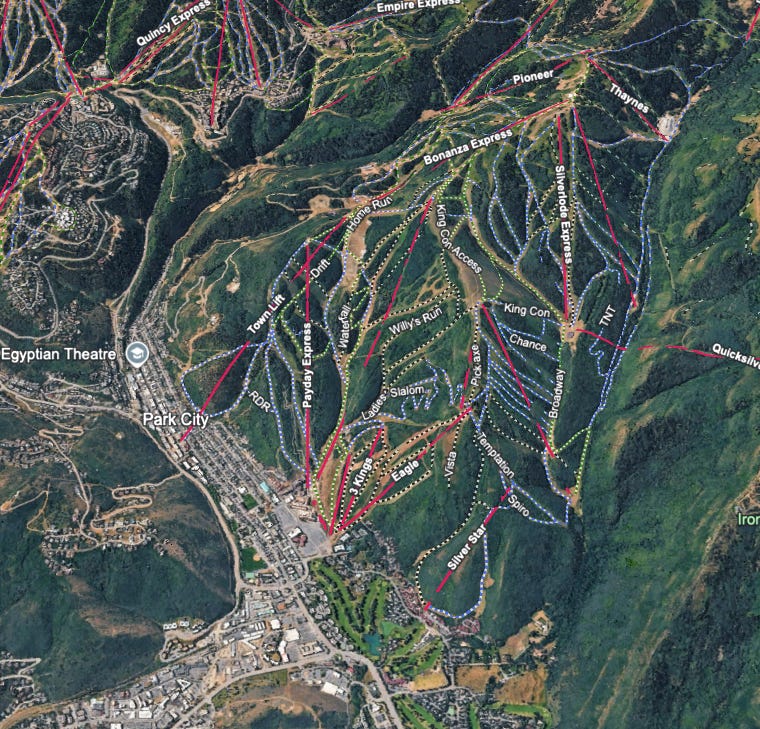
Well that’s quaint. Deer Valley opened in 1981. Powdr bought Park City in 1994, American Skiing Company snatched neighboring Park West/Wolf Mountain/Canyons in 1997, and Vail Resorts eventually acquired both and strung them together with a gondola to create the largest ski resort in the United States. In 2017, Alterra bought long-independent Deer Valley and has since more than doubled the resort’s size with an expansion that included 11 new aerial lifts. Park City today:
As Park City filled up, Summit County filled out:
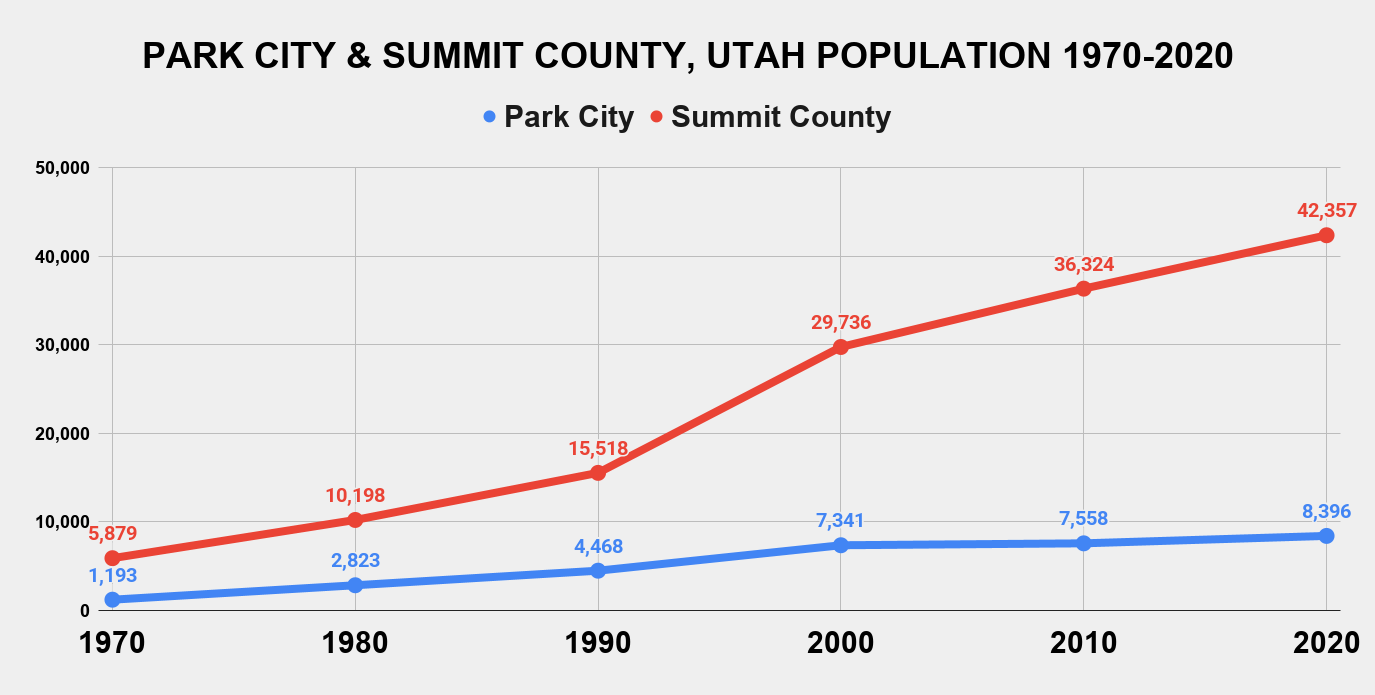
The population exploded with little planning outside of the standard U.S. American Cars-Go-Fast philosophy of road engineering. The tangle of traffic, disconnected structures, and patchwork preservation is a case study in dysfunctional sprawl, in which a community boxed in by its own bad planning resists the density and transit projects that would remedy its worst crowding and affordability problems. Once the toxic narrative takes hold that any development must be bad development, it’s easy enough for a Concerned Citizen to weaponize environmental and zoning regulations to halt – or at least almost indefinitely stall – nearly any project.
I’ve written about all this before. And it’s easy enough to say “sit down Brooklyn if we wanted to live in your big dirty city we’d move there.” But Matthew Prince, born in 1974, grew up in that backwater washed-up Park City and watched it evolve into a center-of-the-world ski town that’s about to co-host its second Olympics. And he’s saying pretty much all the same things.
“We’re strangling this place by just saying ‘nothing can ever change,’” he recently told KPCW’s Mountain Money podcast. “Everyone is here trying to preserve some past that never existed. I was here in the ‘70s – it sucked! … We have to get back to actually trying to build things and making this community better. … [We can] actually build a community that we actually want to live in. … Immediately, you try to do anything unique or original here or you try and invest in the community at all, and the first thing you get is just a series of lawsuits.”
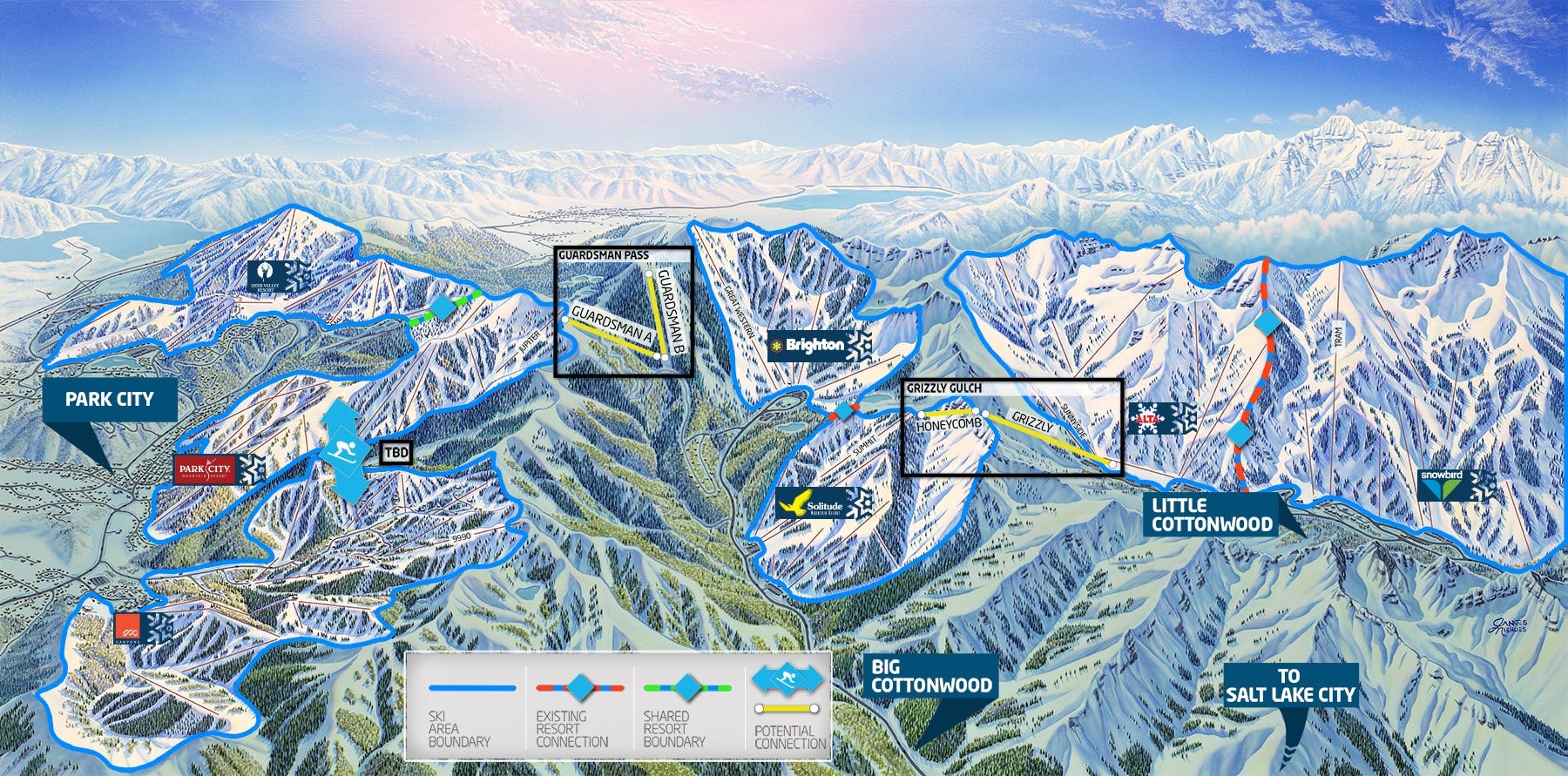
Prince envisions a car-free Main Street and a gondola connection over the peaks to Solitude and Alta (his plan differs different from this 2014 graphic demonstrating how a handful of lifts could connect all six Wasatch resorts):
He also envisions a Park City Mountain Resort under local ownership. Vail, Prince says, can keep the Epic Pass – an independent PCMR may even participate – but he believes the Colorado-based company has under-invested in the ski resort, and he has a half-billion-dollar plan to modernize the whole circus with new lifts and snowmaking infrastructure. He has pledged to reinvest every dollar the ski area earns back into the mountain and the people who work there.
Vail doesn’t want to sell Park City, but as Epic Pass sales continue their sad decline and activist investors nominate new board members and pile up MTN shares, Prince is betting that eventually they’ll have to. Prince, who co-founded tech giant Cloudflare and is worth some number of billions, is waiting with a check.
This could get weird. It wasn’t so long ago that a consolidation-is-inevitable narrative gripped skiing. No one predicted that Park City-based Powdr would sell Killington, the largest and busiest ski area in the East, or, less dramatically, that their smaller neighbor, Pacific Group Resorts, would dispense with Ragged (PGR then almost immediately bought Silverstar, British Columbia from Powdr, which will keep Copper, Snowbird, Woodward, and maybe Bachelor, but is otherwise continuing to downsize). There’s actually plenty of precedent for operator shrinkage, as plenty of multimountain ski area companies have disintegrated (American Skiing Company), or backed away from globe-trotting ambitions (Aspen in the 1980s). But Vail could yet push through, as 11-mountain Boyne Resorts has done for nearly 80 years.
Running a ski area is hard, and most people are bad at it. But if Prince gets his chance, he possesses a rare combination of financial resources and true I-be-from-here status that puts him in an awfully strong position to succeed.
Transcripts
There are two transcripts. Both are generated by robots. Both are helpful and defective in their own unique ways. I do not proofread either of them.
Transcript 1: Click the “transcript” button at the top of this article. You can only see this transcript on a computer. Because I don’t know why exactly but everything is getting better and dumber all at once it seems. Anyway, this is the transcript that the robots create when I upload the podcast to the internet. The cool thing about it is that you can click on any block of text and the audio will teleport there instantly. The uncool thing about this transcript is that it does not indicate who is talking at any given moment.
Transcript 2: You can read this below. This is the transcript that Zoom creates as we record the podcast. The cool thing about this transcript is that it indicates who is talking at any given moment. The uncool thing about this transcript is that the timestamps do not match the audio. Also, you cannot click on this text to move to the associated point in the audio.
Zoom
Stuart Winchester: My guest today is the co-founder, executive chairman, and CEO of CloudFlare, a publicly traded global cloud platform with a $125 billion market capitalization that is used by more than 20% of all websites on the internet.
00:46:34.000 --> 00:46:42.000
Stuart Winchester: He is also owner of the Park Record newspaper, which has published continuously in Park City since 1880.
00:46:42.000 --> 00:46:58.000
Stuart Winchester: He is a Park City native who has worked as a ski instructor at Park City Mountain Resort, which at 7,300 acres served by 42 lifts is the largest ski area in the United States. Matthew Prince is my guest. Matthew, welcome to the storm. So fired up to talk to you about Park City.
00:46:58.000 --> 00:46:59.000
Stuart Winchester: How are you doing today?
00:46:59.000 --> 00:47:18.000
Matthew Prince: Uh, I’m, I’m okay. I, uh, I, I broke my arm, uh, not in a ski accident, unfortunately, but in a, in a mountain biking accident in Corsica. Uh, so I shattered the humerus bone in my, uh, in my arm, and, and I’m in a sling right now, but, uh, but on the mend, and hopefully, uh, hopefully be ready for opening day.
00:47:17.000 --> 00:47:23.000
Stuart Winchester: What was that flight like back to the US? Were you in pain or did you take something to knock it out?
00:47:21.000 --> 00:47:38.000
Matthew Prince: It was, I will say that Corsican medical care leaves something to be desired. So they gave me a little bit of regular strength Tylenol. And it was, if I held perfectly still, it was fine, but I felt every bump of turbulence.
00:47:31.000 --> 00:47:32.000
Stuart Winchester: Mmhm.
00:47:38.000 --> 00:47:45.000
Stuart Winchester: Oh, wow. Alright, so hopefully that’s not gonna mess with your ski season too much. I wanna set up the scene here, Matthew, to…
00:47:45.000 --> 00:48:01.000
Stuart Winchester: For, for the listeners and viewers. So if you’re watching on YouTube or stormseeing. com, you will see what I have here is a trail map of Park City from 1974, the year you were born. Now, it’s a drawing, but it’s more or less shows a very small town.
00:47:54.000 --> 00:47:56.000
Matthew Prince: Yeah.
00:47:56.000 --> 00:47:57.000
Matthew Prince: Yeah.
00:48:01.000 --> 00:48:16.000
Stuart Winchester: In a very tight valley and a very small ski resort. Uh, the ski area had just opened in 1963. The population was around 2,000 people. It’s 8,500 today. Summit County’s population was 6,000. It’s 43,000 today.
00:48:16.000 --> 00:48:21.000
Stuart Winchester: No such thing as Deer Valley yet. Nick Badami owned Park City.
00:48:20.000 --> 00:48:26.000
Matthew Prince: Pull out, this is my, this is my, uh, this is my 7778 ski pass.
00:48:22.000 --> 00:48:23.000
Stuart Winchester: Ooh!
00:48:26.000 --> 00:48:27.000
Stuart Winchester: Oh, wow.
00:48:26.000 --> 00:48:36.000
Matthew Prince: Which I just happen to have here. So that’s my bona fides of how long I’ve been skiing at Park City. So there you go.
00:48:28.000 --> 00:48:30.000
Stuart Winchester: Oh my gosh, that is…
00:48:35.000 --> 00:48:39.000
Stuart Winchester: Does that thing have a price on it?
00:48:37.000 --> 00:48:41.000
Matthew Prince: It’s, uh, but it’s, you know, it’s actually pretty amazing that, um…
00:48:41.000 --> 00:48:57.000
Matthew Prince: And again, I think this is somewhere, you know, we’ll talk about a bunch about Vale, but somewhere where Vale deserves a bunch of credit, the rate of inflation of season passes since I had that one, I actually looked it up.
00:48:57.000 --> 00:49:15.000
Matthew Prince: has increased at half the rate of inflation. So it’s actually one of the goods that has actually massively under-tracked the cost of inflation. So while the Lyft pass has gone up, and the price of the cheeseburgers has gone up, and lessons have gone up, the actual season passes have stayed down. And I actually think that’s something that.
00:49:15.000 --> 00:49:36.000
Matthew Prince: That is, you know, for a while, especially in the 90s, we were all worried that everyone was going to get priced out of skiing. And that was going to become, you know, just sort of a kind of, you know, small niche, rich person sport. And I think actually, you know, Vail with Epic and Altera with Icon deserve a lot of credit of figuring out ways to.
00:49:21.000 --> 00:49:22.000
Stuart Winchester: Mmhm.
00:49:28.000 --> 00:49:29.000
Stuart Winchester: Mmhm.
00:49:36.000 --> 00:49:44.000
Matthew Prince: continue to make the sport accessible to a wide number of people. And I think that’s incredibly important.
00:49:44.000 --> 00:49:56.000
Stuart Winchester: Yeah, I’ve not done the analysis for Park City, but I did one recently for Vail and Steamboat, which is a little easier because Park City was two separate mountains, uh, but the season pass for all of Vail’s mountains now is…
00:49:56.000 --> 00:50:13.000
Stuart Winchester: 60% cheaper even adjusted for inflation than it was 20 years ago. In Park City, I believe the year before Vail started buying them up, each pass was around $1,000 for Canyons and for Park City, so that’s $2,000 for a pass that you now get for, you know, inflation-adjusted, much less.
00:49:59.000 --> 00:50:01.000
Matthew Prince: Yeah.
00:50:08.000 --> 00:50:09.000
Matthew Prince: Yep.
00:50:13.000 --> 00:50:15.000
Matthew Prince: Yeah.
00:50:13.000 --> 00:50:21.000
Stuart Winchester: So… so… but take us… take us back to the 70s. I don’t expect you to remember 1974, Matthew, but… but what was it like.
00:50:19.000 --> 00:50:27.000
Matthew Prince: I was. I don’t. I don’t remember 74, but I but I remember. I remember the. You know it was. It was. It was.
00:50:22.000 --> 00:50:24.000
Stuart Winchester: Yeah, what was it like growing up there?
00:50:27.000 --> 00:50:44.000
Matthew Prince: You know, it was a fun sort of outdoors town. My parents were very sort of free-range parents. You know, they used to send me out with my friends and say, “Hey, don’t come home until you find a moose.” And we’d be out on the side of the mountain. We hadn’t found a moose, so we’d just sleep out there. And this is before, obviously, cell phones or anything else.
00:50:37.000 --> 00:50:39.000
Stuart Winchester: Yeah.
00:50:41.000 --> 00:50:43.000
Stuart Winchester: Right.
00:50:44.000 --> 00:51:12.000
Matthew Prince: you know. Eventually in the morning we get hungry and come wandering back in. But you know it was. It was very much that it was an amazing place to to grow up, you know, skiing. I skied, you know, almost almost every day, almost every weekend. The school that I went to had a had a had a program where every Friday afternoon we would go skiing, and so had had an opportunity to just, you know, just really enjoy the time out there on the mountains and make great friends and get to know those those mountains extremely well.
00:51:12.000 --> 00:51:27.000
Stuart Winchester: And what was the town itself like? You had a quote recently that Old Town has essentially become a bunch of Airbnbs, but just that sense of being in a neighborhood, in a small town, and you happen to have this world, well, probably wasn’t world class at the time, but this gigantic ski resort.
00:51:27.000 --> 00:51:33.000
Stuart Winchester: right there. What was the community like and just being a kid in that time and place?
00:51:32.000 --> 00:51:48.000
Matthew Prince: Oh, you know, I don’t, I don’t think, I think there are a lot of people that sort of fetishize, um, what it was. I, I think it was, um, I think it was kind of a mess. I mean, it was, there was a lot of, there was a lot of falling down buildings. There was a lot of, um, you know, there, there weren’t, there weren’t.
00:51:36.000 --> 00:51:37.000
Stuart Winchester: Yeah, thank you. Yeah.
00:51:48.000 --> 00:52:06.000
Matthew Prince: Uh, there, um, you know, I, I used to, there was a place called Utah Coal and Lumber, which is the little Mexican place that as a kid I loved, but it was, you know, it wasn’t, it wasn’t anything to, to write home about. And, um, and, and, and yeah, you could, you could get, you know, a crumbling miner shack for, for basically just paying the back taxes.
00:51:55.000 --> 00:51:56.000
Stuart Winchester: Mmhm.
00:52:06.000 --> 00:52:22.000
Matthew Prince: But there wasn’t actually that much kind of energy or life to it. It was really the skiing. And I think the Badami’s deserve, you know, an enormous amount of credit through the ‘70s and ‘80s, really, really enriching the skiing environment.
00:52:22.000 --> 00:52:39.000
Matthew Prince: Bringing World Cup races in, doing things in order to get people there. But even things like, you know, the Sundance Film Festival, which was in Park City Forever, didn’t start out as the Sundance Film Festival. It was the United States Film Festival. I, as a kid, used to stand out in front of the Egyptian theater with a sign that said, you know.
00:52:39.000 --> 00:52:55.000
Matthew Prince: And it was a, it was a gimmick to get people to come out and ski because you were, you were fighting like crazy just to get, to get people, uh, into, into town. So I, I think it was, um, like I, I certainly wouldn’t trade, uh, with that and, and, and it, and, and there, you know, I think that.
00:52:55.000 --> 00:53:20.000
Matthew Prince: There are people who remember good times back then, drinking lots and hooking up with their friends and not really having a care in the world. But the reality is, the lines were long, the lifts were slow, the grooming was bad, there wasn’t snowmaking. In ‘76, ‘77, the mountain basically didn’t open because it didn’t have any.
00:53:20.000 --> 00:53:38.000
Matthew Prince: any snow. And so, you know, you fast forward to today, you know, you’ve got much, much bigger mountains, much more terrain, faster, faster lifts, um, you know, better, better snowmaking, better grooming, uh, and, and it’s, and, and skiing is just a lot more, a lot more fun and a lot more accessible to, uh, to, to more people, and I, and I think it’s.
00:53:38.000 --> 00:53:46.000
Matthew Prince: It’s that we should be celebrating that, not sort of, again, fetishizing some past that really never existed.
00:53:46.000 --> 00:54:02.000
Stuart Winchester: Right, so let’s talk about that change in the evolution. It’s so unique and interesting that you actually grew up in Park City, and that’s such a rare thing for what it was and what it became. So just some of the highlights, in ‘81, Deer Valley opened.
00:53:59.000 --> 00:54:00.000
Matthew Prince: Yes.
00:54:02.000 --> 00:54:18.000
Stuart Winchester: Uh, the Badami’s were there and then they sold to Powder in 94. They really brought in a lot of those high speed newer lifts. Uh, Park West obviously changed name to Canyons and then, you know, Vail came in and, and updated. There was Olympics along the way. As you said, Sundance was growing.
00:54:02.000 --> 00:54:04.000
Matthew Prince: Yeah.
00:54:12.000 --> 00:54:14.000
Matthew Prince: Yep.
00:54:18.000 --> 00:54:19.000
Matthew Prince: That’s it.
00:54:18.000 --> 00:54:22.000
Stuart Winchester: Was there a point where…
00:54:22.000 --> 00:54:37.000
Stuart Winchester: You can look back and say, okay, this is when it started to change, or you’re just a kid, maybe you got back from college and were like, wait a minute, this is, so, so, so take us through that process through your eyes and, and how it’s evolved and, and when it stopped becoming.
00:54:37.000 --> 00:54:42.000
Stuart Winchester: this dumpy place of your childhood and started becoming more of what it is.
00:54:41.000 --> 00:54:43.000
Matthew Prince: Yeah, you know, I think, um…
00:54:44.000 --> 00:55:03.000
Matthew Prince: You know, I think that, I mean, it was, it was amazing to watch, you know, Deer Valley go, and I, I, I, um, before they put lifts in, my dad and I got to go on the cat, cats and cat ski the run for, before they were, were, were doing that. And, and when, you know, Todd, uh, the GM was opening East Village, um, I got to do that again and go ski the, the runs on.
00:55:03.000 --> 00:55:25.000
Matthew Prince: on cats before before they were opening it. And so it’s, you know, it’s it’s amazing to see as it’s as it’s continued to evolve. I think it’s it’s been great that you that you can have this incredible, you know, accessible area between Deer Valley, you know, old old Park Cities, the old Park West, Wolf Mountain Canyons area that that all combining.
00:55:25.000 --> 00:55:32.000
Matthew Prince: And, you know, my favorite thing to do when we bring, you know, people to town is that I live kind of on the, what is effectively the far sort of…
00:55:32.000 --> 00:55:52.000
Matthew Prince: southern edge of Park City, and getting people to, you know, take off from our house, ski down, and then ski all the way to the far northern side, and ski all the way back. You just get a sense of the size, and the scale, and the range. And that’s just a small part of it. Like, if you’ve also then done something like… Ski Utah does something called the Interconnect Tour, where you start at Deer Valley.
00:55:53.000 --> 00:56:08.000
Matthew Prince: You go to Deer Valley at Park City, you ski over the back of Jupiter. So if you’ve ever ridden the Jupiter chair, there’s a ski patrol shack at the top of that. You ski just right around that and then down some what is actually fairly intermediate terrain.
00:56:08.000 --> 00:56:24.000
Matthew Prince: Um, not groomed, obviously, but you’re, you’re kind of rolling through, through the, uh, through the glades. You pop out at Solitude. The only time you have to take your skis off is to, is to cross the road, uh, to go to Solitude. You ski Solitude, you go over to Brighton just to see Brighton, come back to Solitude, go over.
00:56:10.000 --> 00:56:11.000
Stuart Winchester: Mm-hmm.
00:56:24.000 --> 00:56:44.000
Matthew Prince: the Highway to Heaven, which then drops you down into Grizzly Gulch, takes you down to Alta, and then you ski Alta to Snowbird. The fact that you can ski between six different resorts all in one day, and that they are so much closer than people expect, is just really, really incredibly miraculous. And so.
00:56:44.000 --> 00:56:56.000
Matthew Prince: I think that, you know, for me, the mountains themselves and the resorts themselves have gotten better and better and better over time. I think the thing that’s changed a little bit is just, really, in the last few years.
00:56:56.000 --> 00:57:14.000
Matthew Prince: it’s gotten frustrating to watch as Vale, which controls Park City, um, you know, and Park City’s really the keystone within this, has just really underinvested in the mountain. And some of that’s, you know, Vale’s fault. Um, you know, they’re a public corporation, they have, um, they’ve obligated to pay a dividend, they’ve got a lot of debt.
00:57:14.000 --> 00:57:32.000
Matthew Prince: that they have to service, and so it makes it harder for them to invest in the mountains. Some of it’s the town’s fault. I mean, the fact that, again, Vail was ready to upgrade some of the lifts, and the town, you know, freaked out and kept them from doing it. I mean, that has caused there just to be this real underinvestment. And if you compare.
00:57:32.000 --> 00:57:48.000
Matthew Prince: what’s happened at Park City, where they haven’t put new snowmaking in the Park City side of Park City in, you know, in 20 plus years. The lifts are, you know, the silver load lift, which is one of the kind of key lifts at Park City was installed the year that I was a.
00:57:48.000 --> 00:58:03.000
Matthew Prince: a ski instructor there, which is more than 30 years ago. It’s way past its useful life at this point. Um, like, all of these things are places where the mountain just desperately needs investment. And both, I think, because of the restrictions that Vail has of being a public company.
00:58:03.000 --> 00:58:23.000
Matthew Prince: And because of just how much goodwill they’ve burned with the town, it’s, it’s, it’s, it’s, it’s, it’s just been sad to watch, uh, what, what feels like a, an infrastructure which is, which is increasingly, you know, just falling apart. And, and it’s gotten to the point where, like, I don’t, I don’t, I don’t let my kids ride certain lifts at, um, at Park City anymore.
00:58:21.000 --> 00:58:22.000
Stuart Winchester: Really?
00:58:23.000 --> 00:58:33.000
Matthew Prince: Because I think they’re dangerous. And, um, and again, I think it’s, it’s up to, you know, Vail to really, to really, um, you know, fix those, or, or, or we’ve got to fix Vail.
00:58:33.000 --> 00:58:51.000
Stuart Winchester: So let’s take a look here and give Vail credit for what they have done. So their first thing was connecting canyons to Park City with this really big gondola. It’s a lot bigger than it looks on this trail map here. Again, sharing my screen. They took King Con. This was a high-speed four, moved that high-speed four over here to replace a triple.
00:58:43.000 --> 00:58:44.000
Matthew Prince: Yep.
00:58:51.000 --> 00:59:07.000
Stuart Winchester: made this a 6, they put this, uh, over an out lift over here as a infill lift at Canyons, and then this High Meadow Express was an old fixed grip, and they updated that, and then, as you mentioned, they had wanted to.
00:59:07.000 --> 00:59:22.000
Stuart Winchester: and want to, again, take Eagle and Eaglet triples, replace those with one six-pack, and take Silverload, or replace it with an eight-pack. They tried to do it in 2022. Those lifts are doing great at Whistler Blackcomb right now, because that’s where they went, uh, after the town, uh.
00:59:13.000 --> 00:59:14.000
Matthew Prince: Yep.
00:59:19.000 --> 00:59:20.000
Matthew Prince: Okay.
00:59:22.000 --> 00:59:37.000
Stuart Winchester: process went through, and they were not allowed to put those in. But, they’re trying again, they just announced, they just announced in their earnings report that they’re putting them in. That’s part of what they say is $200 million in investment they’ve put overall into Park City since buying it. So.
00:59:37.000 --> 00:59:51.000
Stuart Winchester: they have done some things, but if you were them specifically, if this was your mountain, and it’s Fantasy Park City, what would you replace? I mean, you’ve got these two 70s doubles over here, but, I mean, what would you… what would you want to do?
00:59:38.000 --> 00:59:40.000
Matthew Prince: Yep.
00:59:50.000 --> 01:00:07.000
Matthew Prince: Yeah, I mean, so first of all, I have the fortunate position that I’ve done very well financially, and I don’t need to make any money off of the mountain. And so any money that the mountain makes, I would put back into really two things, which is, first of all, how do we reward and take care of the employees and staff?
01:00:07.000 --> 01:00:26.000
Matthew Prince: that are making sure that everyone has a great, great experience. The, the tension between Vail and folks like the Ski Patrol is just, I mean, it’s just silly. Like, that, that’s the, that’s, those are the people who keep my kids safe when they’re out skiing. They, they’re doing incredibly hard, incredibly important work. They should be paid for that work. And, and again, I think that that’s the first thing that we have to, have to invest.
01:00:26.000 --> 01:00:44.000
Matthew Prince: And the second thing is the infrastructure of the mountain. And yes, that means lift infrastructure. And it’s not just about how do you upgrade the lifts, but I think a lot of it is, you know, if you look at where they put the lifts in, especially the Park City side of Park City, back when they originally installed them back in ‘63, in a lot of cases, I mean, some of the lifts.
01:00:41.000 --> 01:00:42.000
Stuart Winchester: Mmhm.
01:00:44.000 --> 01:01:08.000
Matthew Prince: They just don’t make a ton of sense, for what it is. It’s it’s not designed the way a modern mountain would be, would be designed. There’s some very simple things that you could do that would spread people around the mountain and let people take advantage of a lot more of that. But it’s not just lifts. It also is snowmaking. Really, you’ve got to directly invest in the snowmaking that’s there. The problem is that when you have a bad snow year like we did last year.
01:01:08.000 --> 01:01:23.000
Matthew Prince: The amount of runs on the Park City side of Park City, their cover snowmaking is tiny compared with someone like Deer Valley. And what that does is it forces more people onto fewer runs, and that just makes it more dangerous to actually be skiing there. And so the best way for us to.
01:01:23.000 --> 01:01:41.000
Matthew Prince: There’s plenty of mountain. There’s plenty of space. If you know where to ski, like, I ski at Park City, you know, and don’t wait in a lift line ever, don’t see another person on a trail most of the time. But we have to do a better job of re-engineering how the mountain is structured, and that means a real investment.
01:01:41.000 --> 01:01:59.000
Matthew Prince: you know, I have a specific plan that if I’m able to buy Park City from Vail, that I’d put a half a billion dollars into upgrading the infrastructure of the mountain, upgrading the infrastructure of the lifts, upgrading the snowmaking, upgrading the dining facilities. I mean, the fact that the Midmountain Lodge basically didn’t have a functional bathroom for a significant portion of.
01:01:59.000 --> 01:02:15.000
Matthew Prince: of last year is just, I mean, it’s just disgusting. And this is the sort of thing that what I think is missing from Vail is they have lost what’s magic about skiing, which is that every mountain is different, every mountain is unique.
01:02:15.000 --> 01:02:35.000
Matthew Prince: They all have unique stories to tell. They’re all places that have unique cultures and a unique local environment. You can’t manage them all from Broomfield. You have to allow people who really have care and local ownership in order to do well. And I think that if you look at mountains like Jackson Hole, if you look at mountains like Sun Valley, Snow Basin.
01:02:35.000 --> 01:02:44.000
Matthew Prince: Like, just the experience that you have at places like that is much richer because you have local ownership, and then you have a partnership.
01:02:44.000 --> 01:02:57.000
Matthew Prince: with someone like Altera that sells a global pass. And I think that’s the right model for skiing going forward, which is local owners of mountains with local stewardship, and then someone doing a global pass, whether it’s Epic or Icon.
01:02:57.000 --> 01:03:12.000
Stuart Winchester: So just being a knucklehead in New York City and skiing Park City once in a while, whenever I can, it does feel very unique to me. You got the big mining infrastructure and, you know, some of the old lists are kind of cool and quirky. You got town down there below, and there’s really not much like that.
01:03:06.000 --> 01:03:08.000
Matthew Prince: Yeah.
01:03:12.000 --> 01:03:19.000
Stuart Winchester: in American skiing, but you have a much broader, longer perspective on it. So, what do you think that…
01:03:19.000 --> 01:03:28.000
Stuart Winchester: was lost in Vail Resorts ownership? Is it specifically Vail, or did it start to fade when Powder owned it? I know Powder is based right there in Park City, but…
01:03:27.000 --> 01:03:45.000
Matthew Prince: No, I think Patrick’s very much a real local owner. And again, the last time, I mean, one of the best ways to measure this is, you know, that anytime the resort has to upgrade the mountain in any meaningful way, they have to have a development agreement with the town.
01:03:45.000 --> 01:03:50.000
Matthew Prince: Um, Powder, back in, uh, 97.
01:03:50.000 --> 01:04:05.000
Matthew Prince: um, the same year that I was a ski instructor, um, put in place the last master development agreement that’s there. Um, that’s something that should be revisited, frankly, every 2 to 3 years, uh, and gone back to. And yet, we’re now 30 years in.
01:04:00.000 --> 01:04:02.000
Stuart Winchester: Mmhm.
01:04:05.000 --> 01:04:28.000
Matthew Prince: And no one has revisited it. And the town keeps saying, hey, we’re happy to talk about this, but Vail refuses to actually come to the table and revisit it. Again, I think that the challenge with it, and I hadn’t totally appreciated this. I’ve been a supporter of the US ski team for quite some time, and I went out to the Birds of Prey race, which they hold in Beaver Creek, which is another Vail resort.
01:04:28.000 --> 01:04:37.000
Matthew Prince: And I remember it was, um, you know, I skied down, uh, it was between races, and I skied down to get a cheeseburger from the lodge, and I walked in the lodge, and I was like.
01:04:37.000 --> 01:04:52.000
Matthew Prince: huh, this looks exactly the same as Miners Camp at Park City. And I think the Vail model, at some level, is to treat skiing like McDonald’s. How do we make every single place be exactly the same? In fact, if you look at.
01:04:52.000 --> 01:05:11.000
Matthew Prince: that what the lift operators, if you look at what the ski instructors are wearing, oftentimes it won’t even be something specific to the mountain you’re on. It will say… it’ll list all of the different Vail resorts. And again, I get it. At some level, that might be the most efficient way to run something, is treat every mountain as if it’s McDonald’s.
01:05:11.000 --> 01:05:29.000
Matthew Prince: But that’s losing, I think, what people really care about skiing. Like, if you go to Sun Valley, there’s an experience there that you get. If you go to Deer Valley, there’s an experience there that you get, which is different. If you go to Jackson Hole, there’s an experience there that you get that’s different. And I think that comes back to really local management.
01:05:29.000 --> 01:05:45.000
Matthew Prince: which is taking those mountains and running them in a way which is really unique to them. And I think the right model for Vail going forward is, how do you say, how can we get more local ownership and then still sell the Epic Pass? I’ll give you an example. Here are two different.
01:05:45.000 --> 01:05:55.000
Matthew Prince: future realities. Let’s imagine that Vale’s stock price trades on nothing more by than how many Epic Passes they sell, which is roughly true.
01:05:55.000 --> 01:06:13.000
Matthew Prince: Um, here are two different futures. One future is they’ll continue to do what they’re doing in Park City, where they, you know, you know, run it as they’ve been running it, and they promise they’re gonna, you know, make it better next year with, you know, an epic promise to do epic things in an epic way.
01:06:13.000 --> 01:06:29.000
Matthew Prince: Right? And they do that, right? And again, I think we’ve all heard those stories before, and some people are going to bypass us saying, well, yeah, maybe this time is different. And others of us are going to say, you know, the definition of insanity is doing the same thing over and over again and expecting different results. Like, I think Park City stays.
01:06:29.000 --> 01:06:48.000
Matthew Prince: Park City as long as Vail continues to run it. In an alternative world, they sell Park City to someone like me. They get a bunch of cash, which they can use, you know, pay down their debt, do a dividend, buy back stock, invest in their other mountains. I commit to putting half a billion dollars into the mountain, so upgrade the mountain substantially.
01:06:48.000 --> 01:07:12.000
Matthew Prince: We do a deal where we still accept the Epic Pass. There’s no reason you can’t continue to do that. I immediately go to Eric Resnick at KSL and Altera and do it, do a deal to do an interconnect between Deer Valley and Park City upgrade. Then the deal that you need to do in order to do that, you got to upgrade the food on the Park City side because they don’t want everyone to ski over and overwhelm the restaurants at Deer Valley. So you’ve got to get people to go both directions. But that’s a very.
01:07:12.000 --> 01:07:29.000
Matthew Prince: And then in addition to that, put in place a plan in order to connect with a gondola from where the town lift is today, all the way to Alta, stopping in solitude along the way, so that you connect all six resorts and have the largest skiable acreage anywhere in the world. And if you want to ski at Park City.
01:07:29.000 --> 01:07:48.000
Matthew Prince: the keystone to all of that, that you have to actually, you know, have an Epic Pass or have a Park City Pass in order to do that. Under which of those worlds do you sell more Epic Passes? I think the clear answer is B. I think clearly in that world, you sell more Epic Passes if you’re Vale, and so the thing which has been just mind-blowing to me.
01:07:48.000 --> 01:08:04.000
Matthew Prince: Is that folks like Rob Katz at Vail won’t even engage in the conversation. And that to me is just a hallmark of what bad management looks like. If you could do that, it would be good for Vail. It would be good for Park City. It would be good for skiers.
01:08:04.000 --> 01:08:13.000
Matthew Prince: It’d be good for everyone involved. And again, I think that that is very, very, very plausible, and I’ve got a plan to do that and the financing all lined up to do it myself.
01:08:13.000 --> 01:08:28.000
Stuart Winchester: What I’m showing on the screen is the old Wasatch Interconnect plan from 2014. That was pre-Vail purchasing Park City. I think it was probably more environmental activists that killed that plan. But I really want to — there’s so many things I want to follow up on here that you said, Matthew.
01:08:28.000 --> 01:08:42.000
Stuart Winchester: my audience is very much into the… the lifts, the mountain, the way… the way it works. What can you tell us? I mean, the half billion’s a lot of money. Specifically, what lifts would you like to take out, replace, put in?
01:08:32.000 --> 01:08:33.000
Matthew Prince: Yeah.
01:08:33.000 --> 01:08:35.000
Matthew Prince: Okay.
01:08:36.000 --> 01:08:38.000
Matthew Prince: It’s a lot of money. I mean, it’s.
01:08:41.000 --> 01:08:57.000
Matthew Prince: Yeah, I mean, so again, I think that the first step would be like, let’s bring in someone who’s a real ski resort designer to do this. But let’s spitball, you know, some of the things that you can do. So the first is the town lift. Imagine if the town lift, which today takes 22 minutes.
01:08:48.000 --> 01:08:49.000
Stuart Winchester: Yeah.
01:08:51.000 --> 01:08:52.000
Stuart Winchester: Mmhm.
01:08:57.000 --> 01:09:08.000
Matthew Prince: from the base just to get up to, you know, the top of it. If instead it took 22 minutes to take you not just from the base of downtown Park City, but all the way up.
01:09:08.000 --> 01:09:18.000
Matthew Prince: over the, uh, the back of what is, um, Scott’s Bowl on there, down to Solitude, with a stop at Solitude, then up and over, down Grizzly Gulch.
01:09:12.000 --> 01:09:13.000
Stuart Winchester: Mmhm.
01:09:18.000 --> 01:09:39.000
Matthew Prince: to Alta. We can do that with a modern gondola in 22 min, end-to-end downtown Park City to downtown Alta. And think about what that enables. You can stay in Park City, and you can go ski in Alta, or if we ran it late enough, managed it and ran until 1 in the morning, you could be staying over at Alta, and you could come eat at the great restaurants.
01:09:39.000 --> 01:10:02.000
Matthew Prince: At Park City, go see a show, go out to a bar, and then get on the gondola and ride it back. It’d be this very European-like experience, which, because of how close everything is together, that is very plausible and able to do. So I think that’s the sort of thing that is there. We have other places that are absolute bottlenecks within the mountain of Park City itself. So again, the Silver Load area is a key example of that. I take the Silver Load lift.
01:10:02.000 --> 01:10:19.000
Matthew Prince: But run an additional lift from Silver Load and put it to the top of where Crescent goes now. Put a high-speed quad that takes off from right below where Silver Load is, takes people up and takes that down. Put additional snowmaking, especially on some of those Ski Team Ridge runs, and make sure they groom them. What the Cummings did under Powder.
01:10:19.000 --> 01:10:40.000
Matthew Prince: was they made sure that every single day, one of those ski team ridge runs was always groomed, and they called it a signature run, and it was a great run for an advanced intermediate skier to be able to get down off the mountain. That took people off of the choke point of people coming down, uh, Treasure Hollow at the end of the day. Take a lift from the base of where, um, the, the Bonanza lift is.
01:10:40.000 --> 01:11:02.000
Matthew Prince: And run it up to the top. Just it can be a fixed grip triple, and run it to the top of where payday is to get people on the payday runs and again, get them out of Treasure Hollow, which is, again, one of the number one places where you have accidents at the end of the day. Invest in just more snowmaking so that you get more of the mountain open. I think there are a lot of things that you can do in order to, improve the access to other things. Take the mother load lift.
01:11:02.000 --> 01:11:23.000
Matthew Prince: and redirect it slightly so that instead of it ending at the same place where Silver Load and Bonanza do, it actually takes you to the top of where Pioneer and Thanes are so that you get access to some of those Pioneer runs and get more places for people to ski. Take the Pioneer lift, obviously make it a much faster lift, make it less high off the ground because it’s actually dangerously high.
01:11:23.000 --> 01:11:40.000
Matthew Prince: at various places, but run that actually all the way back down to Bonanza so that you have a much longer kind of intermediate run area that’s there, and create an additional intermediate trail that comes off and cuts around Pioneer Ridge so that you can do that. Again, I think what Deer Valley has done a good job of is saying.
01:11:40.000 --> 01:11:55.000
Matthew Prince: How can we make sure that no matter what lift someone is getting on, there’s at least a beginner and an intermediate way of getting down the mountain? I think Park City has divided things up. And so as a family, if you have some people who are strong skiers and some whose people are weaker skiers, you end up having to divide up.
01:11:55.000 --> 01:12:11.000
Matthew Prince: Whereas I think that there are ways that you can, with modern design of a mountain, make the entire mountain more accessible to more people. And as you do that, you spread crowds out, lift lines go down, the crowding on the slopes goes down, the carrying capacity of the mountain goes way up, and you can do.
01:12:11.000 --> 01:12:18.000
Matthew Prince: You know, really great things where the same number of people on the mountain can have just a much, much, much better experience.
01:12:17.000 --> 01:12:21.000
Stuart Winchester: Let’s keep going. Canyons, what do you got?
01:12:20.000 --> 01:12:36.000
Matthew Prince: Well, I mean, again, I think there’s a ton. The Kansas has had better investment, but I think snowmaking galore. I think that there’s a ton of opportunity, especially as you go off Pinecone Ridge. So coming down into the area that’s now the colony, there’s great terrain that you can have.
01:12:24.000 --> 01:12:26.000
Stuart Winchester: Mmhm.
01:12:33.000 --> 01:12:35.000
Stuart Winchester: Mmhm.
01:12:36.000 --> 01:12:52.000
Matthew Prince: that comes down off of all of that. But I think just snowmaking like crazy, making sure that you’ve got, you know, the ability to cover these various parts. And then I think working with the Forest Service to say, how can you go up to the next ridge? So one of the most dangerous places.
01:12:52.000 --> 01:13:17.000
Matthew Prince: to ski right now is flat top, which is out of bounds. But it’s really, really tempting where people can just kind of ski under a rope and get right to it when they come off the 99 90 chair, and every single year even advanced skiers are dying up there, and it’s a really, really dangerous area. If you sort of look right in the center of the screen where 99 90 comes up.
01:13:11.000 --> 01:13:13.000
Stuart Winchester: Hmm.
01:13:17.000 --> 01:13:34.000
Matthew Prince: You can see there’s a boundary and then just to the right of the boundary, there’s sort of a, I can’t remember if it’s a flat top or square top, the name of that mountain. I mean, the best way to deal with that is like put a lift up it and actually groom it and avalanche control it. And there’s a ton of additional terrain.
01:13:34.000 --> 01:13:54.000
Matthew Prince: that I think you can see directly expanding up into and just making the mountain even bigger. And then I think it opens the opportunity of where are the places that you can then ski over the backside and get down into the solitudes and brightens of the world in order to make this just this incredible, like, rich ability to ski across multiple different areas.
01:13:47.000 --> 01:13:48.000
Stuart Winchester: Mmhm.
01:13:54.000 --> 01:14:07.000
Matthew Prince: Because I think it’d be incredible to wake up in Park City, you know, take the gondola over, ski a couple of laps over in, you know, Eddy’s High Nowhere at Alta, or the Cirque.
01:14:06.000 --> 01:14:07.000
Stuart Winchester: Yeah. Okay.
01:14:07.000 --> 01:14:24.000
Matthew Prince: at Snowbird, come back and have the buttered chicken at the Roundhouse at Solitude for lunch, and then make your way back to, you know, the High West Saloon for Apres Ski back in Park City. That would be such a unique opportunity, and again.
01:14:24.000 --> 01:14:41.000
Matthew Prince: I think that you can do something like that, accepting the Epic Pass, but you can’t have Vail own it because Vail has just made too many enemies with too many of the other ski resort operators around there. An independent owner like myself, I think, can pull that off and make that happen. And again, I think it’s good for skiing.
01:14:41.000 --> 01:14:43.000
Matthew Prince: It’s good for skiers and it’s even good for.
01:14:43.000 --> 01:15:00.000
Stuart Winchester: So setting aside Vail for a moment, and we’ll come back to all that, I love this idea of connecting all of these mountains. You see what, but this plan was killed by, from my understanding, a lot of litigation, which is pretty typical of what kills things.
01:14:50.000 --> 01:14:52.000
Matthew Prince: Yeah.
01:15:00.000 --> 01:15:15.000
Matthew Prince: There wasn’t litigation. I think it died early. I think, you know, the advantage of having grown up in Utah and seen, I mean, we’ve been talking about doing some sort of interconnect.
01:15:00.000 --> 01:15:02.000
Stuart Winchester: in the U.S. West.
01:15:15.000 --> 01:15:32.000
Matthew Prince: since the 70s, and it’s not happened. And there’s some real landmines that are out there. And so I think, you know, I’m, you know, cautiously and quietly clearing those landmines. And I think the Olympics, which are coming in 2034, provide.
01:15:32.000 --> 01:15:47.000
Matthew Prince: you know, a real impetus. And there’s, um, and there’s, you know, significant buy-in across, sort of, the political leadership, um, and across most of the ski resort leadership. And so, um, you know, again, I think what’s been missing is a crazy person who.
01:15:47.000 --> 01:15:56.000
Matthew Prince: who, uh, who has the resources to be able to, uh, to drive something like this. And, and, um, and, and that’s, um, I, I, I fit that bill.
01:15:56.000 --> 01:16:12.000
Stuart Winchester: So you see how much trouble they’re having right now putting a gondola up Little Cottonwood Canyon, right? And, and you’ve spoken yourself about how hard it is to build anything in Park City. You have this five acre site that’s very contentious. You have issues with your own home on the property that you own trying to build something.
01:16:12.000 --> 01:16:14.000
Stuart Winchester: So, so there’s…
01:16:14.000 --> 01:16:20.000
Stuart Winchester: We’re stuck in this regulatory world where it can be difficult to get things done.
01:16:17.000 --> 01:16:27.000
Matthew Prince: Yeah, I’m pretty optimistic. I think that those are solvable problems.
01:16:27.000 --> 01:16:41.000
Matthew Prince: and again, it just makes… it makes a ton of sense. There’s a… there’s a lot of… there’s a lot of mountain, uh, for… for people who are gonna do, um, you know, backcountry skiing, uh, and that… that should be preserved, but we should also make sure that we can.
01:16:41.000 --> 01:16:49.000
Matthew Prince: get cars out of the Cottonwood Canyons, that rubber pollution from tires, uh, going into the water sources is terrible.
01:16:48.000 --> 01:16:50.000
Stuart Winchester: Mmhm.
01:16:49.000 --> 01:16:54.000
Matthew Prince: And, uh, and if you can get people there on, you know, fast, quiet.
01:16:54.000 --> 01:17:09.000
Matthew Prince: Almost invisible gondolas. Uh, I mean, Europe has shown that that is, is, is the way that works, and I think we should learn, uh, from, from their examples and, and, and, and, and again, the environmental movements there that have, that have led to, yes, getting people out to enjoy the mountains.
01:16:55.000 --> 01:16:57.000
Stuart Winchester: Mmhm.
01:17:09.000 --> 01:17:15.000
Matthew Prince: But also investing in how you move people around in ways that are not incredibly polluting or inefficient or dangerous.
01:17:15.000 --> 01:17:20.000
Stuart Winchester: Yeah, it seems like we’re overdue for a narrative shift because often.
01:17:20.000 --> 01:17:24.000
Stuart Winchester: The folks opposing things for environmental reasons are.
01:17:24.000 --> 01:17:29.000
Stuart Winchester: Really maintaining a mode of transit or.
01:17:29.000 --> 01:17:44.000
Stuart Winchester: Uh, activity that is worse for the environment, like all the cars up Little Cottonwood Canyon. And you, you’ve talked about how you would close Main Street and Park City to cars. And, and that’s just one example. This, this area of the Wasatch is so dense, has so much.
01:17:45.000 --> 01:18:00.000
Stuart Winchester: potential to be like Europe and like nothing else in the United States. You know, having grown up and watched this all come, you’ve also talked about Park City kind of being stuck in time, you know, like stuck in 1985 or whatever it is that people idealize.
01:17:48.000 --> 01:17:49.000
Matthew Prince: Cool.
01:17:59.000 --> 01:18:01.000
Matthew Prince: 95, but yeah.
01:18:00.000 --> 01:18:03.000
Stuart Winchester: Yeah, was there one…
01:18:03.000 --> 01:18:04.000
Stuart Winchester: Big…
01:18:04.000 --> 01:18:08.000
Stuart Winchester: Big change or one big thing that kind of.
01:18:08.000 --> 01:18:22.000
Stuart Winchester: they need to get past? Is it all just relationships and having someone that can talk to the community more? What did Park City and the surrounding areas get stuck on, and how can they move ahead to a more modern, non-car-based system?
01:18:21.000 --> 01:18:43.000
Matthew Prince: Yeah, I mean, I think to some extent, you’ve got a whole bunch of people who a lot of their wealth has been tied up in the fact that they, you know, bought what were legacy miner shacks, and then those miner shacks are now worth a whole bunch of money. And there’s a false belief that if you allow people to build new things, that that will then cause the older things to be worth less.
01:18:43.000 --> 01:19:00.000
Matthew Prince: That feels like people are having their basically nest egg stolen from them. That has turned out not to be true. If you look at towns like Aspen, the old properties have appreciated even as they’ve built new properties, Telluride, Sun Valley, Jackson Hole, all of those cases, it turns out.
01:18:46.000 --> 01:18:47.000
Stuart Winchester: Mm-hmm.
01:19:00.000 --> 01:19:16.000
Matthew Prince: That helps. I think there’s also just sort of a sort of fear and panic over, oh my gosh, the traffic is so bad. And, you know, again, to some extent, that’s a problem of our own creation in places like Park City. I think, you know, Park City has done, and Park City is a very liberal town.
01:19:07.000 --> 01:19:08.000
Stuart Winchester: Mmhm.
01:19:16.000 --> 01:19:36.000
Matthew Prince: Uh, within a very conservative state. And, um, and has been kind of thumbing its nose at the, um, at the state leadership for quite some time. And yet the two roads that go in and out of town, uh, roads are 224 and 248, they’re both state roads. And, you know, a few years back, there was a state bill.
01:19:36.000 --> 01:19:40.000
Matthew Prince: that upgraded roads across the entire state.
01:19:40.000 --> 01:19:56.000
Matthew Prince: Every single state road got upgraded except two, 224 and 248. And so at some level, like, you know, you may not like the people that run the state legislature, but you’re not doing your community a service if you’re not actually.
01:19:43.000 --> 01:19:44.000
Stuart Winchester: Okay.
01:19:56.000 --> 01:20:11.000
Matthew Prince: Building a relationship with them and saying, hey, it’s in all of our interests to make sure that the infrastructure gets supported, that we’re able to upgrade things, that we’re able to get these things in place. I think there’s a lot that we can do to improve the place.
01:20:11.000 --> 01:20:27.000
Matthew Prince: And, and there’s just a ton of change which is coming like, you know, in ten years, you know, are we all going to be driving cars ourselves? I think probably no. I mean, you look at someone like my dad, who’s 85 and has a Tesla, is self-driving and drives him up and drives him down when he comes and visits.
01:20:27.000 --> 01:20:43.000
Matthew Prince: I think that’s going to become much more of the reality. And how do we think through and plan for what that future looks like? And I think there’s an enormous opportunity for new kind of real leadership to step up and say, we’re going to build what is the future.
01:20:43.000 --> 01:20:58.000
Matthew Prince: Honoring the past, but not preserving the past. And, you know, fights over whether or not a set of stairs is historic or not. Honestly, not the best use of time. And if we don’t do this, the real risk for Park City is, it’s not like…
01:20:58.000 --> 01:21:16.000
Matthew Prince: development and growth is stopping like East Village is getting built like crazy. The canyons based area is getting built like crazy. It’s just Park City itself. It’s kind of in in a in a stasis. And what I worry about is, you know, my, when my dad grew up in in Utah, he used to come up in the in the sixties to see to see Park City as the ghost town.
01:21:16.000 --> 01:21:33.000
Matthew Prince: And it’s not inconceivable that we beat the case. When I was a kid, it was the people from Salt Lake who came up to Park City to go to the good restaurants. Now the people from Park City are going down to Salt Lake to go to good restaurants because it’s become too hard to open a great restaurant in Park City.
01:21:16.000 --> 01:21:17.000
Stuart Winchester: Yeah, yeah.
01:21:27.000 --> 01:21:28.000
Stuart Winchester: Mmhm.
01:21:33.000 --> 01:21:49.000
Matthew Prince: And so I think there’s an opportunity, but we’ve got to make investments. We’ve got to make it easy to get there. We’ve got to make it easy to start businesses and have those businesses thrive. We’ve got to make it a real destination. It’s got to have a little bit more density. I mean, if you compare.
01:21:49.000 --> 01:22:06.000
Matthew Prince: You know, Park City’s one relatively steep road that people have to navigate with somewhere like Aspen, where it’s, again, flat and has some depth to it. Like, there’s some easy things that are wins. Like, there’s an alley called Sweet Alley. Of course, that should be developed with restaurants and shops.
01:22:06.000 --> 01:22:25.000
Matthew Prince: hotels and a grocery store. Of course, we should be doing things to encourage, you know, more people to get there. And in doing that, again, I think it’s going to benefit the entire community, and I think we can do it in a way that actually makes the mountains better, makes the experience of being there better, decreases the actual traffic burden.
01:22:25.000 --> 01:22:30.000
Matthew Prince: And makes it a place where, you know, families like my own were excited to call home.
01:22:30.000 --> 01:22:32.000
Stuart Winchester: So I.
01:22:32.000 --> 01:22:49.000
Stuart Winchester: Read your competitor town lifts email every day. And one of the funniest, it’s, it’s a, it’s a, well, it’s a good newsletter, but one of the funniest parts is the job postings for jobs paying 25 an hour are right above the real estate listings for homes that are 12 million. So there’s a disconnect there.
01:22:49.000 --> 01:22:58.000
Stuart Winchester: And I’m curious how much you’ve thought, Matthew, about if you were to own Park City Resort. We’ve seen in Aspen, Aspen Skiing Company’s done a pretty good job of.
01:22:58.000 --> 01:23:14.000
Stuart Winchester: Helping employees basically by subsidizing homes. But it sounds like what you are saying is maybe more of the abundance movement, which is kind of figure out ways to build and, and let and, and have a market that works better. Am I getting that right? Or do you have other thoughts on housing and how you might handle that?
01:23:12.000 --> 01:23:14.000
Matthew Prince: Yeah, of course, of course.
01:23:14.000 --> 01:23:31.000
Matthew Prince: I mean, I think that the massive advantage that Park City has over places like Aspen is that we’ve got communities all around us that are significantly more affordable. So if you go to Colville, which is not far away, if you go to Heber, which is incredibly close.
01:23:20.000 --> 01:23:22.000
Stuart Winchester: Mm-hmm.
01:23:25.000 --> 01:23:26.000
Stuart Winchester: Mm-hmm.
01:23:31.000 --> 01:23:50.000
Matthew Prince: to, you know, the East Village in Park City. If you go to Salt Lake, which is not that long a drive, you’ve got just… you’ve got places where people can afford to buy homes. In addition, I mean, I do think that for places where, you know, people are firefighters or school teachers or newspaper reporters.
01:23:50.000 --> 01:24:08.000
Matthew Prince: We’ve got to find ways for them to be able to live in the communities that they service as well. So it’s not one silver bullet here, but there’s a lot of different solutions. But I think Park City is better positioned to be able to deal with this than a lot of other places. You’ve got a town of 2 million people with lots of affordable housing options.
01:24:08.000 --> 01:24:25.000
Matthew Prince: within a 30-minute commute to the resort, which is, you know, an incredible luxury that basically none of the Colorado resorts have. And so while I think that, you know, housing prices are a difficult problem, and it’s always going to be tough, like, it’s going to be hard to have ski-in, ski-out.
01:24:25.000 --> 01:24:28.000
Matthew Prince: You know, on mountain employee housing.
01:24:28.000 --> 01:24:50.000
Matthew Prince: Because there’s always going to be an incentive for people to try and find some way to sell that, because you’re selling something for less than what it’s actually worth. But we’ve got lots of other communities around, and we’ve just got to find a way to work with that. And so what I’ve encouraged, you know, is how do we make sure that, yeah, it’s great to do things like after-school, you know, programs and daycare.
01:24:50.000 --> 01:25:12.000
Matthew Prince: inside Park City, but a lot of the people who are working in Park City don’t actually live in Park City. They live in the surrounding communities. So how can Park City be an advocate to those communities to say, let’s make sure that Henifer has the best, you know, after school, you know, programs available. Let’s make sure that, you know, Francis has an incredible, you know, preschool program.
01:25:12.000 --> 01:25:28.000
Matthew Prince: that’s open to anyone that’s there. Let’s make sure that, you know, clinics like the People’s Health Clinic extend their service outside of just the Park City community, but to the greater Summit and Wasatch County communities. And I think as you do that, and you think about it, not just about like.
01:25:28.000 --> 01:25:48.000
Matthew Prince: Park City proper and the town proper, but about the entire area and the entire community, there’s a way for that to be, you know, really important. There’s a guy who works at one of the locker rooms who I’ve become friends with who, you know, is Hispanic and moved to town years ago and bought a home in Heber.
01:25:48.000 --> 01:26:05.000
Matthew Prince: you know, when it was very affordable, and has watched that appreciate, and has made, you know, a really good life and living for himself and his family. And I think those are the stories that we need to encourage and tell, and foster more and more. There’s another guy who owns a…
01:26:05.000 --> 01:26:22.000
Matthew Prince: a restaurant called The Bridge and Flying Sumo in town, came to Park City on a J-1 visa, working basically as a janitor at Deer Valley, worked his way up, was a hard worker, and now is a business owner in town. We need to make it easier and easier for more and more people to do that, and what I’m committed to doing is saying, like.
01:26:22.000 --> 01:26:33.000
Matthew Prince: Let’s make sure that that’s the case, where we’re not, you know, just pricing everyone out of town, but we’re actually creating opportunities, not just in town, but across the greater community.
01:26:32.000 --> 01:26:49.000
Stuart Winchester: Part of the plan for getting more money to flow around, it seems like, was you made a comment to the Colorado Sun that I’ve not seen you expand upon elsewhere, and maybe you have, but if you could humor us here, you said the town should own part of the resort. What kind of model do you have in mind there?
01:26:49.000 --> 01:26:52.000
Stuart Winchester: And how do you see that benefiting the city as a whole?
01:26:51.000 --> 01:27:16.000
Matthew Prince: Yeah, again, what I think I said was that I would be open to that. I’ve had a couple of folks from city council say, hey, would you be willing to cut the town in on any deal? And I said, absolutely. But we just have to be really clear. Like my goal of this is not to make money off of this. And so I’m not going to be, I don’t, some of all, I don’t want investors because investors then have an expectation of return.
01:26:57.000 --> 01:26:58.000
Stuart Winchester: Mm-hmm, okay.
01:27:02.000 --> 01:27:03.000
Stuart Winchester: Yeah. Okay. Yeah.
01:27:09.000 --> 01:27:11.000
Stuart Winchester: Mmhm.
01:27:16.000 --> 01:27:17.000
Stuart Winchester: Yeah.
01:27:16.000 --> 01:27:35.000
Matthew Prince: Whereas I, in this case, am just trying to do something where this is a community that gave a lot to me, and I want to give something back to it. But sure, if the local community wanted to have some, you know, skin in the game in the mountain, I’d be happy to cut them in. I think that that makes a ton of sense. I think it’s a model for a lot of other communities, especially smaller communities.
01:27:35.000 --> 01:27:40.000
Matthew Prince: To say, how can we take back the ownership of the mountains themselves?
01:27:40.000 --> 01:27:43.000
Matthew Prince: But then outsource the selling of passes and the marketing.
01:27:43.000 --> 01:28:02.000
Matthew Prince: to someone like Avail, like, I think that makes a ton of sense. And from a perspective of someone like Avail, you know, generally, I mean, you look at other businesses like this, so you look at, like, a McDonald’s, or you look at, like, a Coca-Cola. Like, a McDonald’s, when interest rates are low, they buy up a bunch of the stores from the local owners. When interest rates go up.
01:28:02.000 --> 01:28:17.000
Matthew Prince: They sell those stores off to various ownership groups, and they manage it. Coca-Cola does the same thing with bottlers. When interest rates are low, they buy the bottlers up and they control more of them. They sell them off when interest rates are high. Interest rates are going up.
01:28:17.000 --> 01:28:33.000
Matthew Prince: And and Vale is sitting on more assets than the underlying value of the company, which means that they’ve done something terribly wrong in terms of capital allocation. And so what we need to do is is basically get them to say, like, this is a time where they should be selling those assets off. And that doesn’t mean that.
01:28:33.000 --> 01:28:54.000
Matthew Prince: those assets can’t still take the Epic Pass. Again, that’s just a negotiation. That’s part of the deal on what the price of buying the asset is. But if you could imagine a world where they could sell the assets off, get the cash from that, those assets would still take the Epic Pass, but you’d have local owners, people like me, and towns that really care about and want to.
01:28:54.000 --> 01:29:10.000
Matthew Prince: you know, highlight these communities, and that they get paid based on every time someone actually comes and skis at one of these resorts. Like, that’s clearly a better model for Vail. We know it works incredibly well for Altera, which, frankly, if you go and visit the Altera Mountains.
01:29:10.000 --> 01:29:27.000
Matthew Prince: They’re much more unique. They’re much more, you know, much more fun places to ski. And I think it’s, again, it’s such a strange no brainer when you’ve got folks like me, when you’ve got folks like the town of Park City that are willing to say, hey, we will take and invest in this.
01:29:11.000 --> 01:29:13.000
Stuart Winchester: Mmhm.
01:29:27.000 --> 01:29:38.000
Matthew Prince: in exchange for making sure that it is the world-class mountain that we know it can be, I think that’s just a no-brainer for Vail to be doing.
01:29:38.000 --> 01:29:54.000
Stuart Winchester: So let’s say you did buy the Scaria from Veiled. Do you think there’s a world in which Park City could be a thriving modern resort without Epic or Icon or any national pass? It’s just a destination resort like Whitefish or like Powder Mountain up the road. Or do you think that we’re at a point where.
01:29:54.000 --> 01:30:00.000
Stuart Winchester: in order to be a successful destination resort in the United States, you need to make some sort of affiliation.
01:30:00.000 --> 01:30:15.000
Matthew Prince: You know, I don’t, I mean, it, it maybe can, I mean, you’ve got a local, you’ve got a local population, you’ve got, you got a bunch of, bunch of things that are there, but I think it, you know, I like, I like the fact that tourists come to town. Like, I like the fact that you, you attract people. I think that the, the key is just.
01:30:11.000 --> 01:30:12.000
Stuart Winchester: Yeah.
01:30:15.000 --> 01:30:31.000
Matthew Prince: You know, what are good restrictions? So Deer Valley takes the Icon Pass, but they just limit the number of days that you can use it, and they require you to have a reservation when you use it. If you have a season pass to Deer Valley, you get preferred access, and some other other benefits. That seems like the right model.
01:30:19.000 --> 01:30:20.000
Stuart Winchester: Mmhm.
01:30:31.000 --> 01:30:47.000
Matthew Prince: So I think that there’s a way of doing this that makes sense. And the vast majority of resorts have said, hey, we will partner with one or more of the Mega Pass providers in order to do that. But it’s a competition, and it’s essentially like a franchise.
01:30:42.000 --> 01:30:43.000
Stuart Winchester: Mmhm.
01:30:47.000 --> 01:31:02.000
Matthew Prince: And if, um, you know, if one sort of falls down and another one, uh, picks up, then you’re seeing that people are switching around, uh, between the various pass models. So, so I think that for, for, certainly for a mountain that’s as large as Park City, it can, it can absorb.
01:31:02.000 --> 01:31:20.000
Matthew Prince: you know, both the local population, um, as well as tourists that are coming in, and, and I think that, you know, having some sort of affiliation with, with someone like, like a Vail and an Epic makes, it makes a ton of sense, and, and again, I, I think it, it, it, from, even from Vail’s perspective, it should be a no-brainer.
01:31:20.000 --> 01:31:33.000
Stuart Winchester: You’ve mentioned Altera and Deer Valley a couple times, and you’re not leaning on Altera to sell you Deer Valley. What did they do right that Vail did wrong? Because they both bought from longtime owners.
01:31:32.000 --> 01:31:39.000
Matthew Prince: Yeah, I mean, I think that they’ve given just a lot more control. Like, if you go skiing with Todd.
01:31:39.000 --> 01:31:40.000
Stuart Winchester: Mmhm.
01:31:40.000 --> 01:31:56.000
Matthew Prince: at Deer Valley versus you go skiing with Deidre at Park City. Like, I think they’re both great people. I think Deidre’s super smart and very, very capable operator. But she, you know, anytime she has to, you know, sneeze, she has to call Broomfield to get permission to do it. Whereas Todd.
01:31:44.000 --> 01:31:46.000
Stuart Winchester: Mmhm.
01:31:56.000 --> 01:32:16.000
Matthew Prince: knows every employee on the mountain, is out there every day fixing issues, you know, and has much more local control, and again, is allowed to make decisions on an individual basis, and that gives it a much more local feel. I think that’s the core thing which has been missing from a lot of the Vail resorts, is that this.
01:32:16.000 --> 01:32:33.000
Matthew Prince: It’s that management is too far away from the mountain, and you’ve got to have people who actually care about the mountain, on the mountain, skiing around, knowing every instructor’s name, knowing every lift operator’s name, knowing every mechanic’s name, hearing about what the problems are, investing ahead of them.
01:32:33.000 --> 01:32:48.000
Matthew Prince: as opposed to, you know, having to, you know, basically ask Mother May I from, you know, a corporation which is thousands of miles away. And I think that’s the core problem. And then I think also.
01:32:48.000 --> 01:33:02.000
Matthew Prince: Um, the willingness to say, we don’t need to own every one of the mountains. The majority of Icon Mountains, um, Altera doesn’t own. You know, Doral is the exception. Um, but you go to Jackson Hole, you go to, you go to Snow Basin, you go to Sun Valley.
01:33:02.000 --> 01:33:07.000
Matthew Prince: But Altera doesn’t own them. And again, I think that’s the right model. Local ownership.
01:33:07.000 --> 01:33:21.000
Matthew Prince: with some sort of a global pass that sits on top of it. And there’s no reason that Vale can’t imitate that model and see a lot more success over, again, what has been, you know, just an abysmal financial performance for the last 5 years.
01:33:21.000 --> 01:33:33.000
Stuart Winchester: So, just curious about, you know, you run a publicly traded company and have a more sophisticated understanding of how that works than probably the majority of my audience, myself included. There’s some, uh…
01:33:33.000 --> 01:33:39.000
Stuart Winchester: new board nominations for Vail. There’s, uh, increasing…
01:33:39.000 --> 01:33:44.000
Stuart Winchester: Stock stake that activist investors are.
01:33:44.000 --> 01:33:57.000
Stuart Winchester: building up, how fast could things theoretically change with Vail Resorts’ current ownership management team structure, if things got really aggressive?
01:33:56.000 --> 01:34:16.000
Matthew Prince: Yeah, I mean, at the end of the day, the CEO is the person that sets the strategy for any company, and the CEO’s boss is the board, and the board decides whether to hire or fire the CEO. And so, I’ve not been… I don’t own a single share of Vale stock, I’m not an investor in.
01:34:02.000 --> 01:34:03.000
Stuart Winchester: Mmhm.
01:34:16.000 --> 01:34:31.000
Matthew Prince: and any of the activists that are there. I know some of the nominees for the board, for folks like Bryce Roberts, who’s a venture capitalist, and Peekaboo Street, who, like, if you could have Peekaboo Street on your board, like, as a ski…
01:34:31.000 --> 01:34:32.000
Stuart Winchester: That’d be pretty cool.
01:34:31.000 --> 01:34:46.000
Matthew Prince: There’s no one who understands, like, the love and the fun of skiing can bring it back better than, than, than someone like Pipu. And, um, and so, you know, I, I, I think that, you know, this can go down a number of different ways. One way is that.
01:34:46.000 --> 01:35:02.000
Matthew Prince: you know, Val can just say, hey, this is a great list of people, and we’d love to have them, you know, on the board, and they could… they could join in, and then… then again, they… they would, um, you know, either, um, presumably influence Rob to… to change directions to some extent, or at least consider other… other possibilities. Maybe…
01:35:00.000 --> 01:35:01.000
Stuart Winchester: Mmhm.
01:35:02.000 --> 01:35:18.000
Matthew Prince: Maybe at least return my phone calls. Or they replace Rob, right? You know, at some level, that’s a possibility as well. And again, I think Rob deserves a ton of credit. He, in some ways, saved skiing.
01:35:18.000 --> 01:35:33.000
Matthew Prince: Um, you know, if prices had just continued to go up and up and up, a lot of people who are able to ski today would have been priced out of it, and they deserve credit for that. But that’s one trick, like, and you need to be able to have multiple tricks to sustain over.
01:35:32.000 --> 01:35:34.000
Stuart Winchester: Mm-hmm.
01:35:33.000 --> 01:35:49.000
Matthew Prince: Over the years. And so I think it’s time for potentially some new management and some new ideas to come in. And I think there’s an opportunity to unlock an enormous amount of value, not only just to Vail shareholders, but to all of us who actually ski and enjoy and love these mountains.
01:35:49.000 --> 01:36:04.000
Matthew Prince: And so, you know, it could change very, very quickly. If Vail resists it, then the activists would launch what’s called a proxy fight, which is basically there’d be two different slates of directors that would be up for election.
01:36:04.000 --> 01:36:20.000
Matthew Prince: And both sides would be advocating for what would happen. But it doesn’t have to come to that. And in fact, in most cases, it doesn’t come to that. If it does come to that, it’s pretty rare. But it’s, you know, I think it’s hard.
01:36:20.000 --> 01:36:36.000
Matthew Prince: To have, if you just look at the chart of, you know, Vale’s stock price over the last five years, it’s hard to have that bad of performance and say, yeah, we’re going to believe and continue to invest in the management team that’s taken us down this hole.
01:36:33.000 --> 01:36:34.000
Stuart Winchester: Mmhm.
01:36:36.000 --> 01:36:53.000
Matthew Prince: And so something has to change. And again, I don’t know. I don’t know what the right strategy is. I don’t have a I don’t have any interest in owning Vail itself. I just want to take care of Park City and the community that I grew up in. I want to make Park City into one of the best.
01:36:53.000 --> 01:37:09.000
Matthew Prince: uh, if not the best ski resort in the entire world, and I want to make the region of Park City, Deer Valley, Brighton, Solitude, Alta, Snowbird, into the largest, most, uh, just amazing, um, ski… ski areas in the world. And again, I think I have the…
01:37:09.000 --> 01:37:14.000
Matthew Prince: the ability and the resources to do that in a way that I think would be hard for Vail to do on their own.
01:37:14.000 --> 01:37:22.000
Stuart Winchester: All right, leave us with this, Matthew. One of Vail’s more toxic legacies, in my opinion, is the cost of a walk-up lift ticket.
01:37:22.000 --> 01:37:36.000
Stuart Winchester: the peak day walk-up lift ticket at Park City will be $369 this season, uh, $349 at Deer Valley, so Altera’s not doing any better. Do you have any thoughts on lift ticket pricing and…
01:37:36.000 --> 01:37:39.000
Stuart Winchester: what that could look like under your ownership.
01:37:39.000 --> 01:37:53.000
Matthew Prince: Yeah, I mean, I think… I think you gotta… so… so, first of all, I think that the incentive here, because what… what Dale Stock trades on entirely is how many Epic Passes they sell, and so the fact that an Epic Pass is basically 3 days of… of lift tickets.
01:37:53.000 --> 01:38:12.000
Matthew Prince: Um, it, you know, shows that they’re just trying to really push you to everyone to, to get, to get Epic Passes. And, and there’s, you know, there’s some part of that that makes sense. It, it’s, it’s much more predictable, it’s better for, it’s better for the resort, it’s better for, you know, skiers, it allows you to, to, to do various things. But for sure, we’ve.
01:38:12.000 --> 01:38:28.000
Matthew Prince: it’s fair, and it feels like it’s, you know, something that that allows people to continue to enjoy enjoy the sport. And, and so, you know, I don’t know exactly what, you know, lift ticket pricing would be, I will tell you that.
01:38:28.000 --> 01:38:46.000
Matthew Prince: my goal is not… I… I don’t… I don’t… I don’t want to make any money off this. I… I have… I have a new unique problem, which is I have to give a lot of money away, um, so I don’t… I don’t need any more. Um, but… but I, um… but… but… but at the same time, like, I do want to make sure that we are able to take care of our… our team and our employees. I.
01:38:46.000 --> 01:39:01.000
Matthew Prince: able to invest in the infrastructure and make it, you know, a world class, you know, mountain. But it should be high quality. A cheeseburger costs the same at Deer Valley as it does at Park City. It’s a lot better at Deer Valley. There’s no reason that that has to be the case. We can have great things and great food.
01:39:01.000 --> 01:39:19.000
Matthew Prince: We can have, you know, ways that, you know, that local school teacher can afford to ski or the kids that are there on the mountain. And, you know, if, you know, if the investment banker comes in last minute and wants to go skiing, you know, maybe they do pay some sort of premium.
01:39:19.000 --> 01:39:29.000
Matthew Prince: Uh, for… for… for the… for the lift ticket. I… I don’t… I don’t know. What… what I come back to is just from a first principles perspective of we need to make… we need to invest in the mountain.
01:39:29.000 --> 01:39:47.000
Matthew Prince: We need to continue to make it a safe, enjoyable, fun place for as many as possible people to be able to ski. We shouldn’t be privatizing it. Like, I don’t… like, the idea of Yellowstone Club sounds… I love meeting random strangers on the lifts. I don’t want to hang out just with my friends when I go ski. I want to actually have.
01:39:45.000 --> 01:39:46.000
Stuart Winchester: Yeah.
01:39:47.000 --> 01:40:03.000
Matthew Prince: a diverse community, so we should be encouraging people to do it. We should make it easier to ski between various places. We should open more of the mountain so that… so that we spread crowds out, and that we don’t have, kind of, bottlenecks, uh, that are there. And we should make it as affordable as possible.
01:40:03.000 --> 01:40:22.000
Matthew Prince: While still making sure that we can pay our, you know, the team a wage that is respectable for the incredible hard work that they do, and that we can invest in the mountain and the lifts and the infrastructure so that it’s a safe and really, you know, enjoyable place to ski.
01:40:22.000 --> 01:40:34.000
Matthew Prince: Like, that doesn’t… that… that… and then exactly where that falls out in terms of prices and passes and everything else, I think we can figure it out, um, because again, I don’t… I don’t need to pay a dividend, and I don’t have a whole bunch of debt that.
01:40:34.000 --> 01:40:49.000
Stuart Winchester: All right, Matthew, let’s walk off on that. I took way more time than I said. I cannot thank you enough. A, just knowing how busy you are in general. B, you know, I hope your arm gets better, and I know you’re fighting through that. And C, just everything going on in Park City.
01:40:43.000 --> 01:40:44.000
Matthew Prince: Thank you.
01:40:47.000 --> 01:41:04.000
Matthew Prince: It’s a lesson. All my friends who are skiers, they don’t get hurt skiing, they get hurt mountain biking. And I swore I was going to be an amateur mountain biker all my life, and yet I still managed to blow my arm up. But anyway, hopefully see you out there. I’ll be the one-armed skier out there.


