Who
Dan Skelton, President and Chief Operating Officer of Blue Mountain, Ontario
Recorded on
October 27, 2025
About Blue Mountain, Ontario
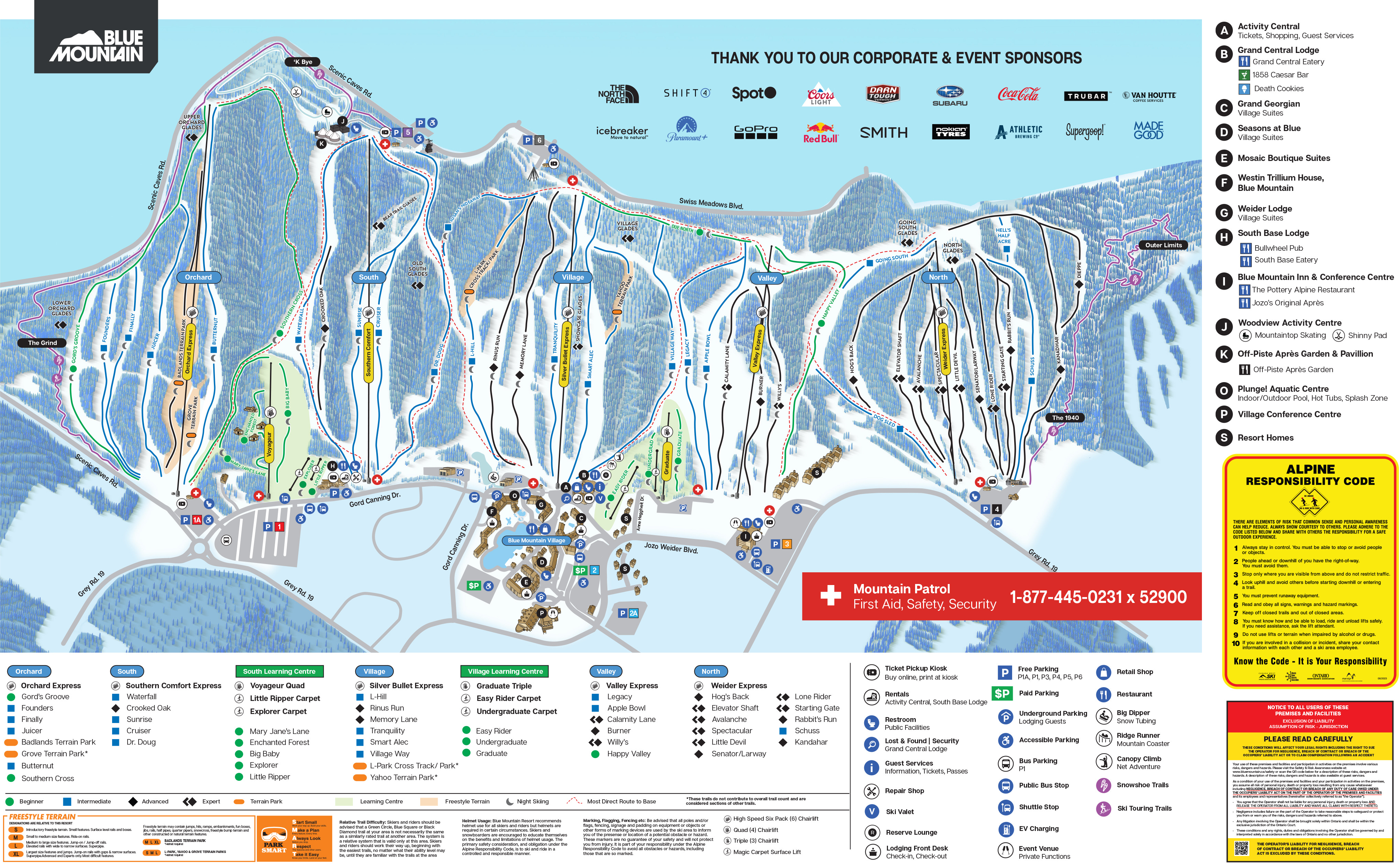
Click here for a mountain stats overview
Owned by: Alterra Mountain Company
Located in: The Blue Mountains, Ontario, Canada
Year founded: 1941
Pass affiliations: Unlimited on Ikon and Ikon Base
Base elevation: 229 feet/750 meters
Summit elevation: 1,480 feet/451 meters
Vertical drop: 730 feet/223 meters
Skiable acres: 364 acres/147 hectares
Average annual snowfall: 154 inches/391 centimeters
Trail count: 43
Lift count: 11 (5 six-packs, 1 fixed-grip quad, 1 triple, 4 carpets – view Lift Blog’s inventory of Blue Mountain, Ontario’s lift fleet)
Why I interviewed him: A Very Dumb Story About a Very Dumb Person, Volume I
In the winter of 1995-96, I developed Vertical Fever, a syndrome in which the afflicted believes, in a way that is beyond reason and immune from contrary arguments, that the skiing will be better if the ski hill is taller.
This was a problem. Because in 1995, I lived, as I had all my life up to that point, in Michigan. Specifically, Sanford, a flat town in a flat county in what may be the flattest region of the country, the Tri-Cities area of Michigan’s Lower Peninsula. Fortunately for a skier, Michigan is cold and full of ski areas. Unfortunately, these ski areas are small or short or both. The tallest of the 33 ski areas inventoried on the 1995 Michigan Downhill Skiing Guide is Boyne Highlands, which then and today promotes a probably made-up vertical drop of 550 feet. Right across the street was 427-vertical-foot Nub’s Nob, one of six Lower Peninsula ski areas to exceed 400 vertical, along with Caberfae (485 feet), Shanty Creek Schuss Mountain (450 feet), Sugar Loaf (500 feet), and Boyne Mountain (495 feet).
I’d skied all of these and I’d skied them all many times since my first real ski season, which was the previous winter, 1994-95. But once I’d stopped summersaulting down the hill and learned to carve and to land jumps, I grew bored. Skiing in 1995 was not like skiing in 2026. Terrain parks were rare and, anyway, off limits to skiers. Jumping was forbidden. There were signs all over saying so. Everything was groomed and everything was about carving turns, even though grooming was inconsistent and the shaped skis that would transform the average skier into a carver were years away from mass market distribution.
So I scoured maps and guidebooks for ski areas of any size in any direction that I could reasonably drive to. To the south lay Ohio and Indiana. Useless. To the north, at the far western end of the Upper Peninsula, lay several 600-ish footers (Mount Bohemia did not open until 2000), but Michigan is a deceptively large state made larger by the inconvenience of driving around gigantic lakes – those UP ski areas were 10 hours away. But also to the north, east instead of west and just over the Canadian border, lay Searchmont: 750 vertical feet of ungladed bananas skiing, with little cliffs and rocks and glades all over. It was a glorious real-life validation of the less-stuffy Canadian ski-area management culture that I’d read about in Skiing and Powder. And it was only a four-hour drive each way, an easy daytrip on the cruise-control-empty interstates of northern Michigan. This is what a Canadian 700-plus-footer is like, I decided, and I searched for more of them.
That’s when I became obsessed with Blue Mountain, this mysterious guidebook mapdot floating south of Lake Huron. Stat-line, as listed in contemporary guide books: 720 vertical feet, 13 chairlifts and two T-bars, 920 skiable acres (this was, um, not accurate). A Midwest hack, a backdoor to a secret mini-New England unknown to Michiganders. As with Searchmont, I would rise at 4 and arrive by lifts-on and soar all day among the woodsy wide-open drop-step terrain of Ontario yahoo skiing.
Yeah it didn’t work out like that. The first time I tried to drive to Blue Mountain, I wound up at Mount Brighton, 273 miles away in Southeast Michigan. A blizzard had forced course correction to a more achievable destination. But the second time, I made it. Here’s how it went, per a journal entry I wrote few days later:
Monday, March 25th, 1996 – 11:53 p.m.
Let’s just call Friday the day that didn’t quite flow. In fact, it didn’t flow like no day on skis ever hasn’t. First off, I only slept four hours. Normally , I wouldn’t give a fuck, but that was directly following three hours the night before, which didn’t help my status in an already exhausting week. Then there was the drive. I figured four, maybe five hours at the most, 250 miles, give or take. Wrong. I only realized this somewhere well over the Canadian border. Six hours, 350 miles. Then there’s the mountain.
I knew Blue was big, but I was not, I’ll admit, in any way, shape, or form prepared for what I found Friday. The place is enormous by Midwest standards, though not as mammoth as I’d originally thought coming up the road, scoping out the two private resorts. Notice I said “enormous,” not necessarily “good.” Which is sad, cause, for one thing, they’re trying pretty hard to make a good hill, and, #2, I drove a long fuckin’ way to get there. The whole thing bore a striking resemblance to western skiing – enormous base lodges, hugely wide runs, high-speed chairs. Which I suppose makes it ideal for families. Then there’s the fifty miles or so of safety fence, zero ungroomed runs, and as many jumps as a Fat Albert convention. This, I surmise, makes it extremely unideal for Stuarts. In fact, I really didn’t enjoy it at all. It was bland, repetitive, and almost sickening in its nature. I was tired, pissed, and lonely. The highlight of the day was jumping off the cornice which was the subject of much inner conflict. But I did it, and I’m glad, and then I drove home, and I’m glad for that too.
I only skied four-and-a-half hours. My ticket was good til’ ten, but I considered a lot of things. For starters, it only cost me twenty bucks; second, I told Clint I was gonna make it a point to get out of there by four [to hang out], so I sorta tried; third, I’d skied the whole fuckin’ place anyhow, and I really didn’t feel like getting home at four AM. It’s not like I didn’t ski well, cause I was actually carving and reacting magnificently (to the terrain, not the carving). I was fluid, but I needed more variety, and they just didn’t deliver.
It would have been nice to have the internet in 1996 (it existed, but almost no one used it, partly because there was almost nothing on it, including driving directions, maps, or trailmaps).
Great endorsement of Blue Mountain, Stu. You managed to convince people not to go and make the people who do ski there feel bad about it all at once. Slow clap for aggressive transparency.
But my message here is hardly “Blue Mountain sucks don’t go.” Blue Mountain is, as it was 30 years ago, exactly what it needs to be: a rapid-fire lap machine optimized to provide a consistent ski experience to the residents of Canada’s densest metro area, Toronto. Blue is, historically and probably still, the third-busiest ski area in Canada after Tremblant and Whistler. It is a low-altitude, variable-weather, high-volume business tasked with the twin burdens of being the sole public outpost for recreational skiing in a ridgeline of upscale private clubs and being a profitable enterprise. It is, from a dollar-generating and Ikon Pass-dispersal-to-the-West point of view, probably one of Alterra’s most important ski areas.
The problem, then, is not that every ski area isn’t like Searchmont. The problem is that, in 1996, I thought every ski area should be like Searchmont. It was like walking into a pizza parlor and complaining that they didn’t sell tacos. I was young and dumb, and it didn’t occur to me until arrival that a 700-ish-vertical-foot ski area dangling off the far eastern end of the Lake Superior wilderness (Searchmont), would, by custom and by necessity, offer a far different ski experience than a 700-ish-vertical-foot satellite orbiting metro Toronto (Blue). I thought every ski area should be for me and for people like me, like the people I read about in ski magazines who toured B.C. in rusty pickup trucks and never took bathroom breaks and who viewed skiing as a constant level-up challenge.
Thirty years later, I view Blue Mountain differently, for two reasons. The first is that I’m sure that Blue, like nearly all North American ski areas, is a more interesting mountain in 2026 than it was in 1996. Freeski culture and snowboarding really did loosen up skiing’s stodgier tendencies, most visibly with the widespread building of come-one-come-all terrain parks. The second is that I no longer approach ski areas by asking if they are the best possible experience for me, but if they are the best possible version of themselves for the demographic of skiers who are most likely to ski there. And with Blue – which I will admit, I never visited again - the answer appears to be, always and ever upward, yes.
What we talked about
Oh Ontario; being a Canadian ski area owned by a U.S. company; “one of the beauties of being part of Alterra is our emphasis on honoring and preserving the uniqueness of each resort and each mountain community”; Blue Mountain’s Reserve Pass; fixing up Blue’s disordered lift mazes; growing up at the base of Blue Mountain; the amazing evolution of ski area technology; Blue’s wacky, charismatic founder; preserving the mountain’s independent character after it’s been absorbed by a conglomerate; Blue in the ‘70s; building Blue’s snowmaking system; big leaps forward in snowmaking during the 1990s; the rise of HKD; Alterra’s point of view on snowmaking; the hit-or-miss Lake Huron and Georgian Bay lake-effect snowbelts; snowmaking in the era of climate change; how snow-depth technology impacts snowmaking volumes; living through the transition from independence to Intrawest and ultimately to Alterra; how the village transformed Blue; “we come to the table scrappy, inventive, entrepreneurial” to this company of mega-resort destinations; the impact of the Ikon Pass; Blue’s amazing lift fleet and how the six-pack became the mountain’s workhorse; building chairlifts in-house; 15,000 skiers on Blue’s busiest days; “we’re not going to cut any new trails, so we gotta squeeze every little bit out and make sure we have a balanced experience”; whether Blue could upgrade to an eight-place lift; operating as the only substantial public ski area amid a huge number of private ski areas; and Blue’s history owning and operating the neighboring Georgian Peaks ski area.
What I got wrong
I mentioned that HKD President Charles Santry had told the same side of a story that Skelton shared on a previous podcast recording, which he had. The problem is that as of now, I still haven’t released that pod with Santry. Stand by.
Podcast Notes
On Intrawest
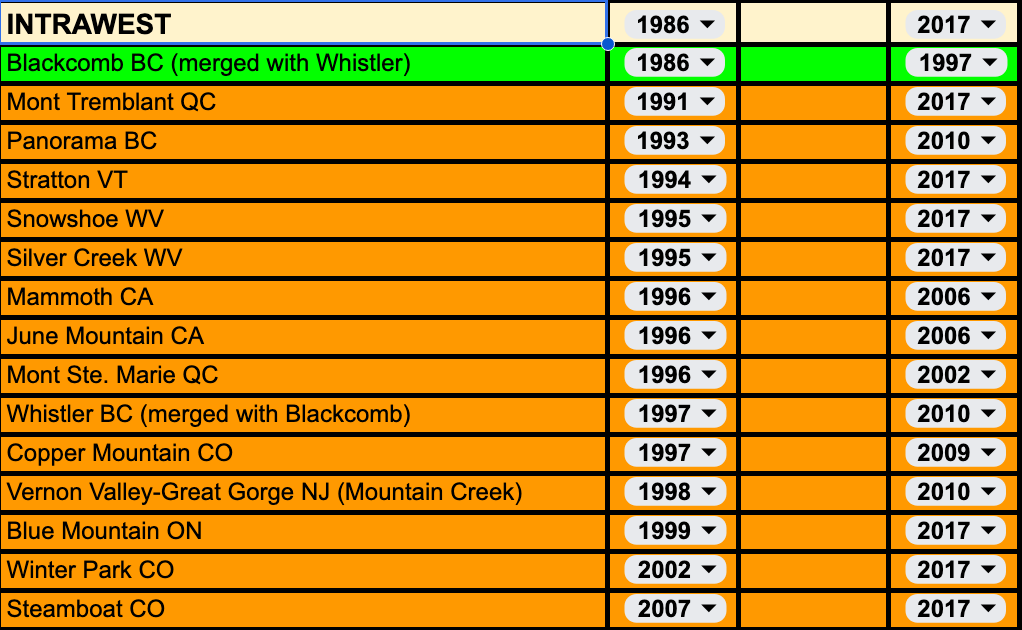
A brief history of Intrawest:
On “Rusty” in the Alterra/Ikon transition
Skelton was referring to Rusty Gregory, Alterra CEO from 2018 to ’22.
Podcast #92: Alterra Mountain Company CEO Rusty Gregory

To support independent ski journalism, please consider becoming a free or paid subscriber. This podcast hit paid subscribers’ inboxes on June 25. Free subscribers got it on June 28. To receive future pods as soon as they’re live, please consider an upgrade to a paid subscription.
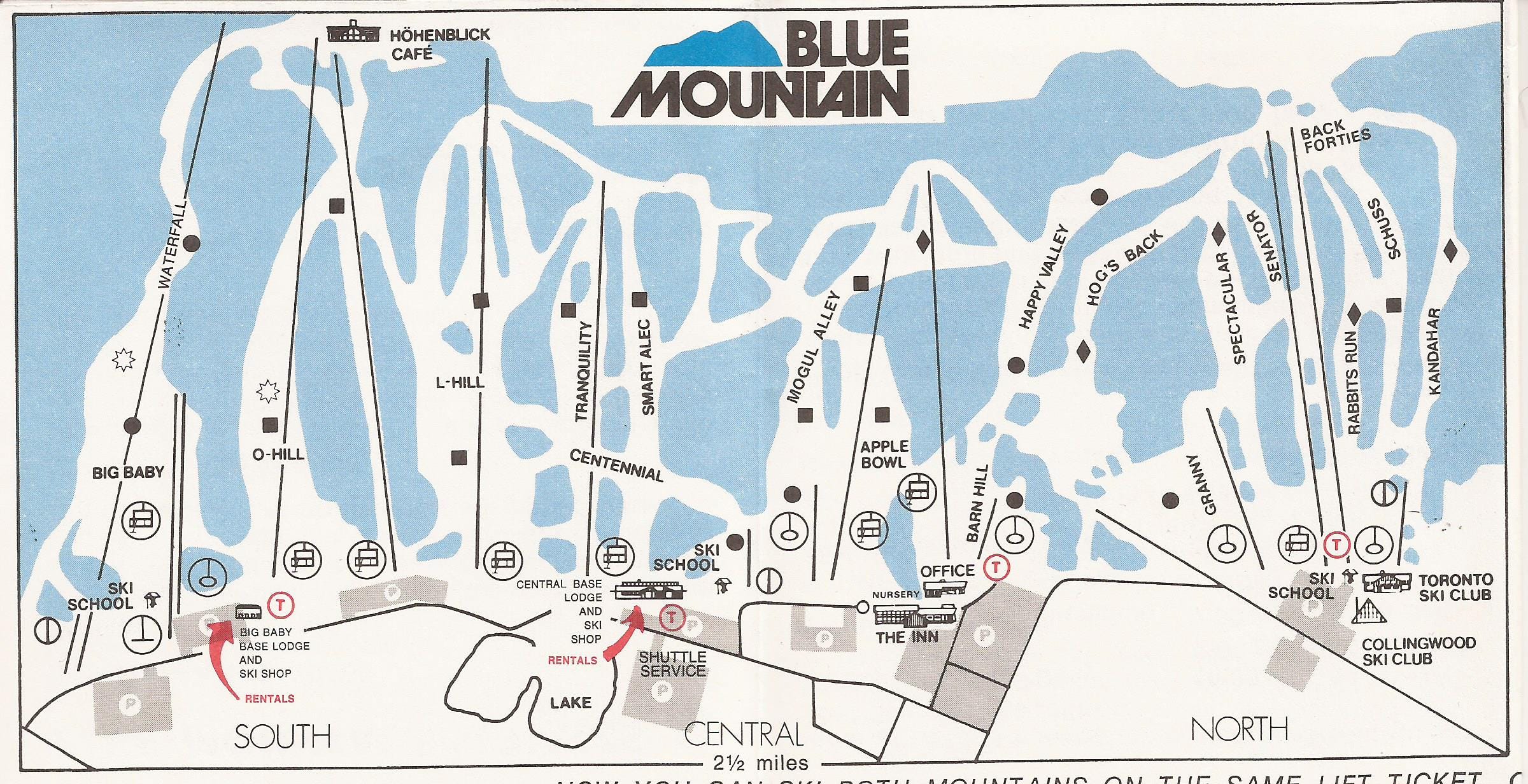
On Blue’s 1980 trailmap