


Who
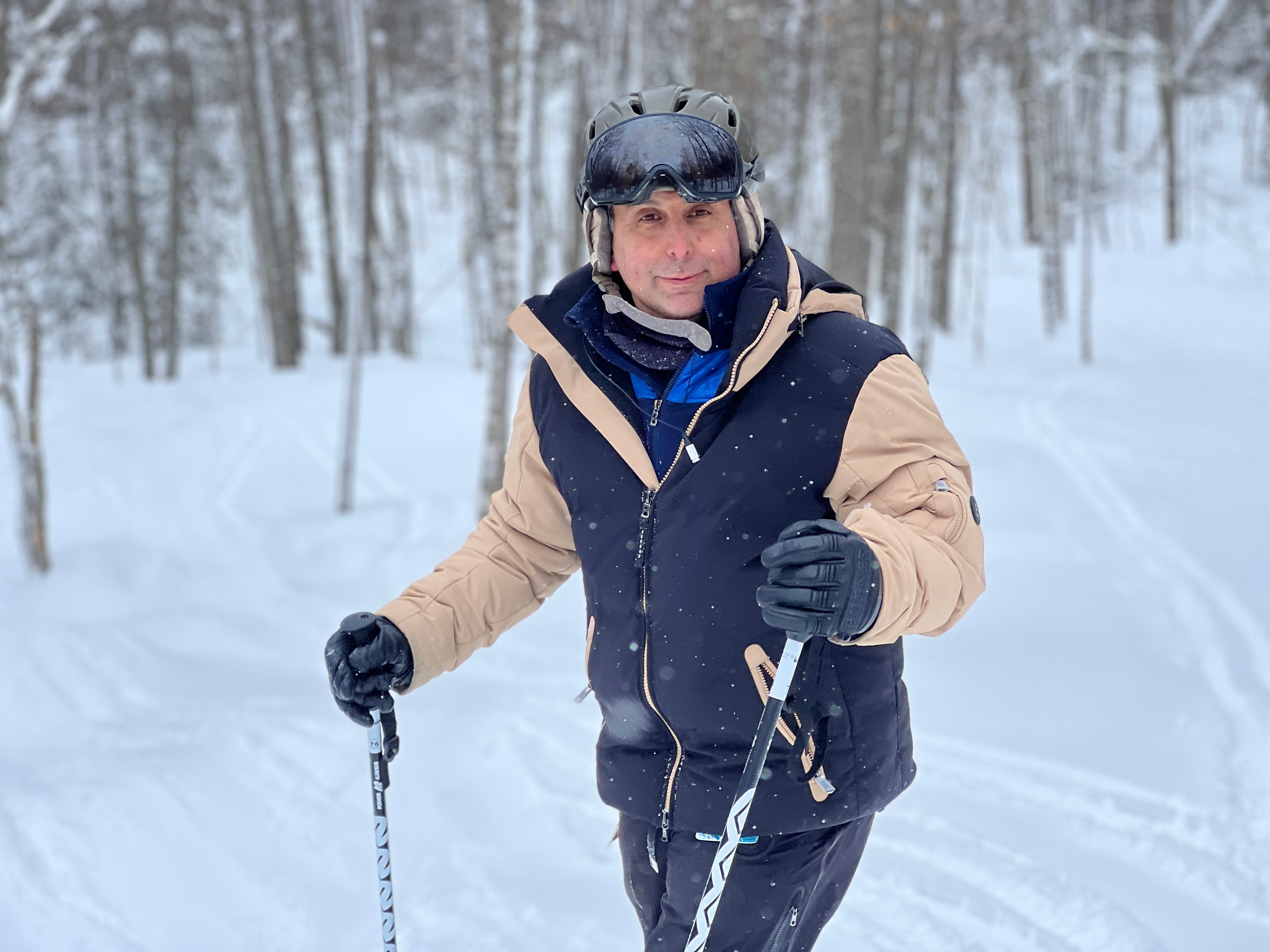
Lonie Glieberman, Founder, Owner, & President of Mount Bohemia, Michigan
Recorded on
November 19, 2025
About Mount Bohemia
Click here for a mountain stats overview
Owned by: Lonie Glieberman
Located in: Lac La Belle, Michigan
Year founded: 2000, by Lonie
Pass affiliations: None
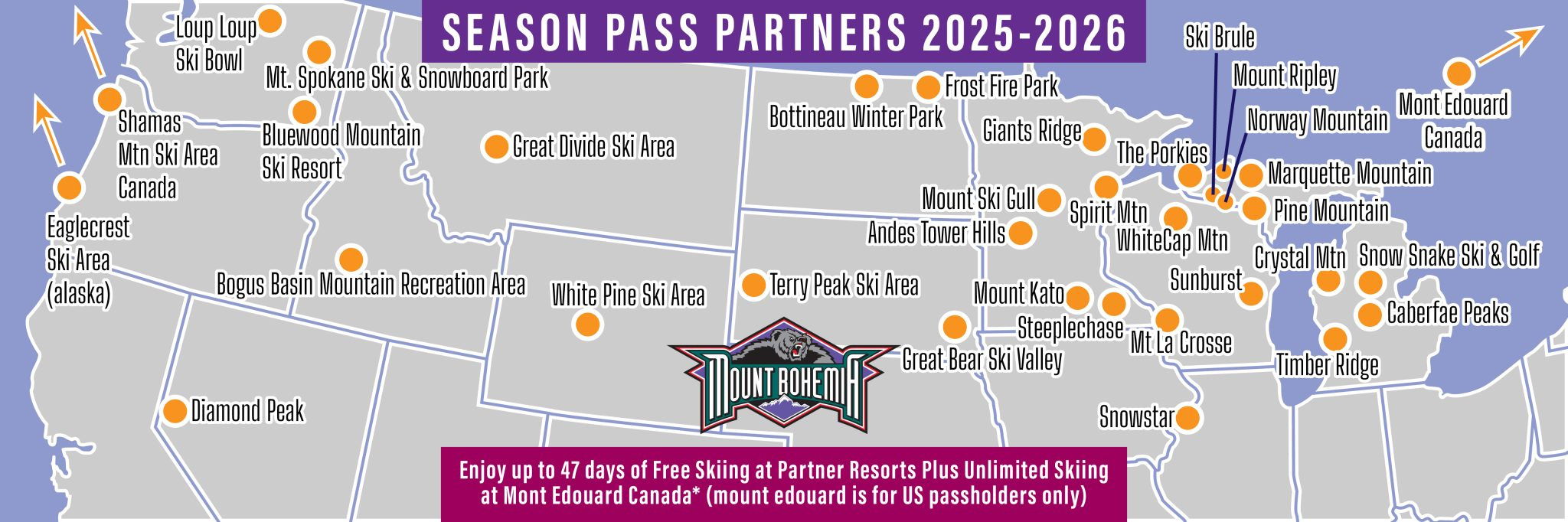
Reciprocal partners: Boho has developed one of the strongest reciprocal pass programs in the nation, with lift tickets to 34 partner mountains. To protect the mountain’s more distant partners from local ticket-hackers, those ski areas typically exclude in-state and border-state residents from the freebies. Here’s the map:
And here’s the Big Dumb Storm Chart detailing each mountain and its Boho access:

Closest neighboring ski areas: Mont Ripley (:50)
Base elevation: 624 feet
Summit elevation: 1,522 feet
Vertical drop: 898 feet
Skiable acres: 585
Average annual snowfall: 273 inches
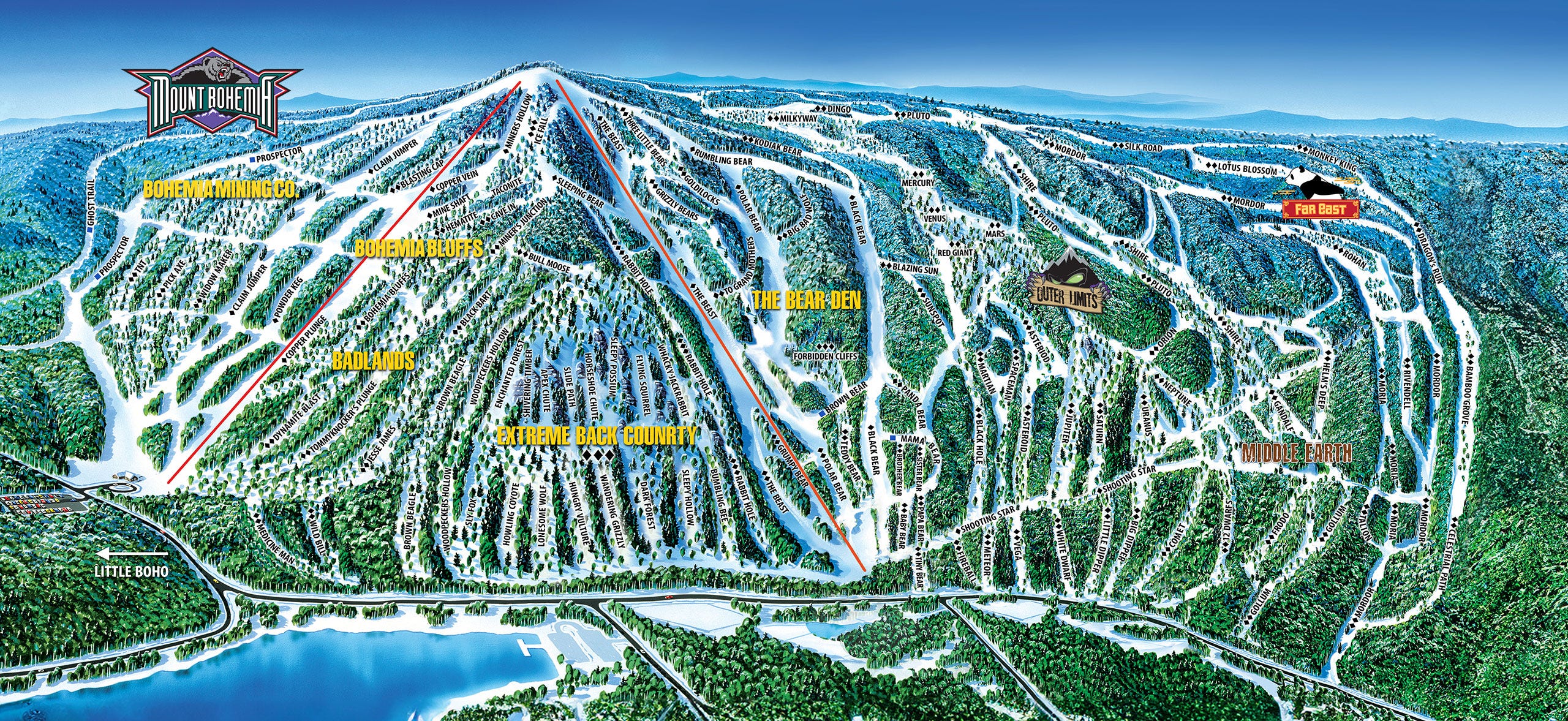
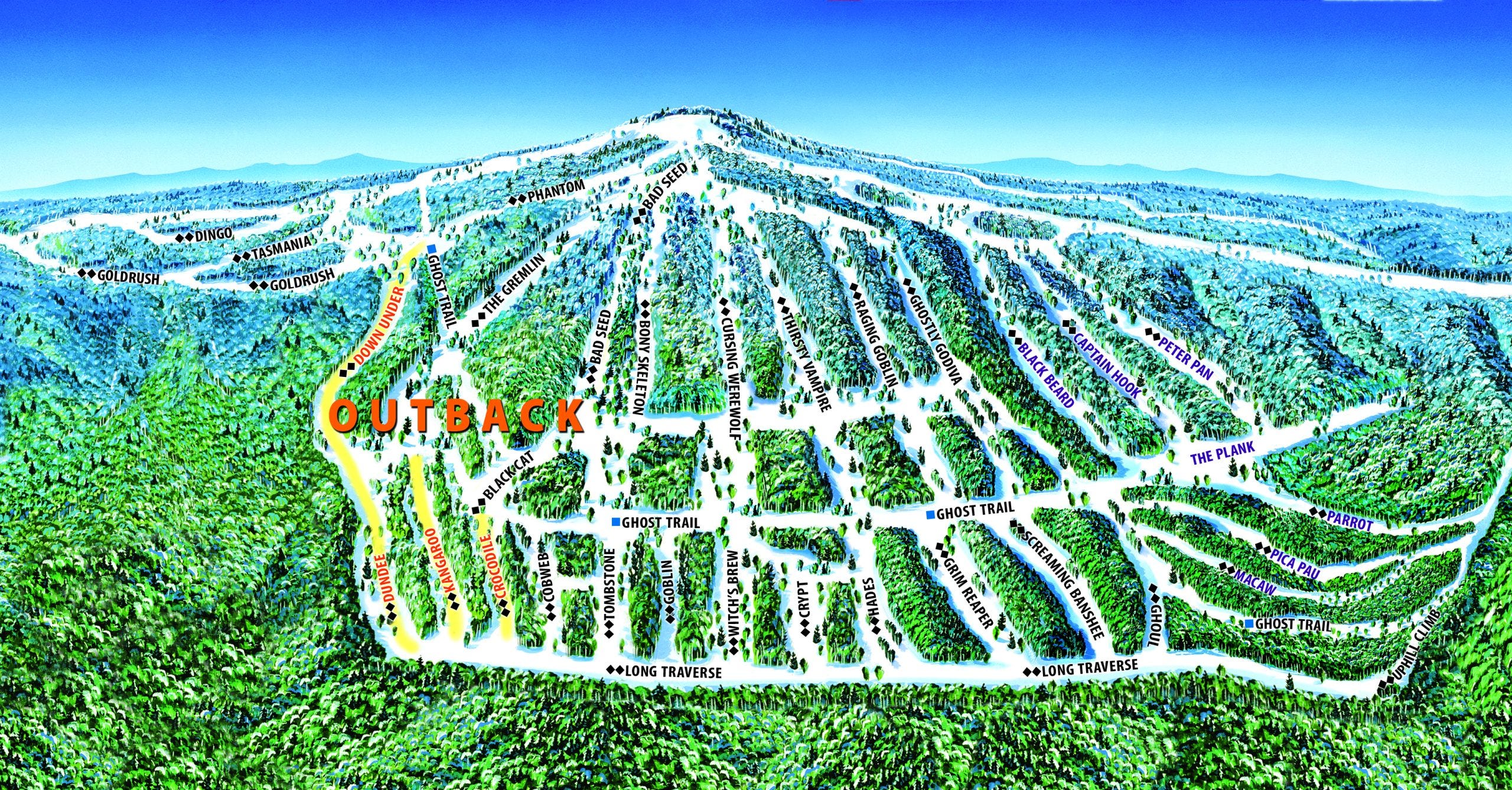
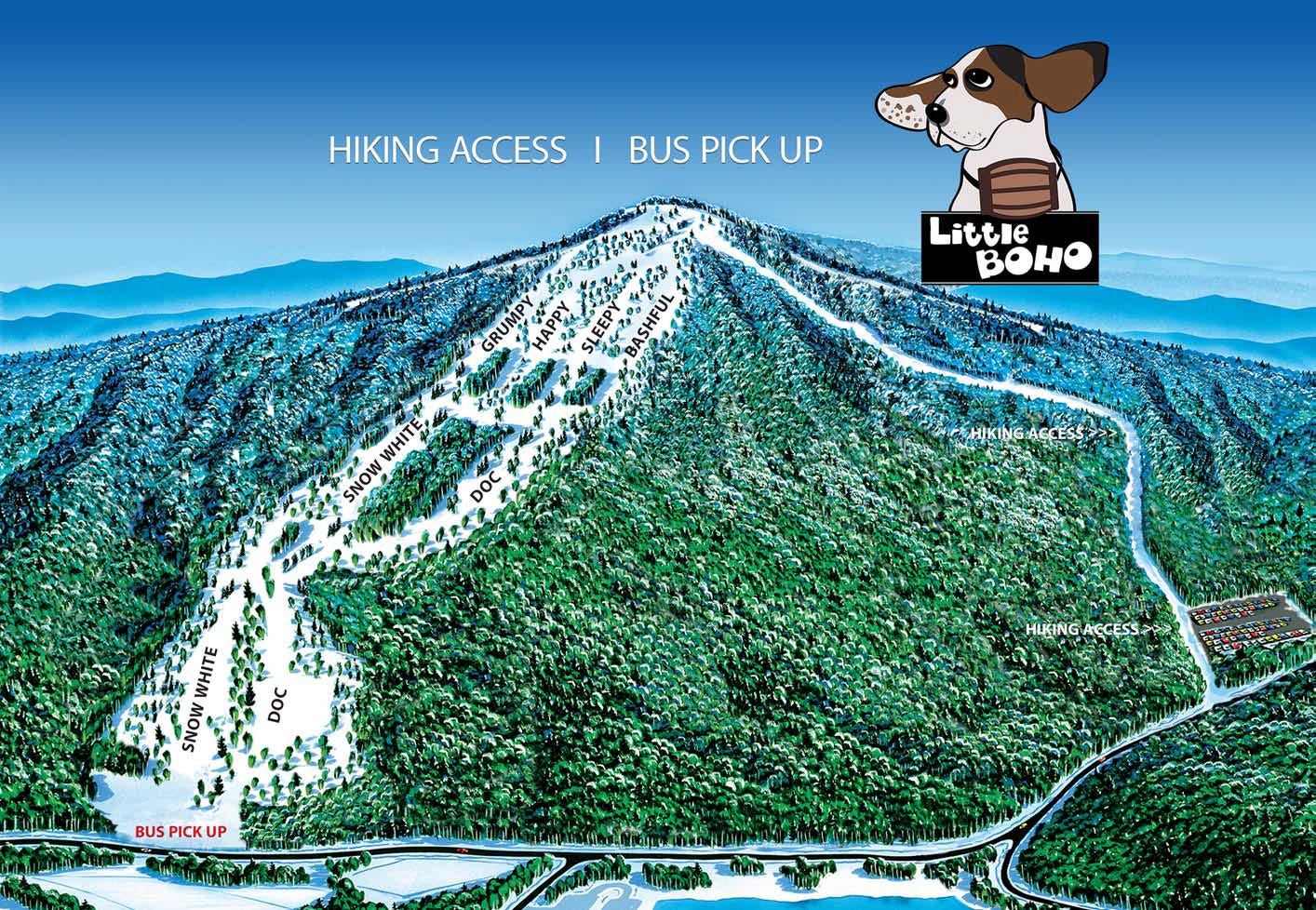
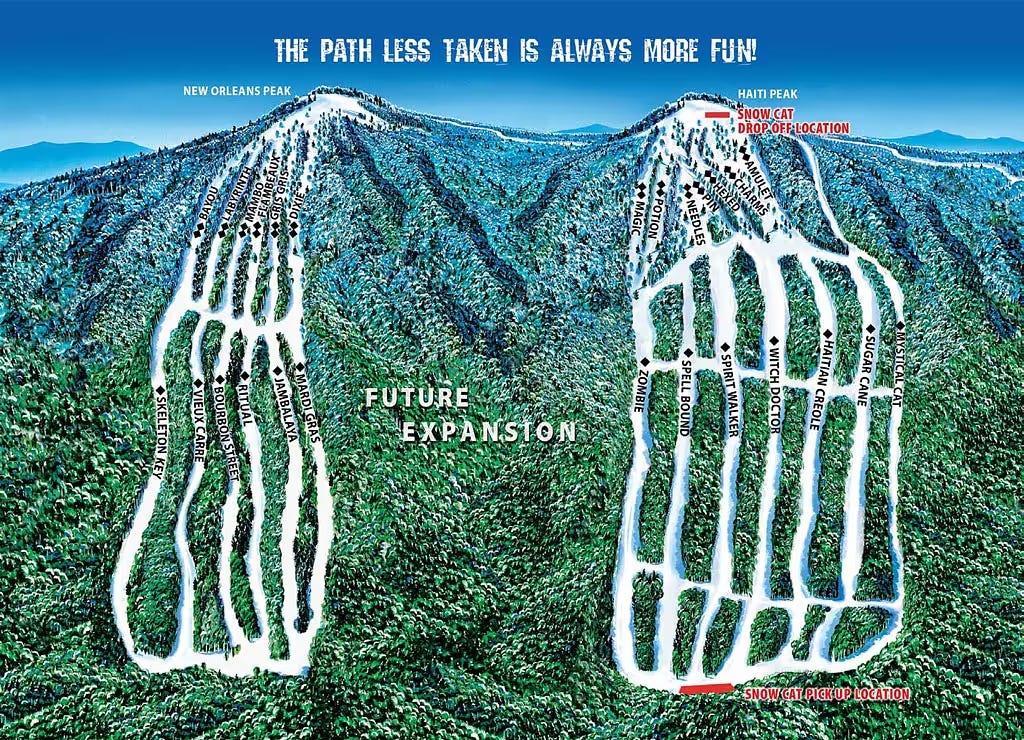
Trail count: It’s hard to say exactly, as Boho adds new trails every year, and its map is one of the more confusing ones in American skiing, both as you try analyzing it on this screen, and as you’re actually navigating the mountain. My advice is to not try too hard to make the trailmap make sense. Everything is skiable with enough snow, and no matter what, you’re going to end up back at one of the two chairlifts or the road, where a shuttlebus will come along within a few minutes.
Lift count: 2 (1 triple, 1 double)

Why I interviewed him
For those of us who lived through a certain version of America, Mount Bohemia is a fever dream, an impossible thing, a bantered-about-with-friends-in-a-basement-rec-room-idea that could never possibly be. This is because we grew up in a world in which such niche-cool things never happened. Before the internet spilled from the academic-military fringe into the mainstream around 1996, We The Commoners fed our brains with a subsistence diet of information meted out by institutional media gatekeepers. What I mean by “gatekeepers” is the limited number of enterprises who could afford the broadcast licenses, printing presses, editorial staffs, and building and technology infrastructure that for decades tethered news and information to costly distribution mechanisms.
In some ways this was a better and more reliable world: vetted, edited, fact-checked. Even ostensibly niche media – the Electronic Gaming Monthly and Nintendo Power magazines that I devoured monthly – emerged from this cubicle-in-an-office-tower Process that guaranteed a sober, reality-based information exchange.
But this professionalized, high-cost-of-entry, let’s-get-Bob’s-sign-off-before-we-run-this, don’t-piss-off-the-advertisers world limited options, which in turn limited imaginations – or at least limited the real-world risks anyone with money was willing to take to create something different. We had four national television networks and a couple dozen cable channels and one or two local newspapers and three or four national magazines devoted to niche pursuits like skiing. We had bookstores and libraries and the strange, ephemeral world of radio. We had titanic, impossible-to-imagine-now big-box chain stores ordering the world’s music and movies into labelled bins, from which shoppers could hope – by properly interpreting content from box-design flare or maybe just by luck – to pluck some soul-altering novelty.
There was little novelty. Or at least, not much that didn’t feel like a slightly different version of something you’d already consumed. Everything, no matter how subversive its skin, had to appeal to the masses, whose money was required to support the enterprise of content creation. Pseudo-rebel networks such as ESPN and MTV quickly built global brands by applying the established institutional framework of network television to the mainstream-but-information-poor cultural centerpieces of sports and music.
This cultural sameness expressed itself not just in media, but in every part of life: America’s brand-name sprawl-ture (sprawl culture) of restaurants and clothing stores and home décor emporia; its stuff-freeways-through-downtown ruining of our great cities; its three car companies stamping out nondescript sedans by the millions.
Skiing has long acted as a rebel’s escape from staid American culture, but it has also been hemmed in by it. Yes, said Skiing Incorporated circa 1992, we can allow a photo of some fellow jumping off a cliff if it helps convince Nabisco Bob fly his family out to Colorado for New Year’s, so long as his family is at no risk of actually locating any cliffs to jump off of upon arrival. After all, 1992 Bob has no meaningful outlet through which to highlight this advertising-experience disconnect.
The internet broke this whole system. Everywhere, for everything. If I wanted, say, a Detroit Pistons hoodie in 1995, I had to drive to a dozen stores and choose the least-bad version from the three places that stocked them. Today I have far more choice at far less hassle: I can browse hundreds of designs online without leaving the house. Same for office furniture or shoes or litterboxes or laundry baskets or cars. And especially for media and information. Consumer choice is greater not only because the internet eliminated distance, but also because it largely eliminated the enormous costs required to actualize a tangible thing from the imagination.
There were trade-offs, of course. Our current version of reality has too many options, too many poorly made products, too much bad information. But the internet did a really good job of democratizing preferences and uniting dispersed communities around niche interests. Yes, this means that a global community of morons can assemble over their shared belief that the planet is flat, but it also means that legions of Star Wars or Marvel Comics or football obsessives can unite to demand more of these specific things. I don’t think it’s a coincidence that the dormant Star Wars and Marvel franchises rebooted in spectacular, omnipresent fashion within a decade of the .com era’s dawn.
The trajectory was slightly different in skiing. The big-name ski areas today are largely the same set of big-name ski areas that we had 30 years ago, at least in America (Canada is a very different story). But what the internet helped bring to skiing was an awareness that the desire for turns outside of groomed runs was not the hyper-specific desire of the most dedicated, living-in-a-campervan-with-their-dog skiers, but a relatively mainstream preference. Established ski areas adapted, adding glades and terrain parks and ungroomed zones. The major ski areas of 2025 are far more interesting versions of the ski areas that existed under the same names in 1995.
Dramatic and welcome as these additions were, they were just additions. No ski area completely reversed itself and shut out the mainstream skier. No one stopped grooming or eliminated their ski school or stopped renting gear. But they did act as something of a proof-of-concept for minimalist ski areas that would come online later, including avy-gear-required, no-grooming Silverton, Colorado in 2001, and, at the tip-top of the American Midwest, in a place too remote for anyone other than industrial mining interests to bother with, the ungroomed, snowmaking-free Mount Bohemia.
I can’t draw a direct line between the advent of the commercial internet and the rise of Mount Bohemia as a successful niche business within a niche industry. But I find it hard to imagine one without the other. The pre-internet world, the one that gave us shopping malls and laugh-track sitcoms and standard manual transmissions, lacked the institutional imagination to actualize skiing’s most dynamic elements in the form of a wild and remote pilgrimage site. Once the internet ordered fringe freeskiing sentiments into a mainstream coalition, the notion of an extreme ski area seemed inevitable. And Bohemia, without a basically free global megaphone to spread word of its improbable existence, would struggle to establish itself in a ski industry that dismissed the concept as idiotic and with a national ski media that considered the Midwest irrelevant.
Even with the internet, Boho took a while to catch on, as Lonie detailed in his first podcast appearance three years ago. It probably took the mainstreaming of social media, starting around 2008, to really amp up the online echo-sphere and help skiers understand this gladed, lake-effect-bombed kingdom at the end of the world.
Whatever drove Boho’s success, that success happened. This is a good, stable business that proved that ski areas do not have to cater to all skiers to be viable. But those of us who wanted Bohemia before it existed still have a hard time believing that it does. Like superhero movies or video-calls or energy drinks that aren’t coffee, Boho is a thing we could, in the ‘80s and early ‘90s, easily imagine but just as easily dismiss as fantasy.
Fortunately, our modern age of invention and experimentation includes plenty of people who dismiss the dismissers, who see things that don’t exist yet and bring them into our world. And one of the best contributions to skiing to emerge from this age is Mount Bohemia.
What we talked about
Season pass price and access changes; lifetime and two-year season passes; a Disney-ski comparison that isn’t negative; when your day ticket costs as much as your season pass; Lonie’s dog makes a cameo; not selling lift tickets on Saturdays; “too many companies are busy building a brand that no one will hate, versus a brand that someone will love”; why it’s OK to have some people be angry with you; UP skiing’s existential challenge; skiing’s vibe shift from competition to complementary culture; the Midwest’s advanced-skier problem; Boho’s season pass reciprocal program; why ski areas survive; the Keweenaw snow stake and Boho’s snowfall history; recent triple chair improvements and why Boho didn’t fully replace the chair – “it’s basically a brand-new chairlift”; a novel idea for Boho’s next new chairlift; the Nordic spa; proposed rezoning drama; housing at the end of the world; could Mount Bohemia have a Mad River Glen co-op-style future?; why the pass deadline really is the pass deadline; and Mount Bohemia TV.
What I got wrong
I said that Boho’s one-day lift ticket was “$89 or $92” last time Lonie joined me on the pod, in fall, 2022. The one-day cost for the 2022-23 ski season was $87.
I said that Powder Mountain, Utah, may extend their no-lift-ticket-sales-on-Saturdays-and-Sundays-in-February policy, which the mountain rolled out last year, to other dates, but their sales calendar shows just eight restricted dates (one of which is Sunday, March 1), which is the same number as last winter.
Why you should ski Mount Bohemia
I can’t add anything useful to this bit that I wrote a few months back:

Or didn’t say three years ago, around my first Boho pod:

Podcast Notes
On Boho’s season pass

On Lonie’s Library
A Boho podcast will always come loaded with some Lonie Library recommendations. In this episode, we get The Power of Cult Branding by Mattew W. Ragas and Bolivar J. Bueno and The 22 Immutable Laws of Branding by Al Ries and Laura Ries.
On Raising Cane’s
Lonie tells us about a restaurant called Raising Cane’s that sells nothing but chicken fingers. Because I have this weird way of sometimes not noticing super-obvious things, I’d never heard of the place. But apparently they have 900-ish locations, including several here in NYC. I’m sure you already know this.
On Jimmy Buffett
Then again I’m sometimes overly attuned to things that I think everyone knows about, like Jimmy Buffett. Probably most people are aware of his Margaritaville-headlined music catalog, but perhaps not the Boomers-Gone-Wild Parrothead energy of his concerts, which were mass demonstrations of a uniquely American weirdness that’s impossible to believe in unless you see it:
I don’t know if I’d classify this spectacle as sports for people who don’t like sports or anthropological proof that mass coordinated niche crowd-dancing predates the advent of TikTok, but I hope this video reaches the aliens first and they decide not to bother.
On “when we spoke in Milwaukee”
This was the second time I’ve interviewed Lonie recently. The first was in front of an audience at the Snowvana ski show in Milwaukee last month. We did record that session, and it was different enough from this pod to justify releasing – I just don’t have a timeline on when I’ll do that yet. Here’s the preview article that outlined the event:
Join Me Live with Mt. Bohemia at Snowvana Milwaukee Saturday, Nov. 8

TLDR: I’ll be interviewing Mount Bohemia founder and owner Lonie Glieberman live on stage at Snowvana Milwaukee next Saturday, Nov. 8, 2025, from 2 to 2:45 p.m. The event will be at the MOSH Performance Facility in Franklin, Wisconsin, and will feature a 10,000-plus-square-foot ski swap and gear sale. Admission includes free lift tickets to Tyrol Basin,…
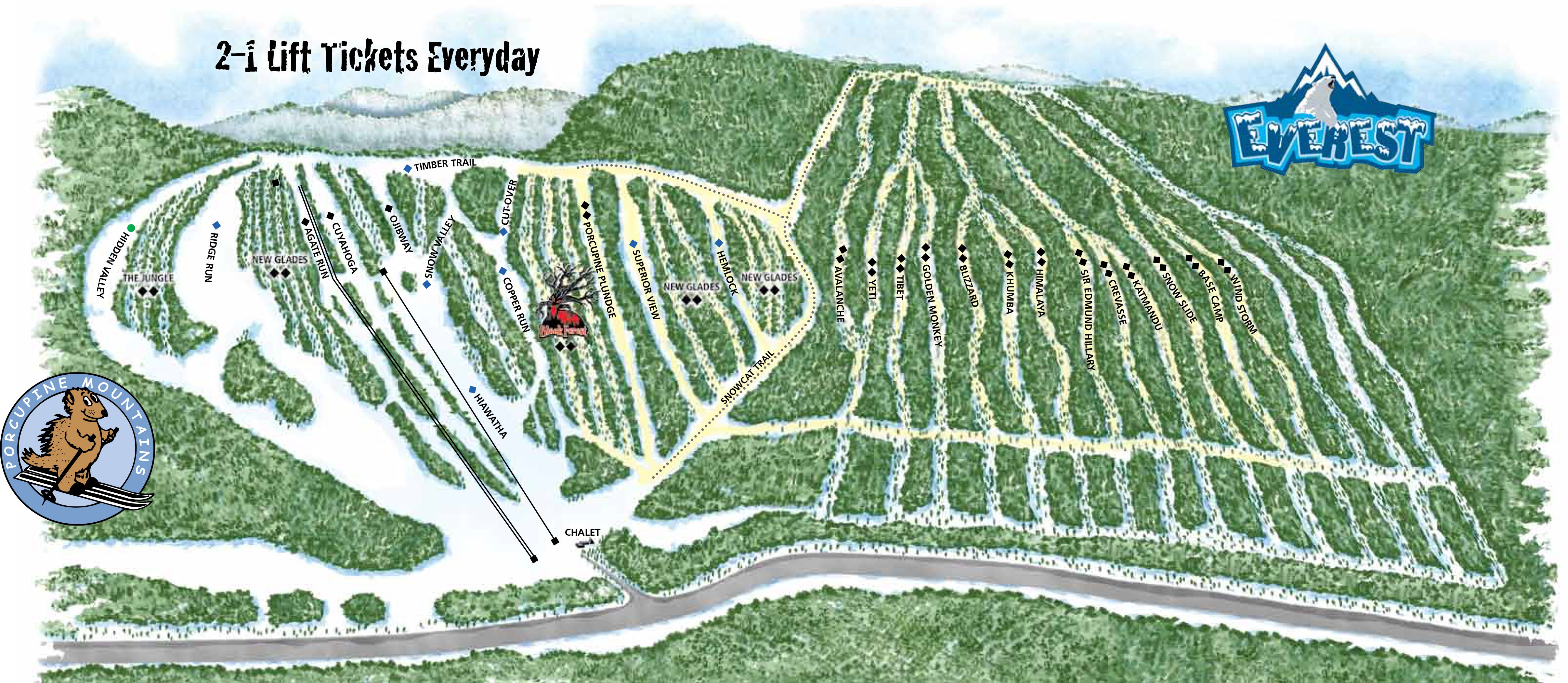
On Lonie operating the Porcupine Mountains ski area
I guess you can make anything look rad. Porcupine Mountains ski area, as presented today under management of the State of Michigan’s Department of Natural Resources:
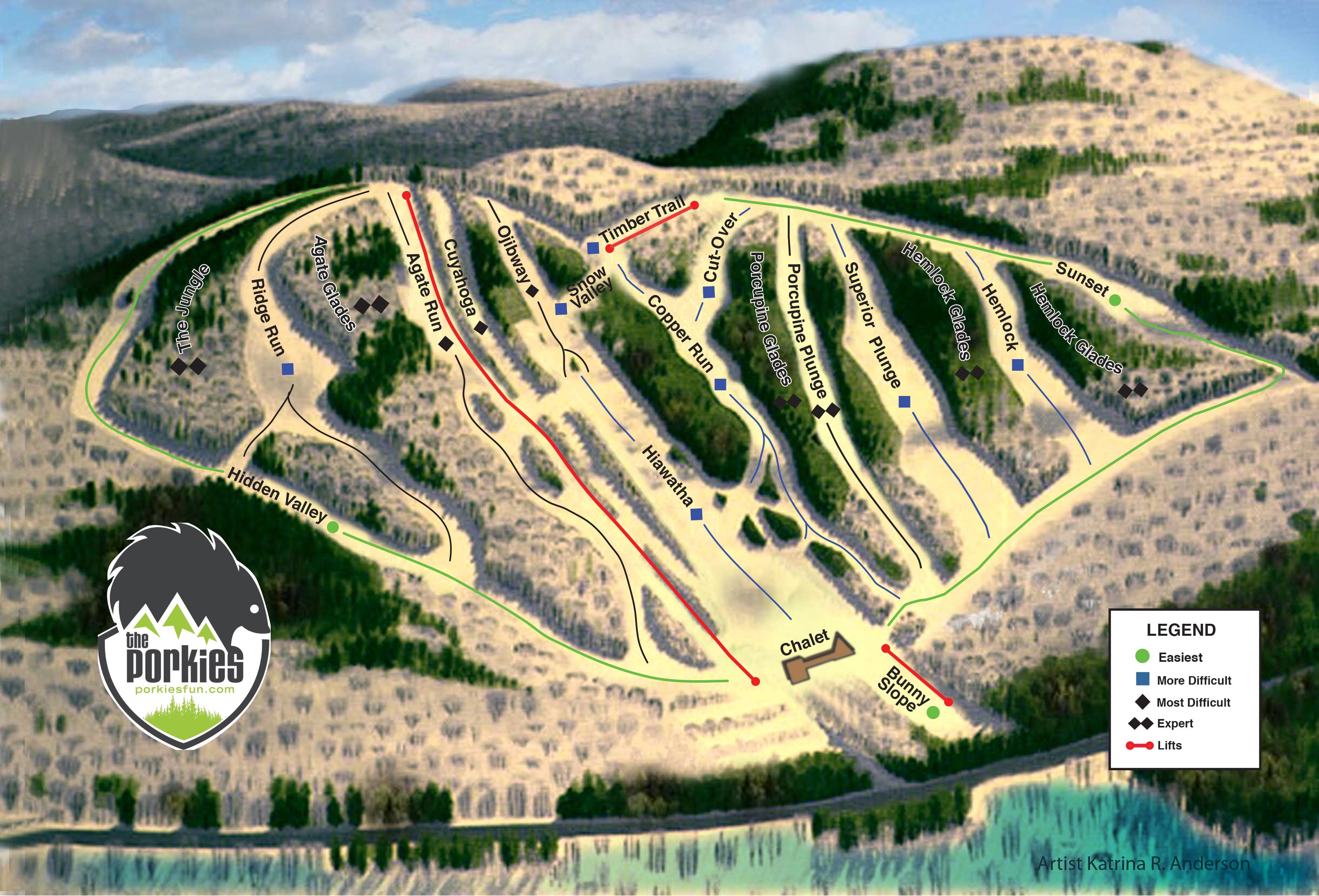
The same ski area under Lonie’s management, circa 2011:
On the owner of Song and Labrador, New York buying and closing nearby Toggenburg ski area

On Indy’s fight with Ski Cooper
I wrote two stories on this, each of which subtracted five years from my life. The first:

The follow-up:

On Snow Snake, Apple Mountain, and Mott Mountain ski areas
These three Mid-Michigan ski areas were so similar it was frightening – the only thing I can conclude from the fact that Snow Snake is the only one left is that management trumps pretty much everything when it comes to which ski areas survive:

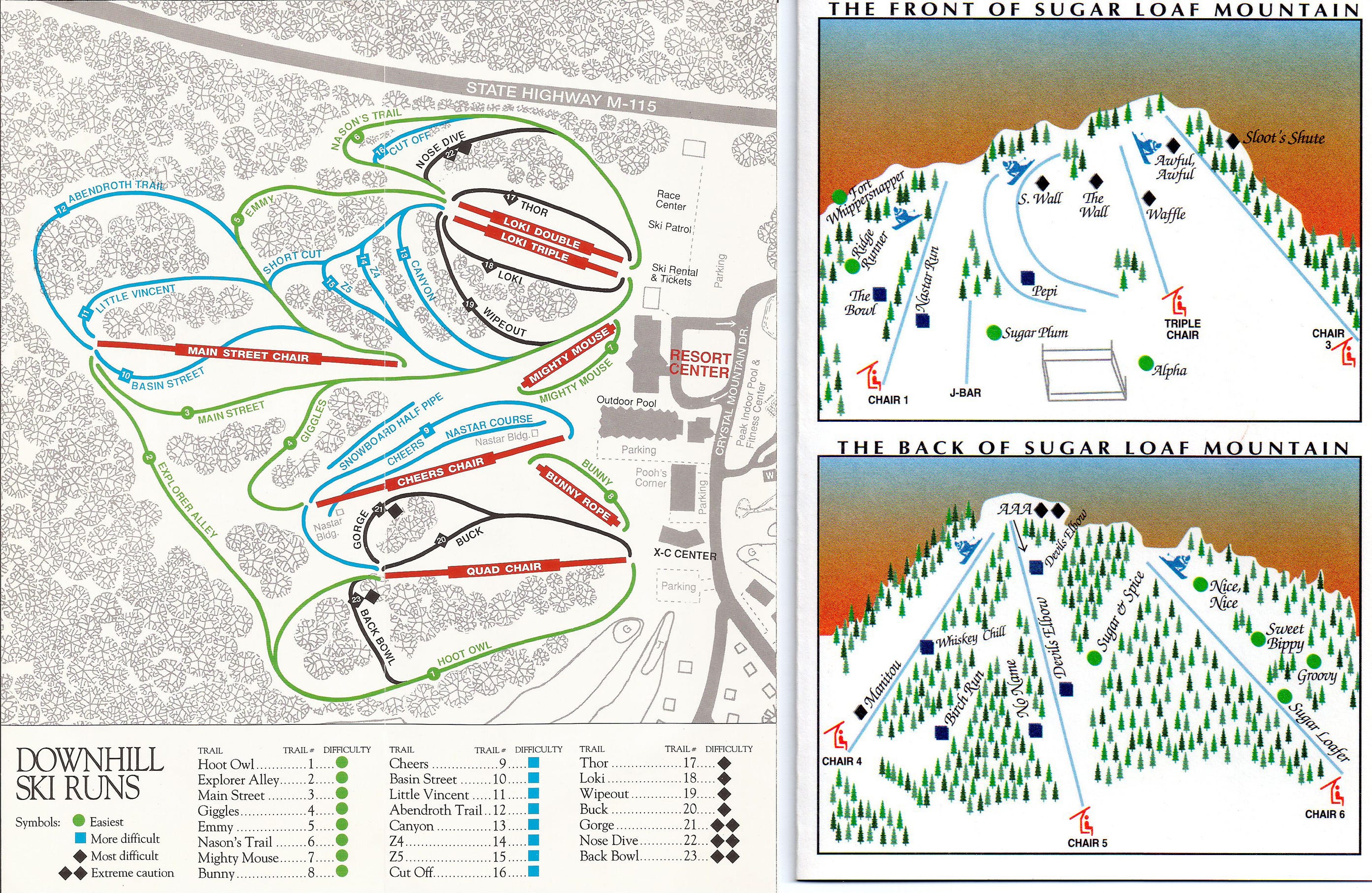
On Crystal Mountain, Michigan versus Sugar Loaf, Michigan
I noted that 1995 Stu viewed Sugar Loaf as a “more interesting” ski area than contemporary Crystal. It’s important to note that this was pre-expansion Crystal, before the ski area doubled in size with backside terrain. Here are the Crystal versus Sugar Loaf trailmaps of that era:
I discussed all of this with Crystal CEO John Melcher last year:

On Thunder Mountain and Walloon Hills
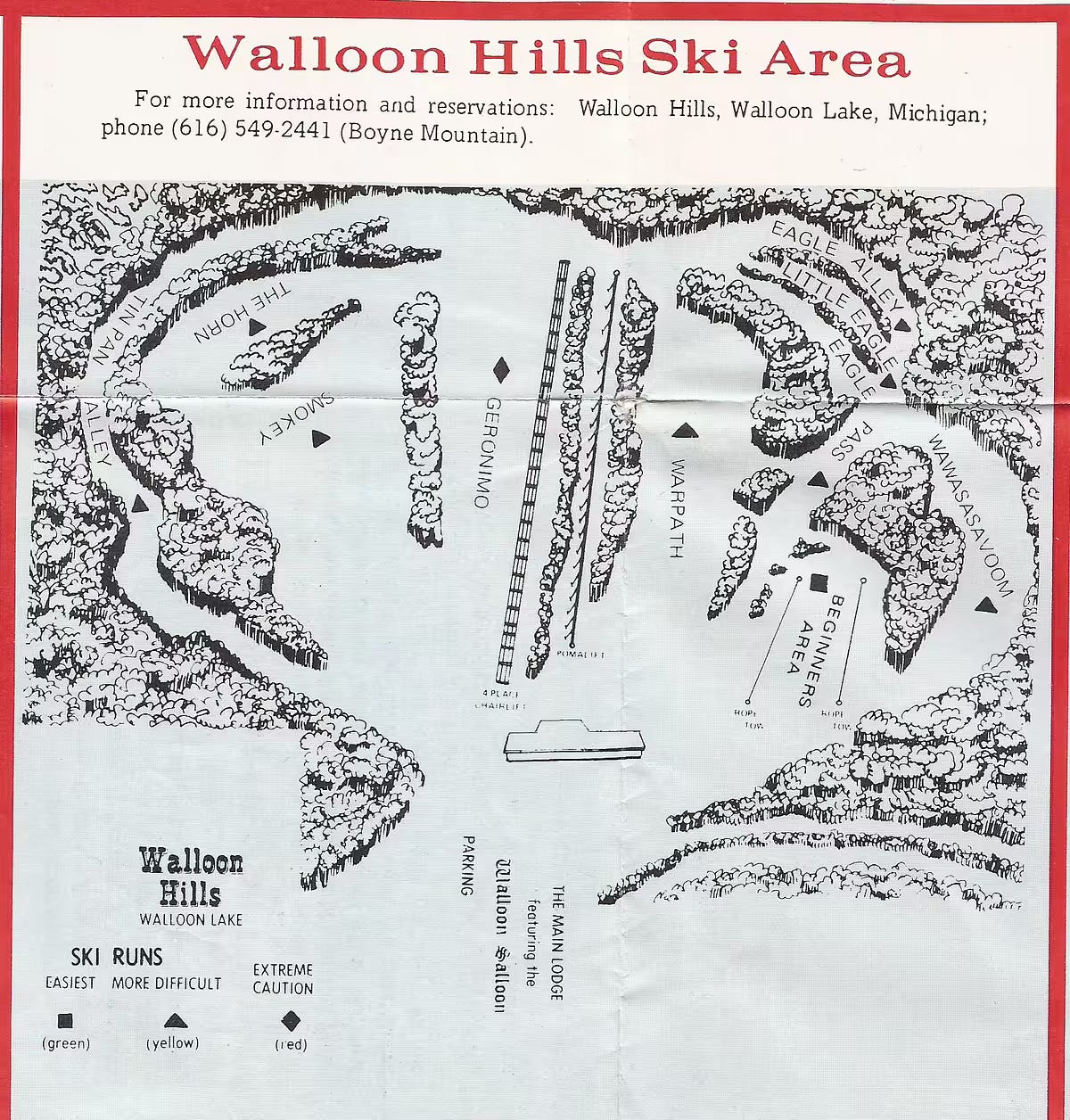
Lonie mentions two additional lost Michigan ski areas: Thunder Mountain and Walloon Hills. The latter, while stripped of its chairlifts, still operates as a nonprofit called Challenge Mountain. Here’s what it looked like just before shuttering as a public ski area in 1978:
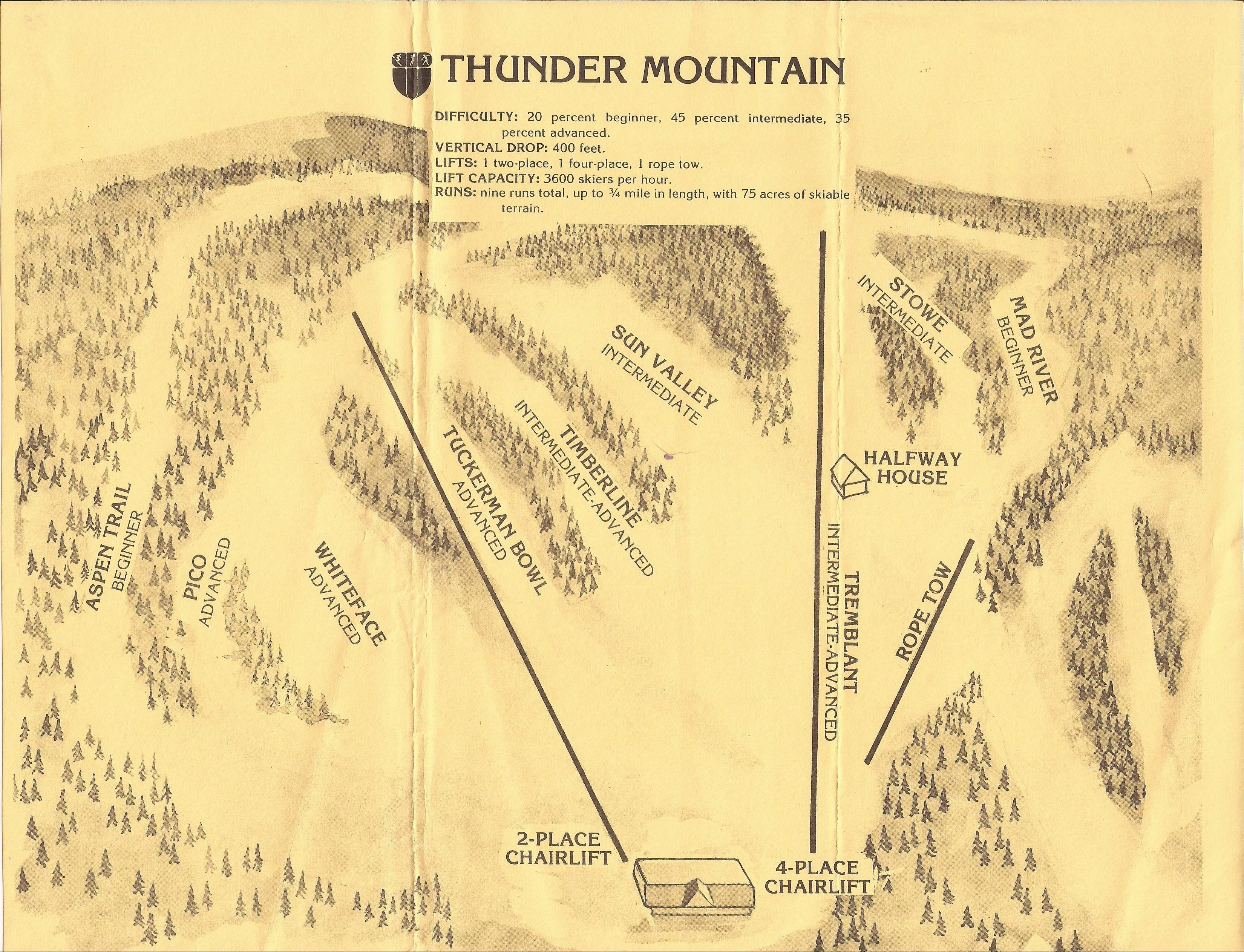
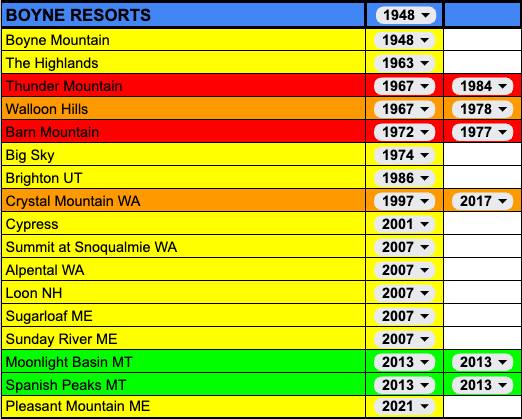
The responsible party here was nearby Boyne, which bought both Walloon and Thunder in 1967. They closed the latter in 1984:
The company now known as Boyne Resorts purchased a total of four Michigan ski areas after Everett Kircher founded Boyne Mountain in 1948, starting with The Highlands in 1963. That ski area remains open, but Boyne also owned the 436-vertical foot ski area alternately known as “Barn Mountain” and “Avalanche Peak” from 1972 to ’77. I can’t find a trailmap of this one, but here’s Boyne’s consolidation history:
On Nub’s Nob and The Highlands
When I say that Nub’s Nob and Boyne’s Highlands ski area are right across the street from each other, I mean they really are:
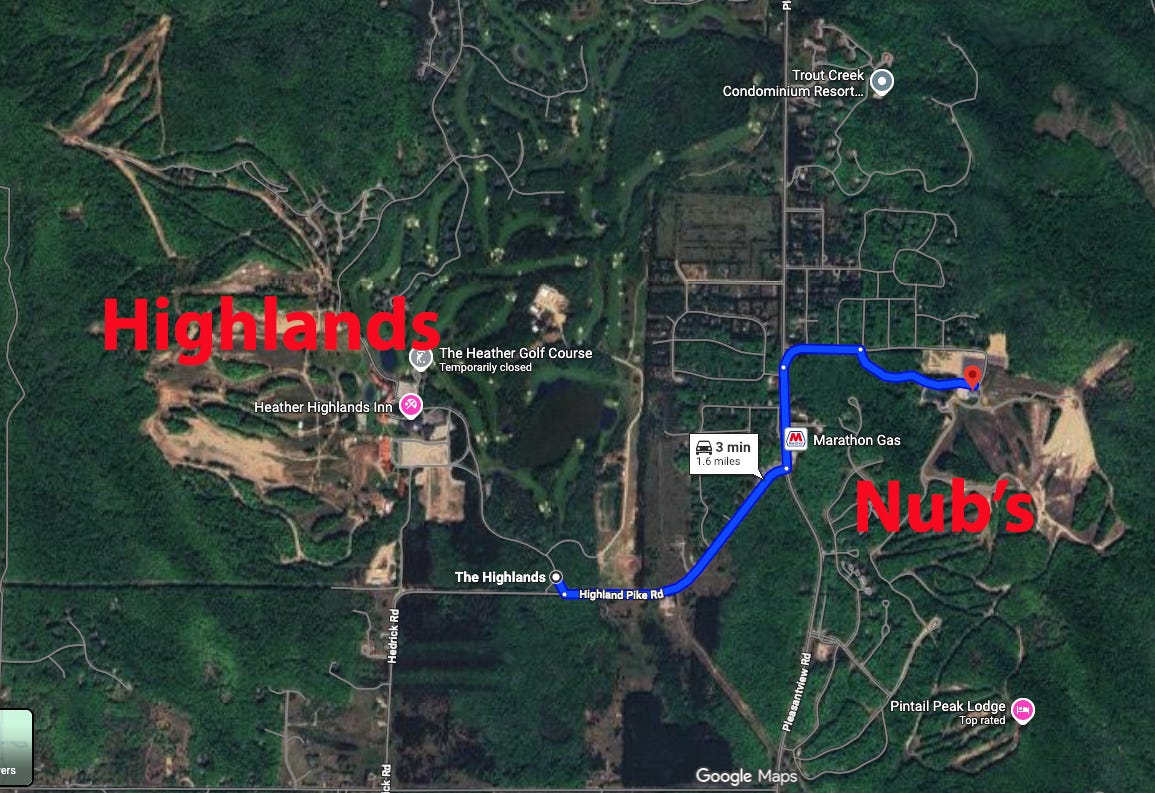
Both are excellent ski areas - two of the best in the entire Midwest.
On Granite Peak’s evolution under Midwest Family Ski Resorts
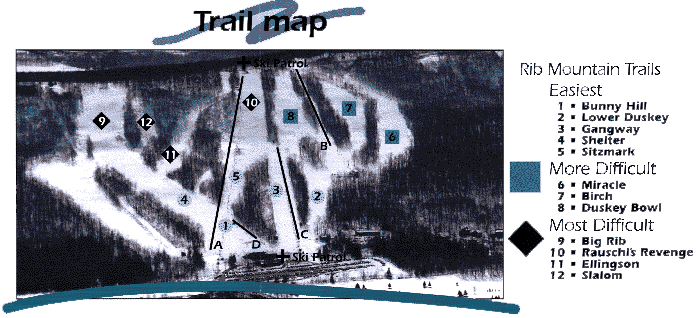
I’ve written about this a lot, but check out Granite Peak AKA “Rib Mountain” before the company now known as Midwest Family Ski Resorts purchased it in 2000:
And today:
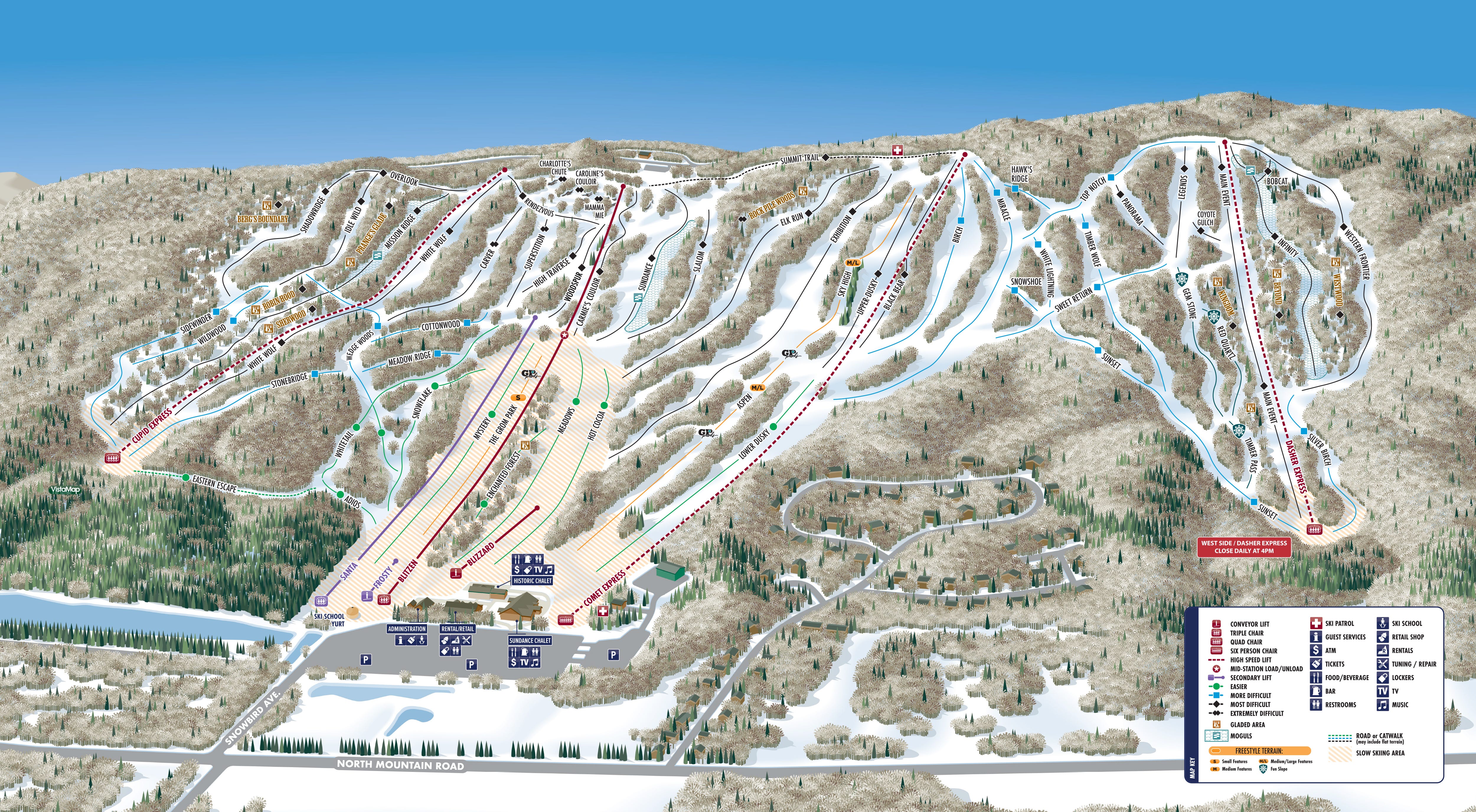
And it’s just like “what you’re allowed to do that?”
On up-and-over chairlifts
Bohemia may replace its double chair with a rare up-and-over machine, which would extend along the current line to the summit, and then continue to the bottom of Haunted Valley, effectively functioning as two chairlifts. Lonie explains the logic in the podcast, but if he succeeds here, this would be the first new up-and-over lift built in the United States since Stevens Pass’ Double Diamond-Southern Cross machine in 1987. I’m only aware of four other such machines in America, all of them in the Midwest:
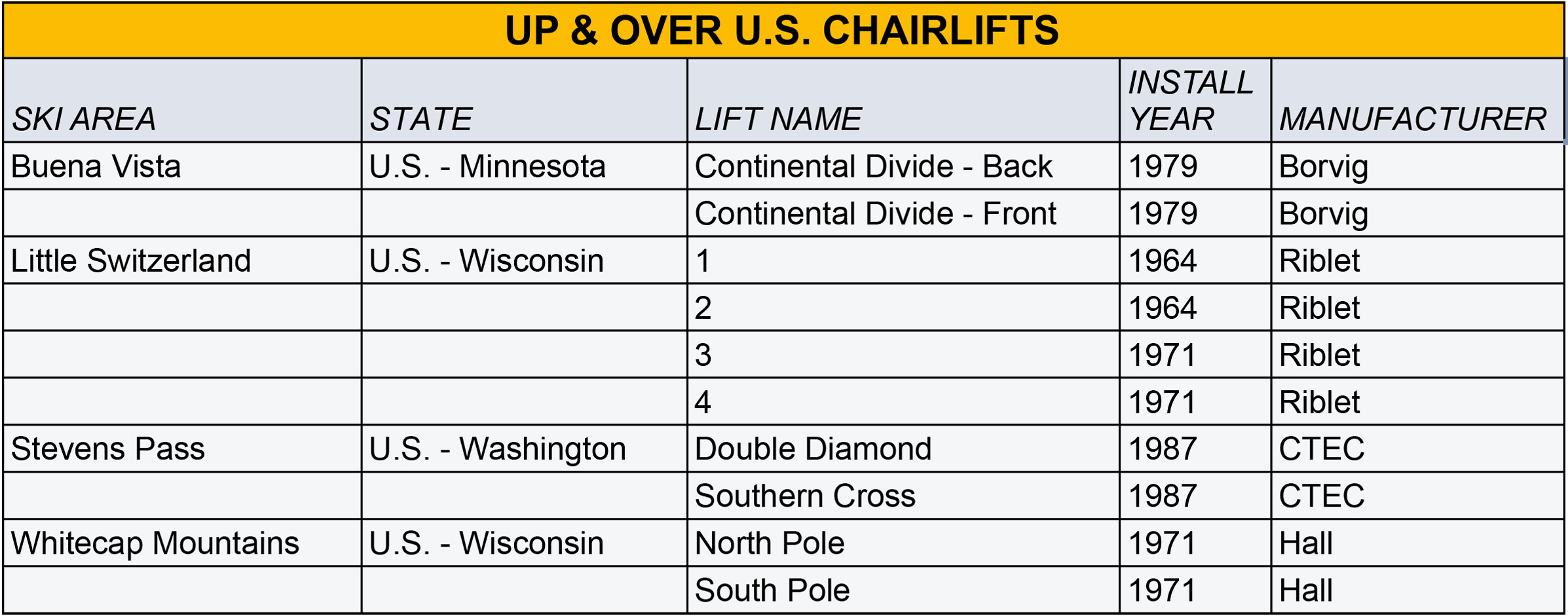
Little Switzerland recently revealed plans to replace the machine that makes up the 1 and 2 chairlifts with two separate quads next year.
On Boho’s Nordic Spa
I never thought hot tubs and parties and happiness were controversial. Then along came social media. And it turns out that when a ski area that primarily markets itself as a refuge for hardcore skiers also builds a base-area zone for these skiers to sink into another sort of indulgence at day’s end and then promotes these features, it make Angry Ski Bro VERY ANGRY.
For most of human existence we had incentives to prevent ostentatious attention-seeking whining about peripheral things that had no actual impact on your life, and that incentive was Not Wanting To Get Your Ass Kicked. But some people interpreted the distance and anonymity of the internet as a permission slip to become the worst versions of themselves. And so we have a dedicated corps of morons trolling Boho’s socials with chest-thumping proclamations of #RealSkierness that rage against the $18 Nordic Spa fee taped onto each Boho $99 or $112 season pass.
But when you go to Boho, what you see is this:
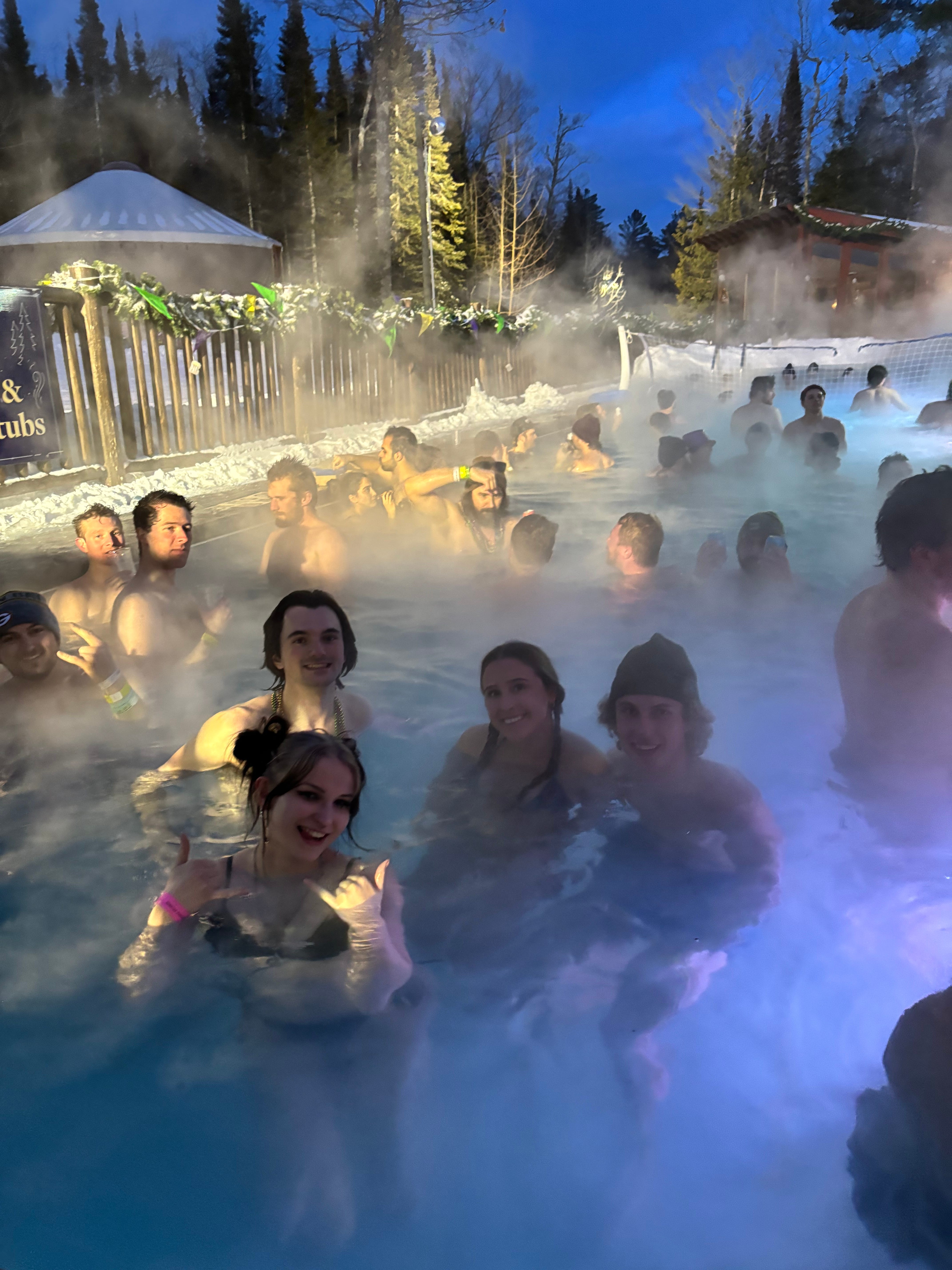
And these people do not look angry. Because they are doing something fun and cool. Which is one more reason that I stopped reading social media comments several years ago and decided to base reality on living in it rather than observing it through my Pet Rectangle.
On the Mad River Glen Co-Op and Betsy Pratt
So far, the only successful U.S. ski area co-op is Mad River Glen, Vermont. Longtime owner Betsy Pratt orchestrated the transformation in 1995. She passed away in 2023 at age 95, giving her lots of years to watch the model endure. Black Mountain, New Hampshire, is in the midst of a similar transformation.

On Mount Bohemia TV
Boho is a strange, strange universe. Nothing better distills the mountain’s essence than Mount Bohemia TV – I mean that in the literal sense, in that each episode immerses you in this peculiar world, but also in an accidental quirk of its execution. Because the video staff keeps, in Lonie’s words, “losing the password,” Mount Bohemia has at least four official YouTube channels, each of which hosts different episodes of Mount Bohemia TV.
Here’s episodes 1, 2, and 3:


And 21 and 22:

If anyone knows how to sort this out, I’m sure they’d appreciate the assist.


