


The Storm once again partnered with the Slopes ski tracker app to document my 2025-26 ski season. Click here for a free premium day pass for next winter.
There are only two reasons why anyone would attempt to visit every ski area in Ohio. The first is that they live in Ohio. The second is that there is something wrong with them. This is not because Ohio’s five public ski areas are remote or run-down. Most sit directly off an interstate, offer parking within 100 feet of the ski runs, and are served by modern-enough lifts, snowmaking, and grooming. But Ohio is a state you pass through, not one you go to on purpose. Unless your destination is The Horseshoe, where the Columbus Buckeyes (as their fans universally refer to them) play their home football games. But if you’re a visiting fan, the Shoe is less a destination than a gameshow-style survival mission. There’s a reason that this guy, who looks like a Mad Max extra who suffered an onset concussion and never re-joined our collective reality, is television’s favorite Buckeye mascot:

There is probably no telling this dude that it is not in fact a law that the loser of the Michigan-Ohio State football game be drawn and quartered by motorbikes driving in opposite directions.
Then again Michigan has this guy:
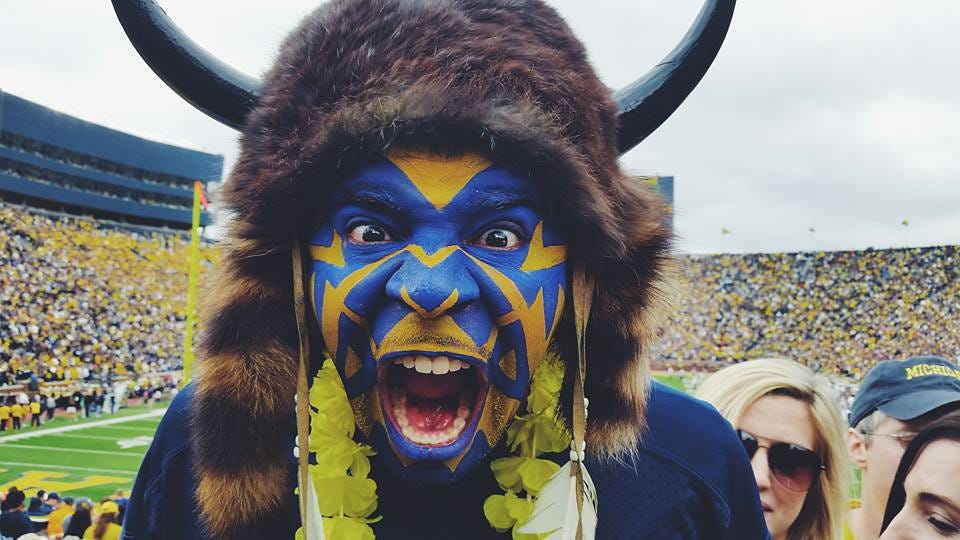
But that’s just Terrance. And Terrance is a friend of mine.
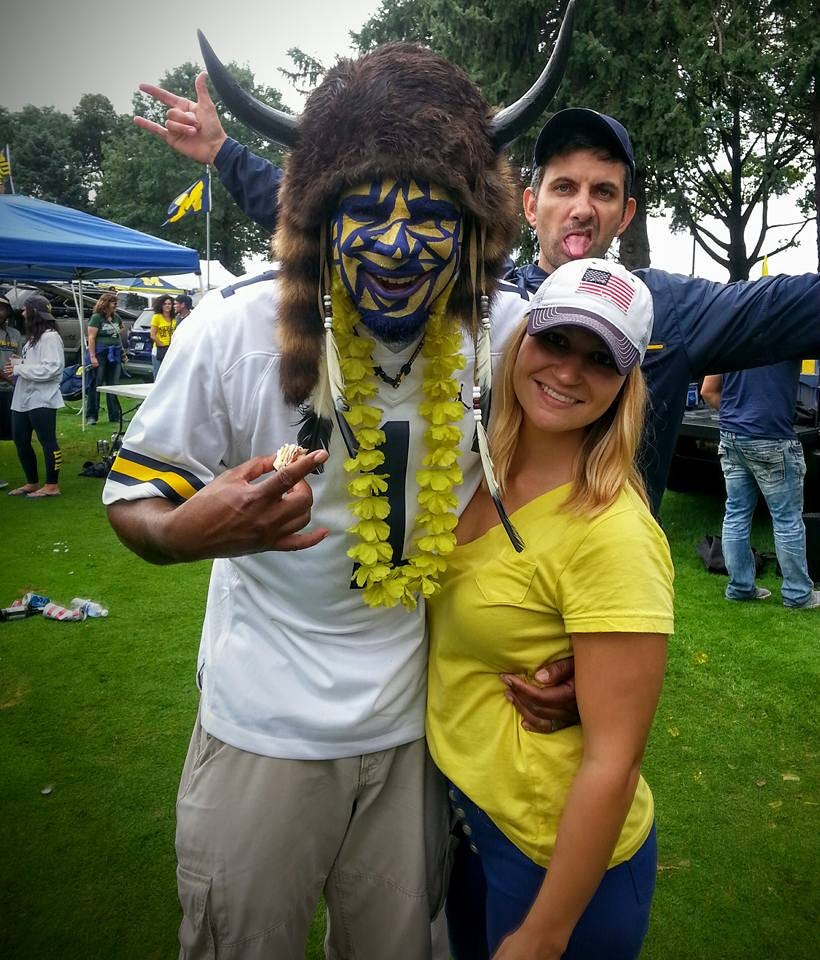
Which is another way of saying I’m from Michigan. Or at least, I grew up there. Which is most of the context you need for the Reliable Narrator portion of this story.
Speaking of football, analysts often praise a quarterback’s knack for “taking what the defense gives them.” Meaning: don’t insist on throwing 50 yards to your double-covered receiver when you can just hand off to Stumpy for a guaranteed four-yard gain.
And skiing is like that too: sometimes, you have to take what the winter gives you. And sometimes winter gives you 2022-23, when the daily snow reports out of Utah and California resembled an AI that confused inches with centimeters and had mistranslated the Ice Age movies as contemporary news reports. It snowed 903 inches at Alta that winter and Mammoth closed in August not because it ran out of snow, but because at some point the mountain had to prep for the next winter. But sometimes winter gives us 2025-26, when blizzards paint the eastern half of the continent white while the Mountain West wonders if this El Nino fellow mis-read the calendar.
I was supposed to go west in December and I cancelled it and I was supposed to go west in January and I cancelled that too. And instead I went to a place where generational snowfalls had churned up the best ski conditions in decades and single-digit temps had kept the snow nice. It was a place that I had passed through hundreds of times but had never skied. And that place, (believe it or not, Terrance), was Ohio.
DAY 16 - SNOW TRAILS, BOSTON MILLS, BRANDYWINE
Snow Trails – Ohio’s independent outpost
To reach Snow Trails, exit Interstate 71 and hang a left at the Wal-Mart. Then drive a mile and a half into the 1930s and you’re there.
Snow Trails is the only public ski area in Ohio that is not owned by Vail Resorts. How that happened I don’t know. Actually I do know. Peak Resorts purchased Mad River in 2001, Boston Mills and Brandywine in 2002, and Alpine Valley in 2012. Then Vail bought all of Peak in 2019. And what was once a state of family-run ski areas is now a state of one family-run ski area plus Vail. “Vail took over Mad River, so I only come here,” one woman said when I asked if she’d ever been to Mad River, metro Columbus’ other ski area. And this is what Vail is up against when it comes to public sentiment in Ohio.


They are also up against good operators. The Crislip family has operated Snow Trails since its 1961 founding. That story occupied a good portion of this 2022 podcast:

Snow Trails is not much of a mountain, but it’s a hell of a ski area, packing an unbelievable amount of variety onto 80 acres: six chairlifts, two carpets, and at least four terrain parks, one of which is served by a modern upper-mountain Sunkid ropetow. I rode this one time and cannot understand how Snow Trails park kids still possess functioning rotator cuffs.
Boston Mills - names are hard
I understand that a ski area parked next to an Ohio interstate may, for purposes of marketing and self-esteem, mine the far reaches of Planet Ski in search of a worthy name. Little Switzerland, Wisconsin and Afton Alps, Minnesota both present as playful, self-aware urban ski-hives nodding toward their aspirational mountain gods across the ocean. And I get that Boston - wealthy, cold, swarthy, iron-skinned Boston - is one of North America’s great ski markets, which, along with New York metro, supports the bulk of New England’s enormous ski industry. But to most of the world, Boston is about as synonymous with skiing as it is with bullfighting. Which is to say not at all.
It’s not Vail’s fault that the hill’s name is stupid, but if they’re looking for something with more contemporary ties to the region than a town demolished decades ago to expand Cuyahoga Valley National Park, how about “Cleveland Mills?” Or better yet, “King James’ Kingdom?” They could theme it like the old King Ridge ski area in New Hampshire:
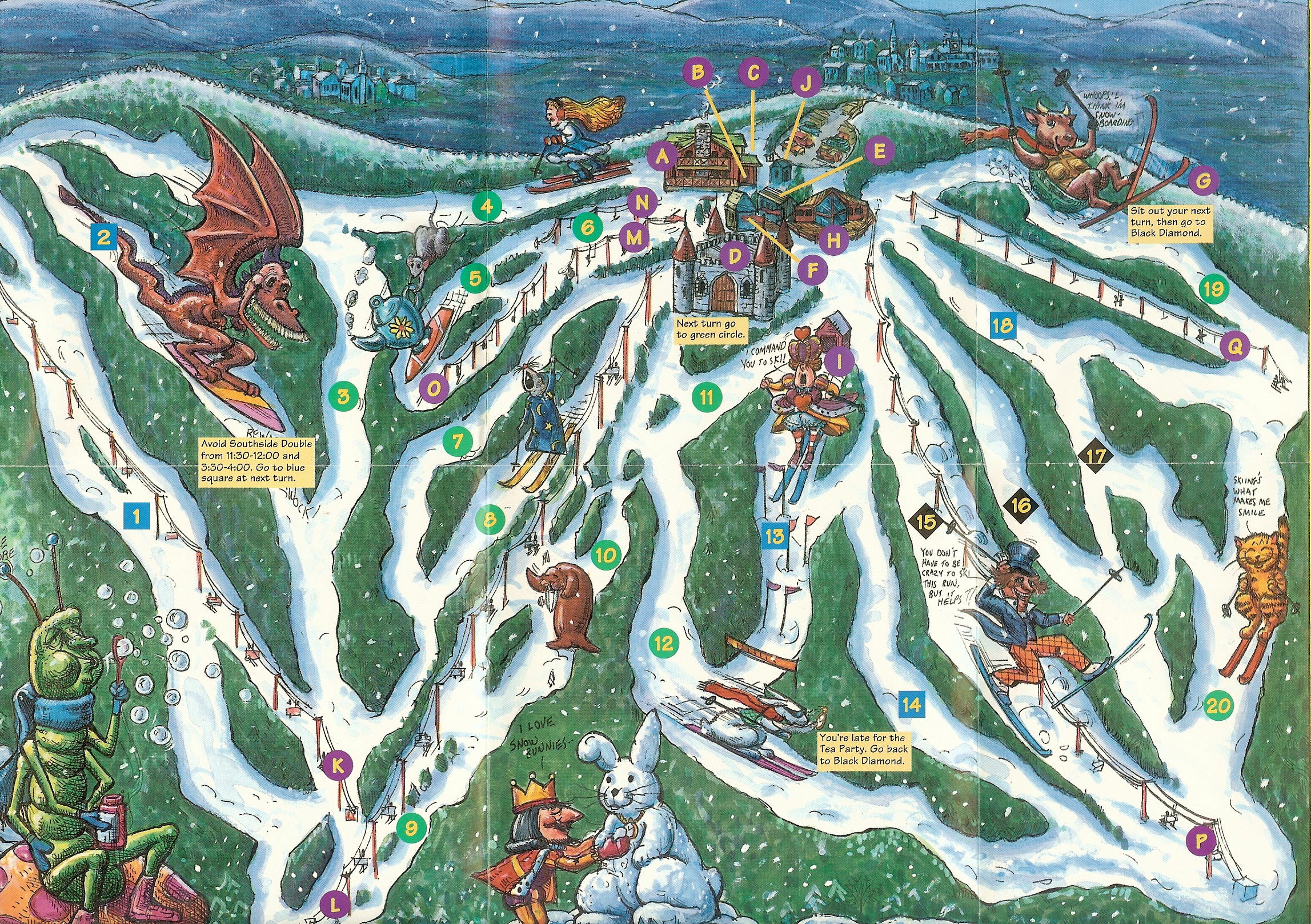
Though I’m not sure if the NBA’s all-time leading scorer would be interested in lending his name to a 230-vertical-foot, 40-acre bump. You may be able to get LeBron’s attention with Big Sky, but from just about any point on Boston Mills, you can see just about all of the rest of the ski area:
This makes it difficult to shutter terrain. And because it had snowed two feet, everything in sight was skiable. And Boston Mills’ mountain ops team, accustomed to offering skiing only where they can make snow, didn’t bother roping anything off. Joyous kids stacked themselves like mountain goats on every knoll and side-hill and blazed novel-if-somewhat-useless forest paths and no one stopped them.
The skiing was intense, short, varied, and delightful. A mix of bump fields and beginner meadows and terrain parks and big heaving snowpiles that doubled as impromptu jumps. School appeared to have been deemed irrelevant and the hill swarmed. I wish Vail would have responded to this unusual volume by opening an extra chairlift. Or at least by repurposing a scanny-gun employee to encourage more than one skier at a time to ride the quad, as anyone under the age of 30 has some sort of allergy to sharing the lift with a stranger (this is true at all Midwest ski areas). Anyway I skied the kids’ dumb little backside run just for fun:
Brandywine - at least it evokes a good buzz
Brandywine is about a five-minute drive from Boston Mills, and the two have been co-owned for decades, and maybe forever. In summer or fall 2022 I’d stopped through both ski areas to inspect the two new fixed-grip Skytrac quads – one at each ski area - that Vail Resorts was installing as part of its Eptacular Lift Upgrade.


They were beautiful new machines, but I was skeptical about their potential impact. What good would one modern lift do for small ski areas that already ran half a dozen lifts each?
I’m not sure about Boston Mills, where the Buena Vista quad replaced a double chair and the old lift 4 rises condemned-looking in parallel (VR reps tell me Boston Mills’ Lift 4 is certified and operational), and the other chair on that side of the ski area sat idle. But the upgrade’s impact was clear at Brandywine, where the Ram quad runs beside an amazing double quad, showcasing the lifts’ speed differential. A video I shot from Ram, with the double quad spinning in the distance:
But Man what is cooler than a double-freaking quad:
The only other such machine I’ve encountered is at Swain, New York, though the looker’s right machine only ascends partway up that ski area:
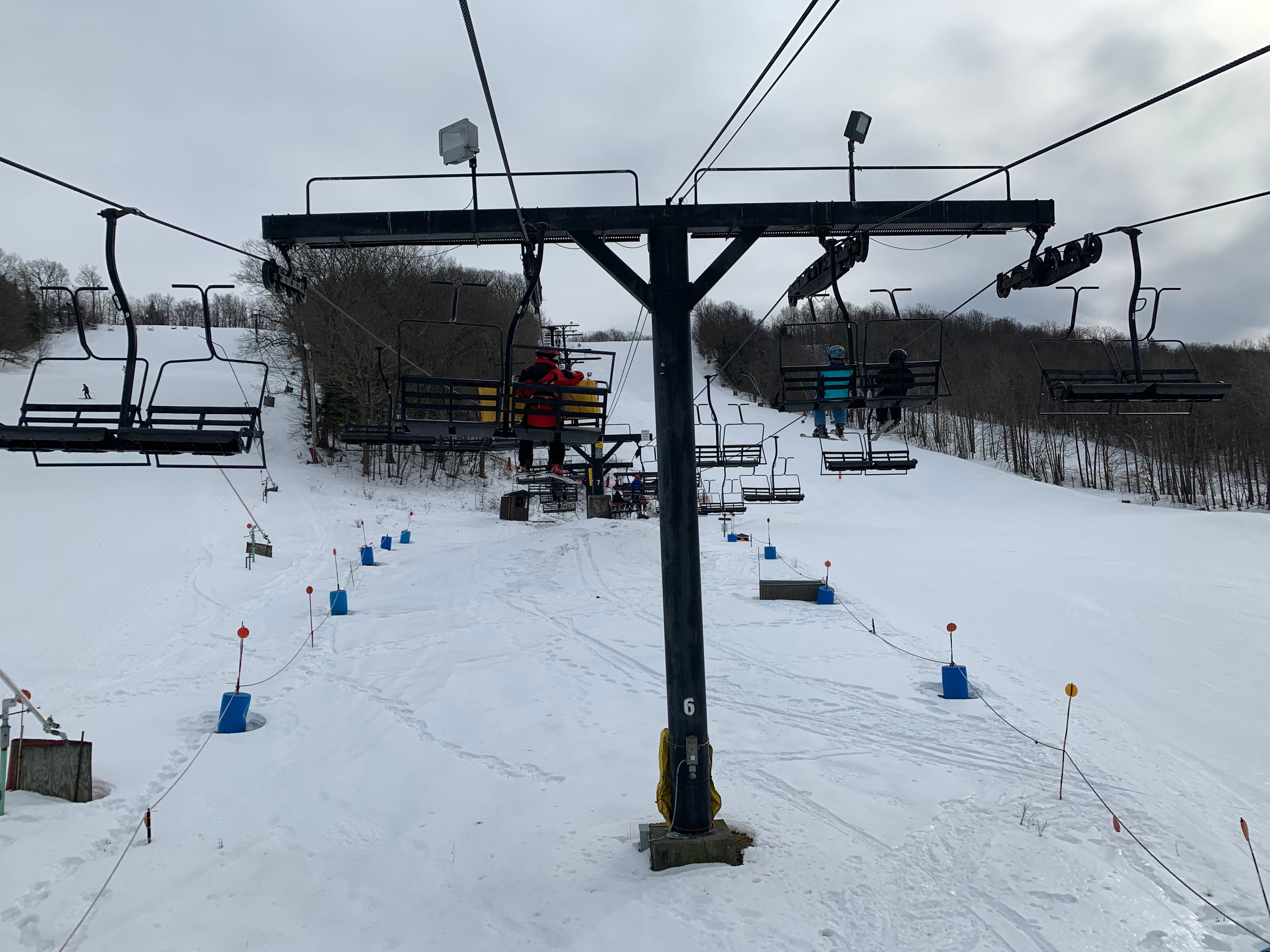
Brandywine is the RV of American ski areas, with incredible variety crammed onto a steep and narrow ridge: five chairlifts, a terrain park handletow, and one of the steeper carpets I’ve encountered. It’s one of America’s more unique terrain layouts, even if it looks kind of blah on this trailmap:
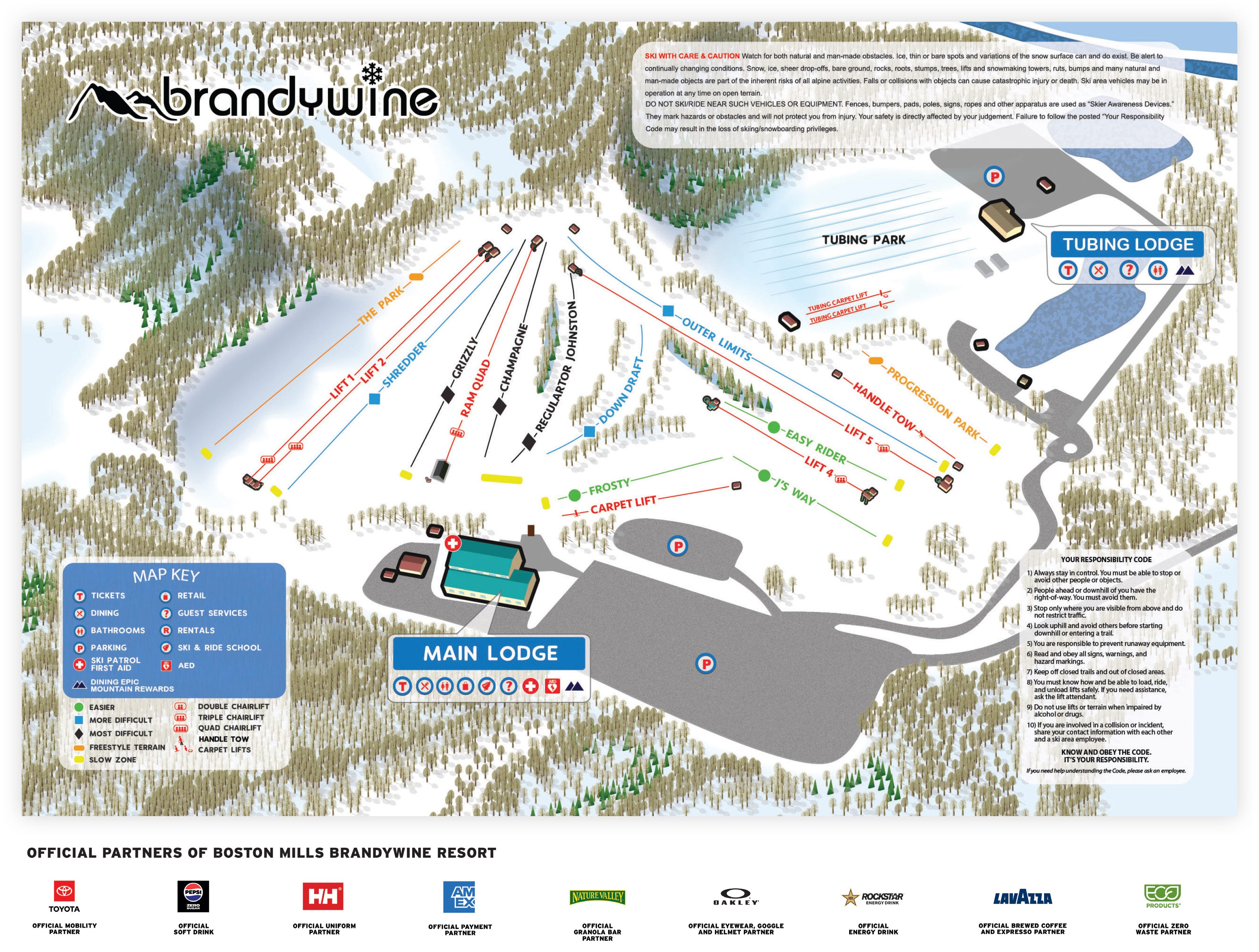


Like its sister ski area Boston Mills (the two share a website and are often classified as one ski area, though they sit a few miles apart), Brandywine is denuded, industrial, intentional. It’s what ski areas would look like had nature not bothered leaving us hills to ski down: steep and severe and relatively short, littered with terrain parks and ski lifts, with a topridge oriented for spectacular sunsets. It is also a testament to man’s industrial ingenuity and insistence on carving ski centers out of variable-weather zones in which no native ski culture exists.
A quirk at Brandywine: Lift 4, the beginner lift that runs short but quite high, still lacks safety bars, an unusual oversight for a Vail ski area. The company typically retrofits all of its chairlifts with safety bars, even in places like Ohio that do not require such features by law (all new lifts must follow ANSI standards, which require bars, but hundreds of older, bar-free machines have been grandfathered in across the Midwest and West). That Vail has owned this bump for going on seven years and still not gotten around to adding bars felt odd to me, and I asked company reps if there was something inherently challenging about this particular chair’s engineering or construction. The bars were, in fact, onsite, the rep told me. “Our intention is to have restraining bars installed across [this lift and Lift 4 at Boston Mills] for the 2026-27 season,” they wrote.


Both Boston Mills and Brandywine share an unusual moat aesthetic – the former supplied by a gate, the latter by an actual bridge-over-a-stream. This single point of entry makes it difficult to sneak onsite without a valid lift ticket, a strategy I’ve also seen deployed at Trollhaugen, Wisconsin, another urban-adjacent ski area catering to the teenage rule-bending crowd.
A Midwest anecdote before I get the hell off this frozen Midwest bump and find myself in a Chili’s drinking Miller Lite tallboys and eating a molten chocolate cake: I shared my first Brandywine chairlift ride with a purple-bedecked snowboarder. “Watch your head,” I said as I brought the bar down. She seemed shocked, a reaction that I first interpreted as indigence, but quickly translated as joy. “No one ever wants this,” she said. It would have been useless to explain that I lived in New York, where chairlift bars and chairlift bar usage were mandatory, and that I had driven to Ohio to ski on purpose and for no other purpose, importing my effete East Coast habits along with me. So instead she told me how much she liked Vail’s new chairlift and the sunsets off the ridge, and I skied off toward the slow double-quad, where the lift attendant told me I was the first rider of the day.
DAY 17 - MAD RIVER AND ALPINE VALLEY, OHIO
Mad River - the real Mad River ski area
For various reasons, Peak Resorts ended up building a lot of baselodges. At Crotched this was because they rebuilt the entire ski area after it spent two decades rotting in the woods. At Alpine Valley, Ohio, it was because one day the whole lodge just collapsed. At Mad River, it was a fire that chewed up the legacy structure – which I discussed with former Mad River GM Tom Price, current GM at Timberline, West Virginia, when he joined me on the pod in 2023. (Someone on the lift at BM had described the lodge as “industrial” and that was correct – it reminded me of the lodge at Crotched, New Hampshire, which Peak also built, and I wondered if there was some sort of industrial design aesthetic at work within the company.)


The skiing at Mad River is a lot like the skiing at Snow Trails – both ski areas present almost identically: 300-foot vertical drops, a disorienting number of chairlifts strung side-by-side along a broad face, excellent grooming, large sections of the mountain devoted to terrain parks of various sizes, small gladed areas. The differences are more operational than atmospheric: Mad River staffed by Vail’s blue-jacket scanny folks, the 20th-century lift fleet updated with safety bars, one chairlift spinning rather than Snow Trails’ three. That latter reality was too bad, as the one terrain pod inaccessible via the summit quad is a 2006 expansion installed by Peak and serviced by the Mines Peak triple from the defunct Berthoud Pass ski area in Colorado. I’ll leave it to you to decide if life serving an Ohio buttercup is an ignominious end for a chairlift that once sat atop the Rocky Mountains, or a symbol of skiing’s resilience and an apt way to honor a fallen domain.
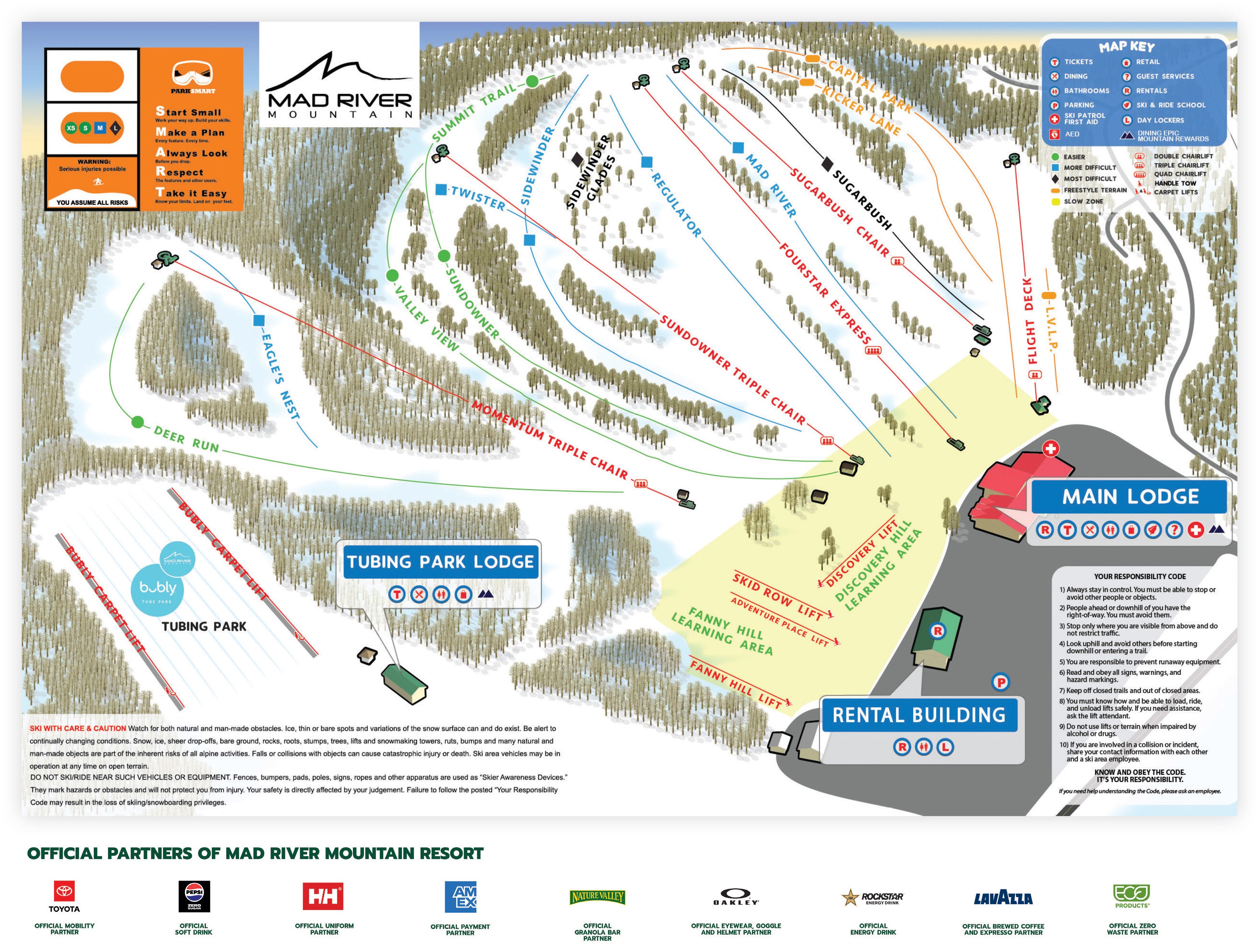
Both Snow Trails and Mad River shared an unexpected trait: a competent skier corps. Good skiers – a mix of over-60 retiree carvers and under-25 student park-lappers – far outnumbered fumblers. Every ski area is home to great skiers, but generally the overall student body’s skier rating drops in direct proportion to the bump’s distance from the nearest large metro, especially in the Northeast, Mid-Atlantic, and Midwest. Meaning: closer to a city = more beginners. But I suppose it is the hardcore and most-prepared that beeline for spinning chairlifts in single-digit weather, especially on weekdays.
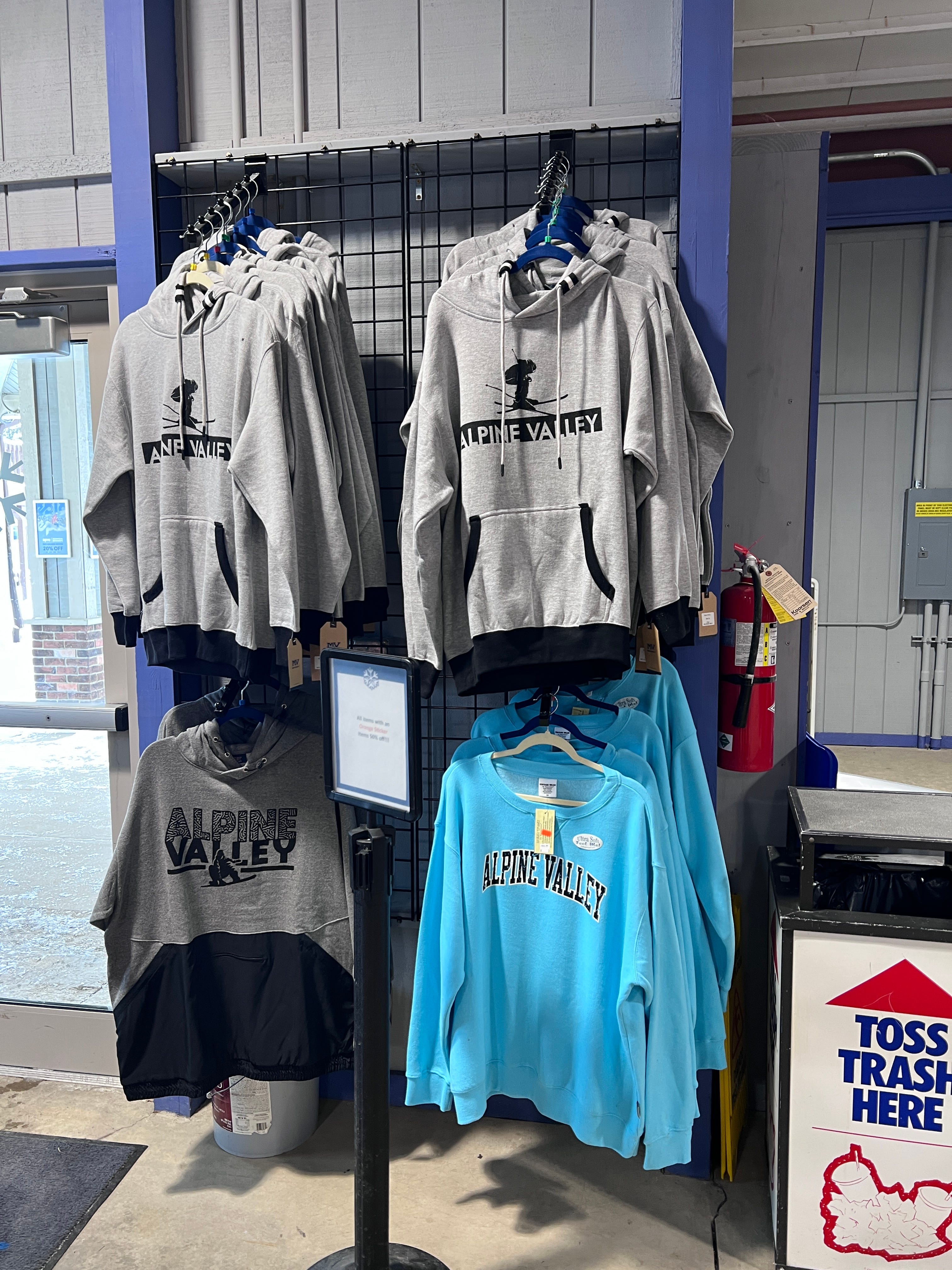
One additional tidbit that I learned at Mad River: folks working at Vail’s regional ski areas design the merch sold in their onsite stores. I had assumed - I guess cynically but not really on purpose - that all designs spun from some Epic Merchandise and Branding team in Broomfield. But both Mad River Resort Operations Manager Brian Onofrio and Alpine Valley Resort Operations Manager Chuck Shultz told me that they had designed the hoodies, hats, and other merch hung in the baselodge shops.
EDITOR’S NOTE: I have been informed by numerous parties that the article I published last month on my visit to Mad River was erroneous, that I had mistaken two completely different ski areas in two different states for the same ski area simply because they share a similar name, that I ought to be ashamed of myself for denigrating a cathedral of American and New England skiing. And so I have to admit a gigantic flaw in my article: I failed to mention THE VAST CONSPIRACY propping up the mirage of “Mad River Glen” in “Vermont.” Nice try, Suckers. But unlike you idiots, I actually did my reeserch and visited the place in person. So eat this Factburger for breakfast:

ALPINE VALLEY, OHIO – The #Realest Alpine Valley
Skiers driving up to towering Cascades bomber Alpental dead-end at a covered bridge. You walk over. It’s an appropriate arrival experience for what may be America’s greatest small ski area:
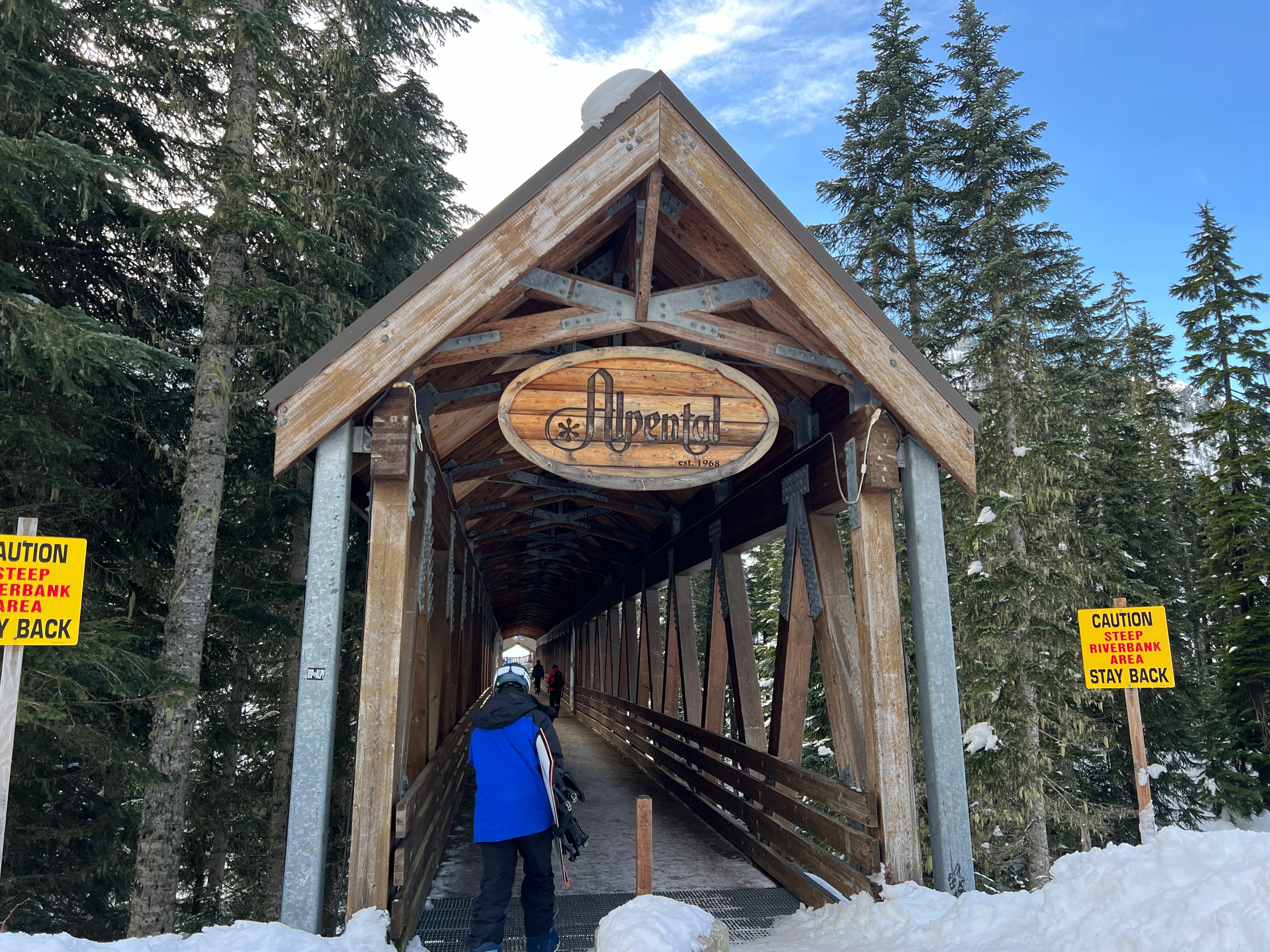
So when I arrived at Alpine Valley, Ohio in the snowy dusk and encountered a similar covered bridge, with a double chair shooting skyward from the far side, I deferentially parked the minivan and began booting up for the walk across:
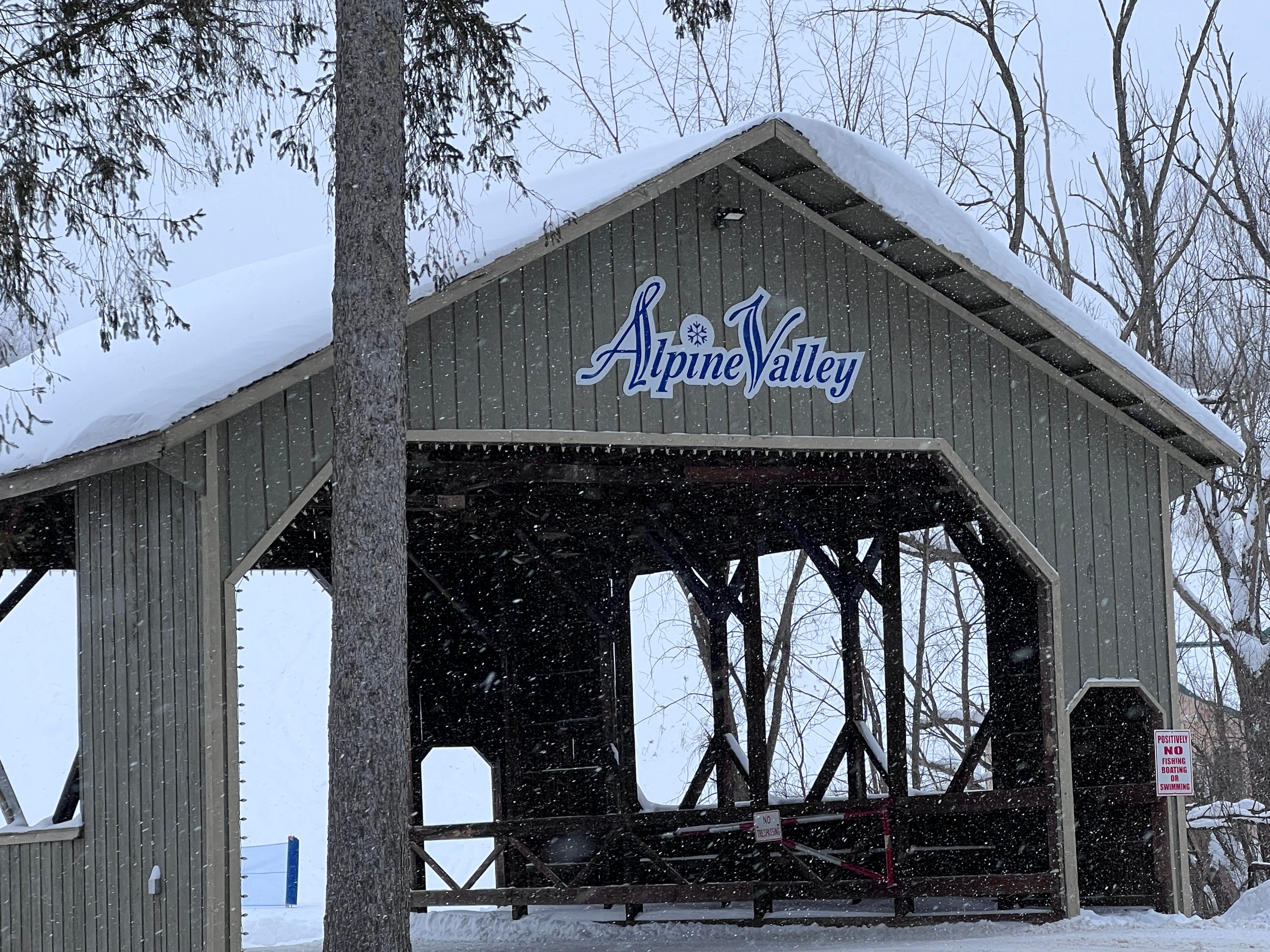
And about 30 seconds later, a civilian SUV sped across the bridge. Followed by another and several more. And this was my first indication that Alpine Valley was not in fact the Alpental of Ohio.
It is, rather, the Buttermilk of Ohio: broad, gentle, uncrowded runs. It is quite beautiful:


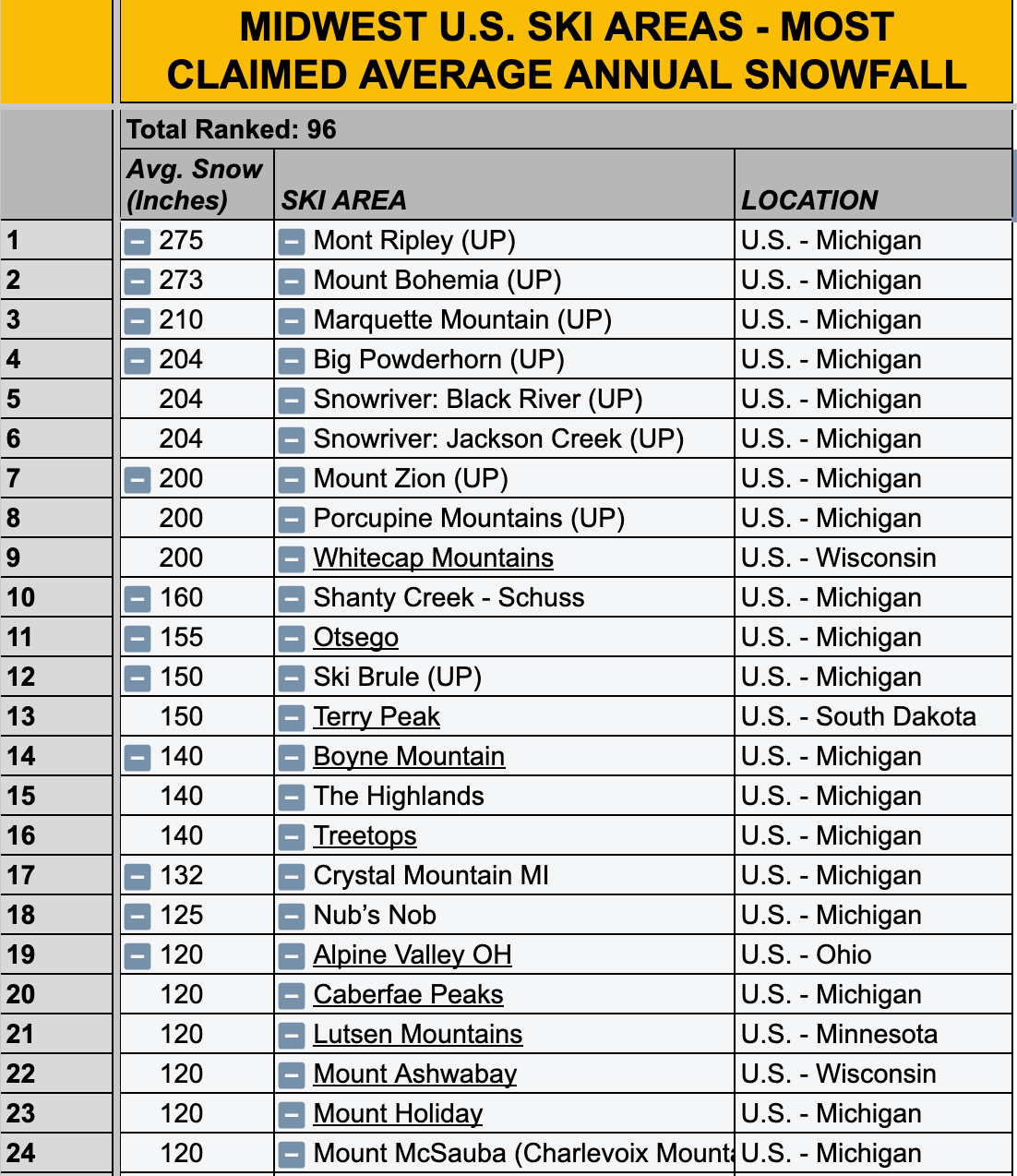
One reason for that beauty: Alpine Valley, to stick with the Washington State comparisons, is the Mount Baker of Ohio. Meaning it’s the state’s snowiest ski area, and not by a little bit. Because of its position in the Lake Erie lake-effect bullseye, Alpine Valley hauls in around 120 inches of snowfall in an average season, more than double any other ski area in the state. This microdot is, in fact, one of the snowiest ski areas in the entire Midwest, and the only non-Michigan resort in the top 20 outside of not-really-in-the-Midwest-because-it’s-practically-in-Wyoming-and-has-a-5,900-foot-base Terry Peak, South Dakota:
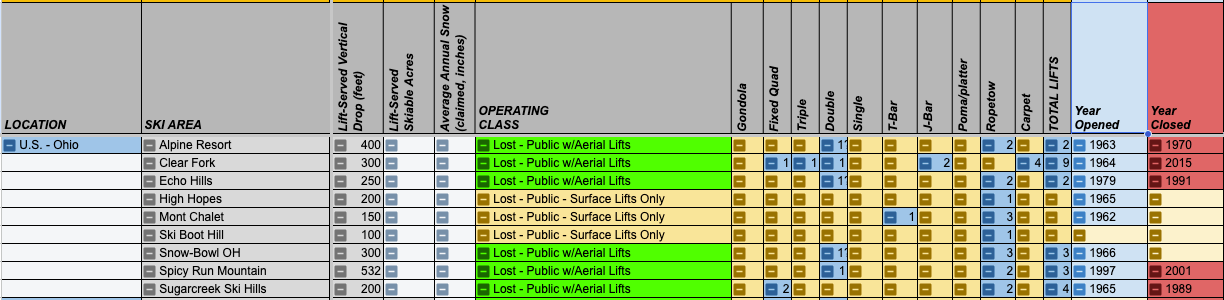
This snowbelt location no doubt helped Alpine Valley weather the great ski-area weedout that shuttered at least half a dozen chairlift-served ski areas across Ohio over the decades:
What really probably helped it along, however, was Peak Resorts’ 2012 purchase of the ski area, their fourth in Ohio. Here’s what the bump looked like before the Missouri-based operators arrived:
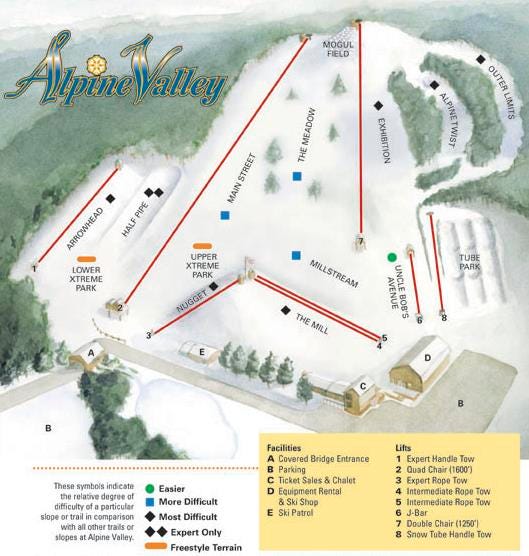
Shultz, who has worked at the ski area for decades, rattled off the sequence of improvements as we skied around: Peak had replaced the lower ropetows with the Sycamore Lake triple chair, installed a new base-to-summit Partek quad, demolished the increasingly unreliable summit double, converted the old Hall quad (Chair 2 above) to a triple, and dispensed with the expensive halfpipe:
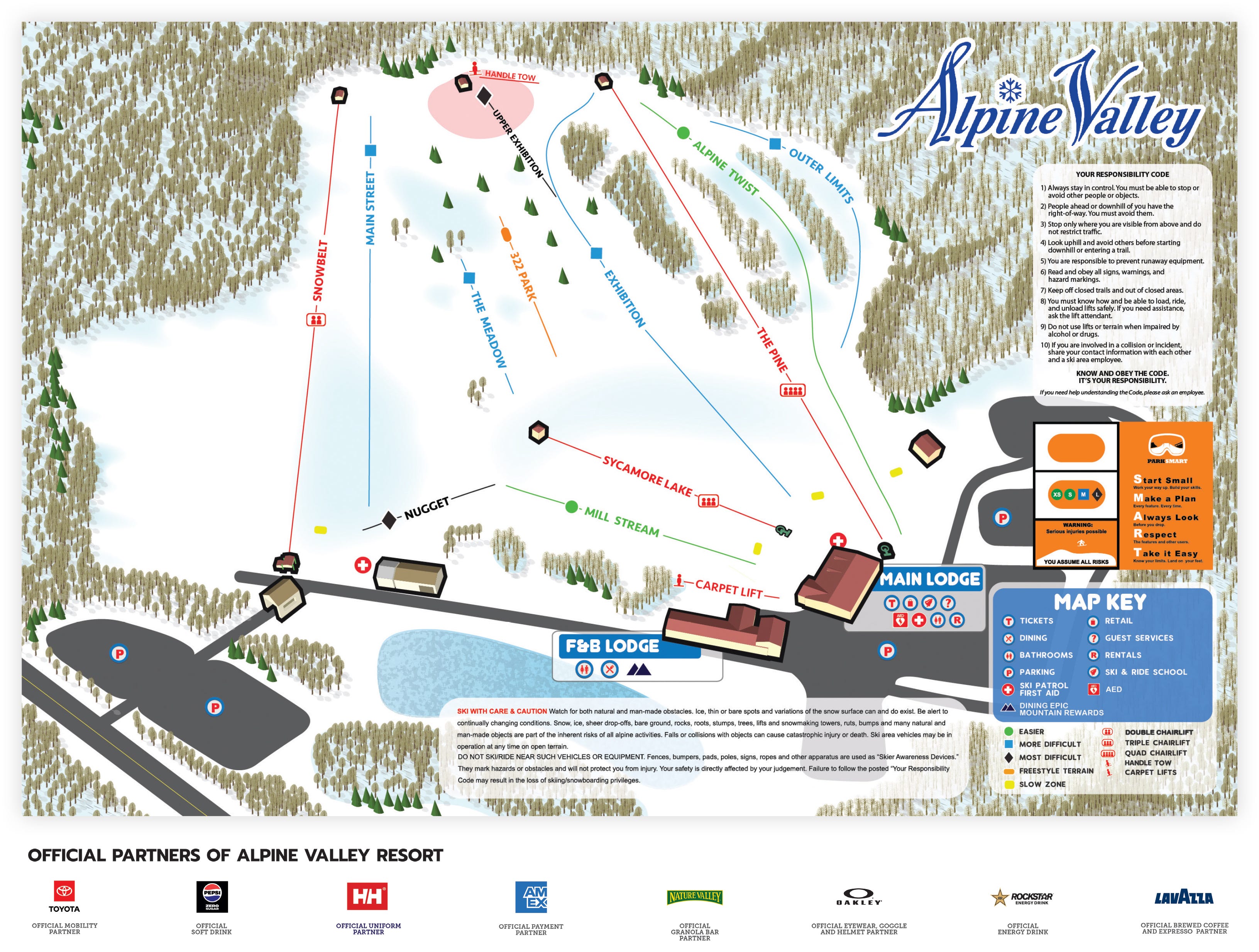
Then Vail Resorts nudged the bump further along, restoring summit access with an inexpensive handletow, converting Snowbelt from a triple to a double using discarded chairs from its Afton Alps resort, shuttering tubing to focus those operations at its nearby ski areas, and ramping up snowmaking. Future improvements, Shultz told me, could include a progression park on the old tubing site, where a carpet has remained intact, inspected, and functional.


I am not trying to brag, but I have now skied every Alpine Valley ski area in America. This one is not the best one from a pure ski point of view, but it is probably my favorite. Unlike the much larger Alpine Valley, Wisconsin, all of the lifts at Alpine Valley, Ohio have safety bars. Unlike Alpine Valley, Michigan, Alpine Valley, Ohio does not overlook a Meijer superstore. And unlike both of those Alpine Valleys, Alpine Valley, Ohio, actually gets real snow on more than an occasional basis. It’s also probably my favorite ski area in Ohio, because unlike the other four, Alpine Valley had nothing resembling a liftline. I realize most of you will never ski here or ever want to ski here, but if you have kids and live anywhere in this region, I can’t think of a better low-key spot to spend a few hours sliding around.
Good thing that you didn't tell the purple snowboarder that you had driven to Ohio to ski and only to ski, right after you trapped her pulling down the sissy bar. She would have started screaming in terror, knowing she was cornered by a madman, and tried to jump off to save herself. Or you could have mentioned you are a Michigan fan, with the same results. Except she would have tried to push you off the chair.
This was the nicest thing I have ever read about Ohio skiing.