


If you’re headed to Snowvana in Milwaukee this weekend, use code “thestorm26” to snatch a free ticket here.
Who
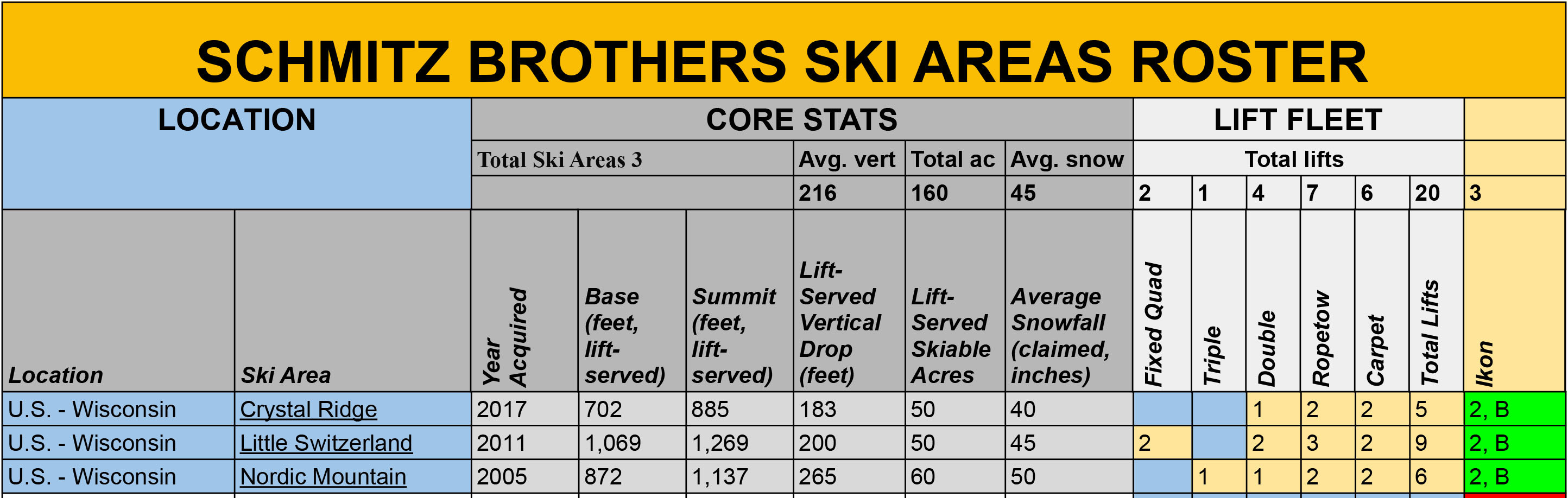
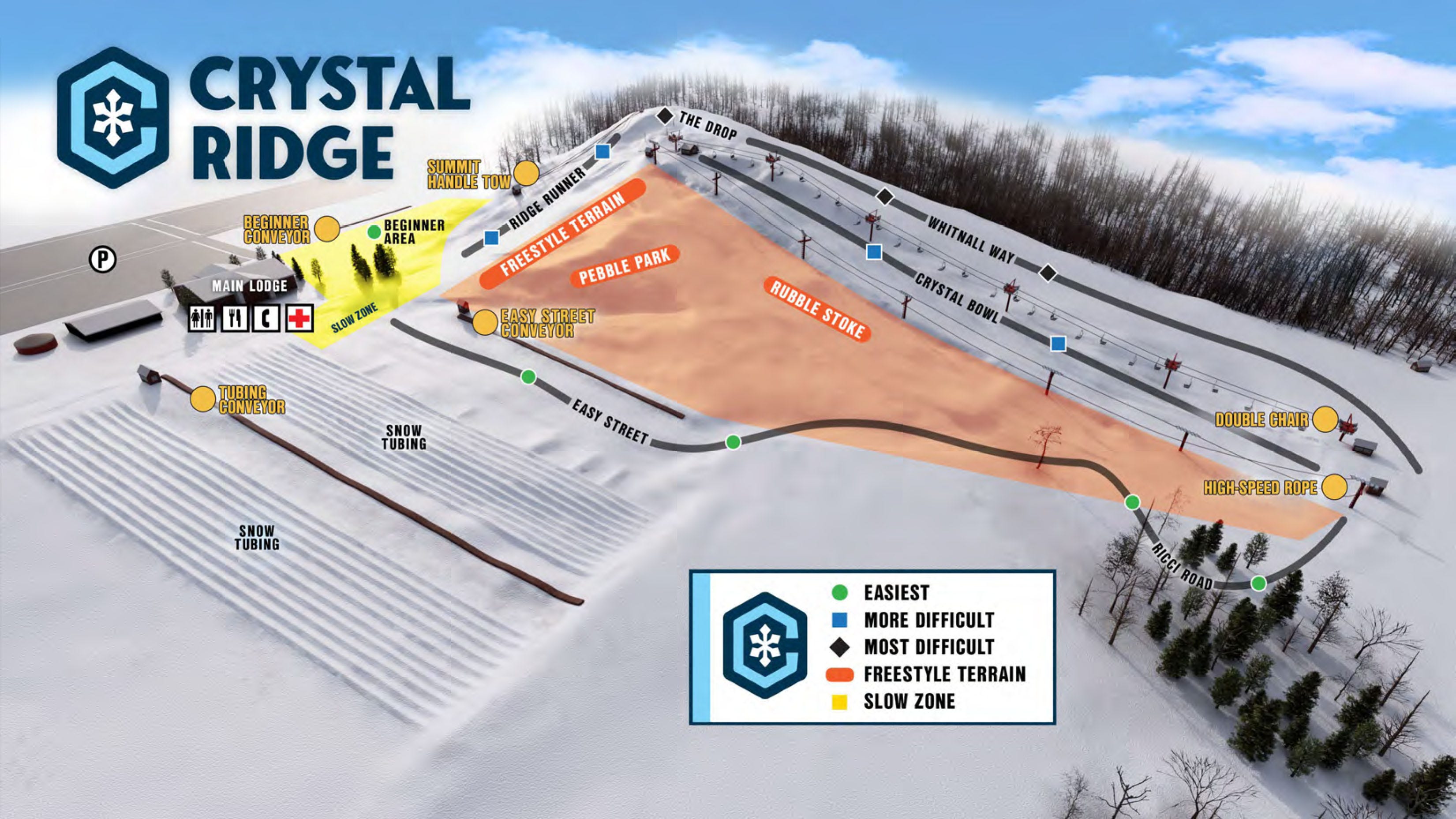
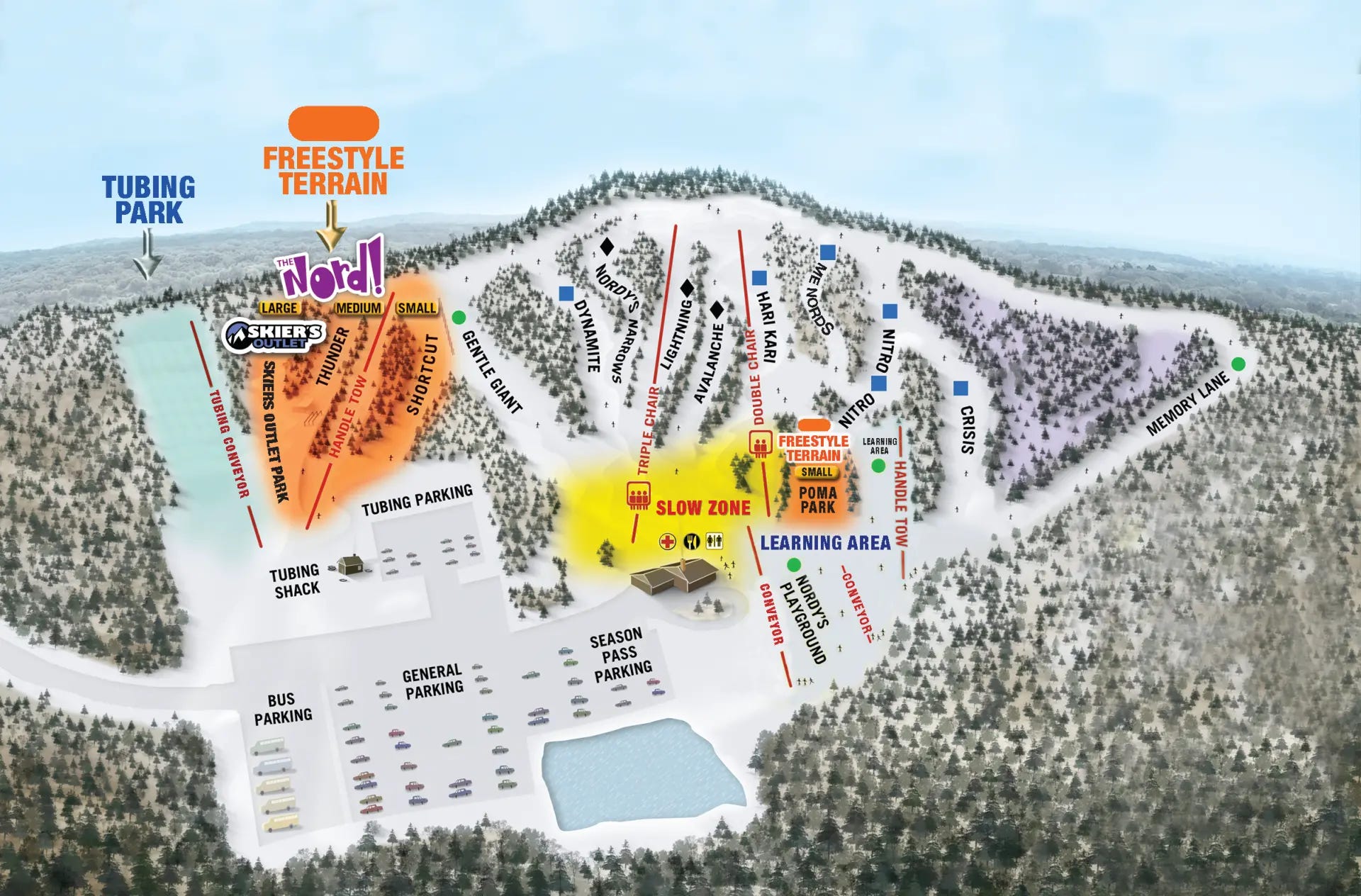
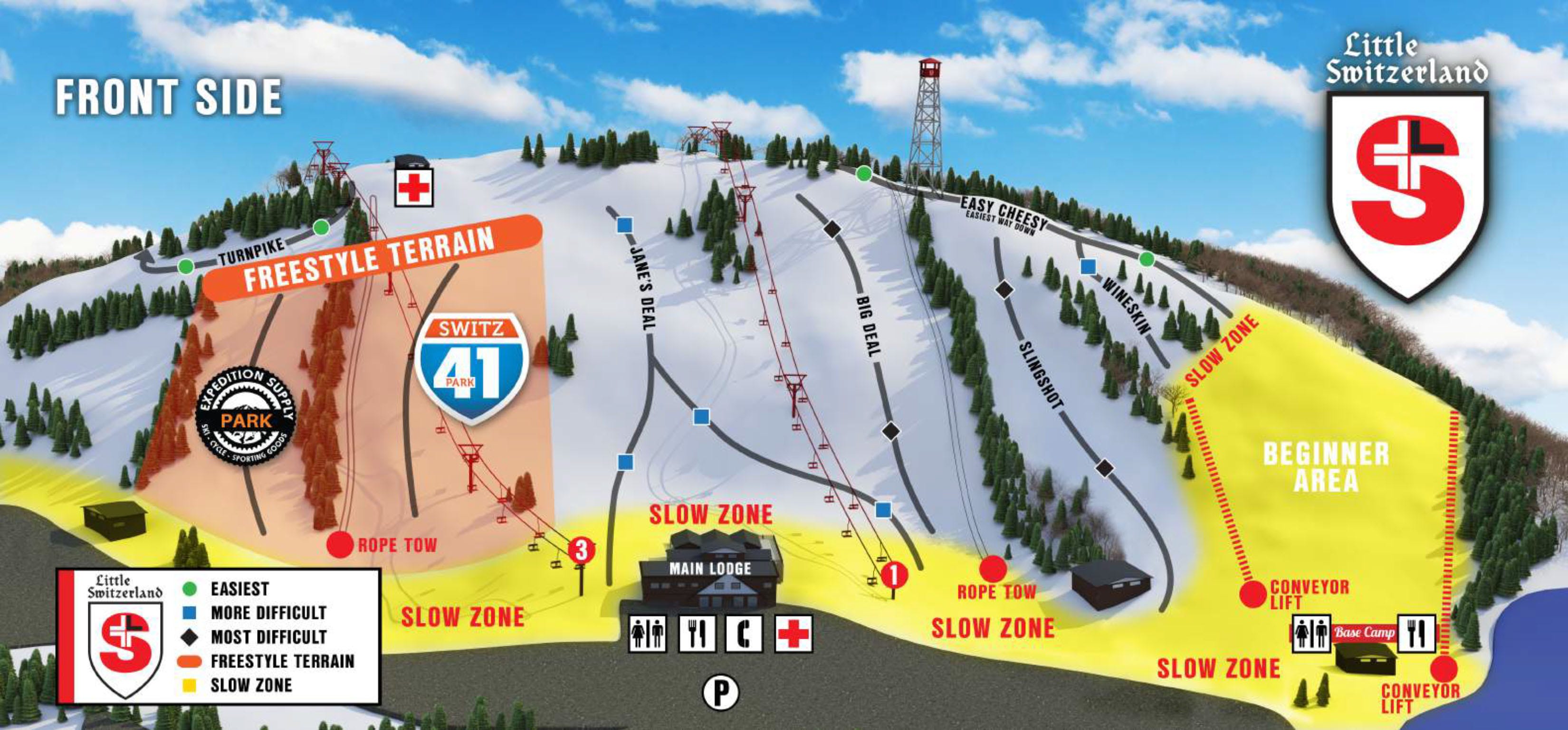
Rick Schmitz, Managing Partner of Schmitz Brothers, owners of three Wisconsin ski areas: Little Switzerland, Nordic Mountain, and Crystal Ridge
Date Recorded
Nov. 12, 2026
About Schmitz Brothers

Why I interviewed him
My 2022 interview with Schmitz remains one of my favorites. Here was a guy who, at age 22, bought a broken-down Nordic Mountain, Wisconsin, moved into the baselodge, and lived on around $20,000 per year while he stapled the place back together. A few years later, he and his brothers bought the overgrown and abandoned Little Switzerland ski area outside of Milwaukee, rebuilt the busted-ass fleet of antique Riblet doubles, gut-renovated the baselodge, and knitted together a modern snowmaking system. “You don’t hire someone to do something you can do yourself,” Schmitz told me.

It was one of many great quotes in a conversation full of them. “The better ski area isn’t always the better business,” Schmitz said to explain why he’d bought, but eventually sold, Blackjack ski area, a snow-blessed mountain in Michigan’s Upper Peninsula with nearly double the vert of his current ski areas. (Midwest Family Ski Resorts later purchased Blackjack, along with neighboring Indianhead, and renamed the complex “Snowriver.”) He explained why ropetows were superior to chairlifts for certain parts of the hill, why nothing was more important than snowmaking, and why if anything was more important than snowmaking, it was “location, location, location.”
Since Schmitz was obviously a thoughtful guy, I paid attention to everything he did. And his most recent move was a big one - earlier this week, his Wisconsin trio joined the Ikon Pass as two-day partners:

It was a big deal for three tiny ski areas that had all nearly failed before Team Schmitz’s arrival, and for a global pass that had just recently acknowledged its bad habit of overlooking both the Midwest and small mountains in general.
The Ikon announcement followed Schmitz’s decision, earlier this year, to exit the Indy Pass after seven seasons. It was a blow for a pass that had already lost regional anchors Lutsen, Granite Peak, and Snowriver to Ikon earlier in the year, denting Indy’s once seemingly impregnable Midwest network.
Meanwhile, Schmitz has continued to refurbish his mountains, yanking out Little Switzerland’s spectacular-but-aging 1964 up-and-over Riblet double and building two brand-new quads in its place. That’s a $4 million project - a number that ought to make anyone convinced of independent skiing’s inevitable decline reconsider their thesis. Failing businesses, after all, rarely signal that failure with big infrastructure investments.
If you’re still not convinced that pockets of Little Ski are doing just fine in the era of Big Ski and its so-called “Duopoly,” go there. Driving up to Little Switzerland last year, I was flabbergasted to think that the bump had ever been abandoned. The lodge rises palatial over a paved parking lot (a rare luxury in skiing). Lifts of all kinds shoot off in all directions. An amazing variety of trails serve racers, beginners, ramp-poppers, and cruisers. As schoolbuses emptied into the baselodge, Schmitz led me on his daily rounds. We skied every trail, rode every lift. Like so many Midwest ski areas, Switz presented small, skied big, and erased all cynicism one could harbor about Industrial Skiing Circa 2026. It doesn’t snow much in Slinger, Wisconsin, and the glaciers barely left a speedbump to slide down when it does. But there Switz goes, bumpity-bump in the winter night, lights a-shimmer, the streaking stick people conducting their kaleidoscopic song that echoes over the parking lots. It’s the sound people make when no other sound will do. The sound of freewheeling motion animate across a crowd. The sound of joy. The sound of skiing.


Transcripts
There are two transcripts. Both are generated by robots. Both are helpful and defective in their own unique ways. I do not proofread either of them.
Transcript 1: Click the “transcript” button at the top of this article. You can only see this transcript on a computer. Because I don’t know why exactly but everything is getting better and dumber all at once it seems. Anyway, this is the transcript that the robots create when I upload the podcast to the internet. The cool thing about it is that you can click on any block of text and the audio will teleport there instantly. The uncool thing about this transcript is that it does not indicate who is talking at any given moment.
Transcript 2: You can read this below. This is the transcript that Zoom creates as we record the podcast. The cool thing about this transcript is that it indicates who is talking at any given moment. The uncool thing about this transcript is that the timestamps do not match the audio. Also, you cannot click on this text to move to the associated point in the audio.
Zoom
The take up top - Hoedown Hill, Colorado to close after three seasons (and why it doesn’t really matter)
Stuart Winchester: Welcome to The Storm! I’m your host, Stuart Winchester. Today is Friday, November 13th, 2026.
01:24:07.000 --> 01:24:23.000
Stuart Winchester: Today on The Storm, one of the best operators in the Midwest explains to us why he left the Indy Pass for Icon and how a small ski area with barely 200 vertical feet can afford to buy two brand new quad chairs.
01:24:23.000 --> 01:24:37.000
Stuart Winchester: I also try to talk him into buying Snowstar, Illinois. Plus, unfortunately, another ski area shuts down. Maybe an opportunity for anyone who wants one of its four brand new conveyors.
01:24:37.000 --> 01:24:41.000
Stuart Winchester: Alright, we will get right to…
01:24:41.000 --> 01:24:57.000
Stuart Winchester: Wisconsin. Rick Schmitz is my guest today. He is, uh… he is a fantastic operator and always a good chat. First, though, I unfortunately, for the second time this week, have to start the show by talking about a ski area that has announced that it will not open.
01:24:57.000 --> 01:25:02.000
Stuart Winchester: for the 2026-27 ski season. So, on…
01:25:02.000 --> 01:25:04.000
Stuart Winchester: Thursday.
01:25:04.000 --> 01:25:12.000
Stuart Winchester: I… or Wednesday, rather, I laid out for you that Snowstar, Illinois would not be opening, and I learned…
01:25:12.000 --> 01:25:19.000
Stuart Winchester: Today, or actually, I’m recording this on Thursday, so I learned today on Thursday, and I’m sending this out on Friday.
01:25:19.000 --> 01:25:21.000
Stuart Winchester: that…
01:25:21.000 --> 01:25:28.000
Stuart Winchester: Hoedown Hill in Colorado will not be opening for the 26-27 ski season. Now.
01:25:28.000 --> 01:25:42.000
Stuart Winchester: Here’s the difference between Podown Hill not opening and Snowstar not opening. Snowstar, the tragedy there is it is the only ski area in a metro area of 400,000 people.
01:25:42.000 --> 01:25:48.000
Stuart Winchester: ish. And the closest ski area is about two hours away. So if Snowstar closes.
01:25:48.000 --> 01:25:58.000
Stuart Winchester: And it’s a good little hill, 260 vertical feet only, but it has 2 quad chairs and 2 double chairs, and it has tons of snowmaking infrastructure, and it’s established in the community.
01:25:58.000 --> 01:26:01.000
Stuart Winchester: So if that goes away…
01:26:01.000 --> 01:26:06.000
Stuart Winchester: You’re just not gonna learn to ski if you grow up there, unless you’re in a ski family that takes you somewhere.
01:26:06.000 --> 01:26:14.000
Stuart Winchester: Uh, Hoedown Hill’s a little different. Uh, number one, because it’s in Colorado, and there’s obviously plenty of ski areas in Colorado.
01:26:14.000 --> 01:26:22.000
Stuart Winchester: Now, what there are not plenty of in Colorado is affordable ski areas, and that’s where Hoedown Hill had hoped to make its…
01:26:22.000 --> 01:26:26.000
Stuart Winchester: business. So the ski area opened in 2024.
01:26:26.000 --> 01:26:37.000
Stuart Winchester: And… it was just… it was a little bump. It was serving the Fort Collins area. Let me look at my stats for Hoedown Hill here. So, the… the place…
01:26:37.000 --> 01:26:45.000
Stuart Winchester: it was well con… it was not well conceived, I don’t think. I think the idea of having a super affordable.
01:26:45.000 --> 01:26:49.000
Stuart Winchester: Ski area with surface lifts.
01:26:49.000 --> 01:26:59.000
Stuart Winchester: in the Front Range, like, in the Front Range cities, is good, right? I think that that could work in Colorado Springs and Fort Collins and… and in Denver itself.
01:27:00.000 --> 01:27:11.000
Stuart Winchester: And Denver, I guess, has Echo that you can drive up to. And Hoedown Hill, it was 130 vertical feet, right? So barely enough to even measure on a tracking app.
01:27:11.000 --> 01:27:16.000
Stuart Winchester: And the fatal flaw of it… I’m gonna share my screen here. So they opened a couple years ago.
01:27:17.000 --> 01:27:29.000
Stuart Winchester: And they told me that they were expecting really high volumes. And this is powder I’m looking at, and this is powder that I saw the news from. There’s a press release that I did not see and have been unable to find. So here’s the…
01:27:29.000 --> 01:27:40.000
Stuart Winchester: trail map, right? And they have a tubing operation over here, and so for those of you watching on StormSkiing.com, or, uh, YouTube at Storm Ski Journal, these are tubing lanes, so one of the carpets serv.
01:27:40.000 --> 01:27:42.000
Stuart Winchester: And the other two…
01:27:42.000 --> 01:27:46.000
Stuart Winchester: Served parks, and then there’s the learning carpet up here at the top.
01:27:46.000 --> 01:27:47.000
Stuart Winchester: Here’s the problem.
01:27:48.000 --> 01:27:52.000
Stuart Winchester: Park riders will ride 100 vertical feet.
01:27:52.000 --> 01:27:53.000
Stuart Winchester: All day long.
01:27:53.000 --> 01:28:09.000
Stuart Winchester: But you put in a rope toe, man, you don’t put in a carpet. A, it’s a lot cheaper. B, it’s a lot faster. C, it’s a lot simpler. The carpet is just not the right lift for this terrain. And I think that if…
01:28:09.000 --> 01:28:11.000
Stuart Winchester: Hoe Down Hill.
01:28:11.000 --> 01:28:15.000
Stuart Winchester: would have put in, on their features.
01:28:15.000 --> 01:28:31.000
Stuart Winchester: rope toe or two, I think they would have had a lot more success, because you would at least have that core of kids wanting to lap it and come back as repeat business as it was. They could just never, I don’t think, get the volume. So let me read from powder here, because Ian Greenwood did a nice job on this story.
01:28:32.000 --> 01:28:41.000
Stuart Winchester: Quote, Hodown Hill, a small Colorado ski area that opened in recent years, is pivoting, offering live music instead of skiing and snowboarding for the foreseeable future.
01:28:41.000 --> 01:28:51.000
Stuart Winchester: In a news release dated November 5th, 2026, Hodan Hills operators, TWVC Hospitality, announced they will focus, quote, exclusively on live music and outdoor entertainment, end quote.
01:28:51.000 --> 01:29:00.000
Stuart Winchester: The move the release added builds on three seasons of multi-day music festivals that drew thousands of music fans each night, plus a free summer concert series.
01:29:00.000 --> 01:29:07.000
Stuart Winchester: And some more stuff about concerts I don’t care about, I’m not really a concert bro. I’m sure it’s fun, but not my thing.
01:29:07.000 --> 01:29:22.000
Stuart Winchester: Hoedown Hill is, again, reading from Powder. Hoedown Hill hosted a grand opening in January 2024. The skier became a new close-to-home option for Northern Colorado skiers, filling the gap left by Greeley’s Shark Tooth skieria, which closed in 1986.
01:29:22.000 --> 01:29:27.000
Stuart Winchester: The digs were modest, 4 surface lifts, 10 acres, and 200 vertical feet, according to the IndyPass, and I was just.
01:29:27.000 --> 01:29:43.000
Stuart Winchester: I… I… the 200 vertical feet, I think, uh, may have been marketing exaggeration, not by IndyPass, but they might have copied that from them. Uh, Google Earth told me $130. They also made skiing more accessible and affordable, lift tickets around $30. The other closest ski area, Eldora Mountain.
01:29:43.000 --> 01:29:58.000
Stuart Winchester: It’s nearly 2 hours away by car, without traffic, and quite expensive. So, uh, Greenwood says, the press release didn’t mention warmer weather as a factor in Waterville… in Wat… in Water Valley. Oh, in the companies in Hodown Hills’ decision to shift the focus.
01:29:58.000 --> 01:30:04.000
Stuart Winchester: But, like the other ski areas in Colorado, they dealt with the warmest winter on record this past season.
01:30:04.000 --> 01:30:06.000
Stuart Winchester: So…
01:30:06.000 --> 01:30:13.000
Stuart Winchester: you know, there’s a quote from CBS News in February from, uh.
01:30:13.000 --> 01:30:29.000
Stuart Winchester: One of the principals there at Hoedown Hill, quoted in Greenwood’s article in Powder, he says, we, quote, we started this hill, we had the warmest winter the first year in recorded history, last year was the warmest winter in recorded history, a new record, and this winter’s been twice as warm as both of them, and it’s an impossibility that we.
01:30:29.000 --> 01:30:34.000
Stuart Winchester: to overcome. So, down in that ski area, I…
01:30:34.000 --> 01:30:41.000
Stuart Winchester: don’t think this is a huge, tragic loss for the ski industry. I know there’s a…
01:30:41.000 --> 01:30:45.000
Stuart Winchester: There’s a habit of catastrophizing these things.
01:30:45.000 --> 01:30:49.000
Stuart Winchester: I think that Hoedown Hill was poorly conceived.
01:30:49.000 --> 01:30:55.000
Stuart Winchester: I think that they didn’t build the right lifts for the terrain or the right lifts for the market.
01:30:55.000 --> 01:30:58.000
Stuart Winchester: I don’t know what their snowmaking system looked like.
01:30:58.000 --> 01:31:00.000
Stuart Winchester: Uh, I suspect…
01:31:00.000 --> 01:31:06.000
Stuart Winchester: that if the perfect family can run a ski area in southern Indiana, then someone.
01:31:06.000 --> 01:31:10.000
Stuart Winchester: more experienced could have run a ski area on the Front Range.
01:31:10.000 --> 01:31:16.000
Stuart Winchester: What do I know? So, uh, my biggest takeaway from this…
01:31:16.000 --> 01:31:19.000
Stuart Winchester: Is okay. Didn’t work out.
01:31:19.000 --> 01:31:25.000
Stuart Winchester: Doesn’t sound like they want to part with the property. They do have four brand new carpets.
01:31:25.000 --> 01:31:35.000
Stuart Winchester: Relatively new, right? Installed in 2024. I… I think that they bought those all new. Anyway, I know those are a hot commodity, so if you’re looking for a carpet…
01:31:35.000 --> 01:31:41.000
Stuart Winchester: There you go. Uh, and I know that… that as carpets take over as the default learner lift.
01:31:41.000 --> 01:31:46.000
Stuart Winchester: ski areas are adding more and more as progression devices. So.
01:31:46.000 --> 01:32:00.000
Stuart Winchester: I’m not gonna cry over this one. I don’t think you should either. I don’t think you should read too much into it. It was barely open at all. It was only open a couple years. It doesn’t really sound like they knew what they were doing, and…
01:32:00.000 --> 01:32:12.000
Stuart Winchester: now you have some equipment that you can go purchase. Uh, Snowstar, I’m gonna keep beating that drum, because I think the Snowstar is important. Alright, we will get to Rick in a moment. Before we do that, though…
01:32:12.000 --> 01:32:14.000
Stuart Winchester: I have…
01:32:15.000 --> 01:32:30.000
Stuart Winchester: A little more, actually, Midwest news to share. So, if you’re a Midwesterner and you’re listening to this on Friday, uh, Snovana, Milwaukee is coming to the Mosh Performance Facility in Franklin, Wisconsin, suburban Milwaukee.
01:32:30.000 --> 01:32:32.000
Stuart Winchester: And…
01:32:32.000 --> 01:32:43.000
Stuart Winchester: I was at it last year, I’m not going this year. I was at Snovana New England last weekend, it was a lot of fun. Interviewed Eric Mogensen on stage, and the, uh… the principles of…
01:32:43.000 --> 01:32:49.000
Stuart Winchester: uh, the leaders of Killington on stage. That was two awesome sessions. We had a great crowd, great turnout, great energy.
01:32:49.000 --> 01:33:04.000
Stuart Winchester: I’m not going to Milwaukee this year, where last year I interviewed Lonnie Glieberman, the owner of Mount Bohemia, at Snowvana. That was awesome. But, not gonna make it this year, but, but, but, but, but, my code still works, so you can still get free tickets using code…
01:33:04.000 --> 01:33:07.000
Stuart Winchester: The storm.
01:33:07.000 --> 01:33:11.000
Stuart Winchester: 26. So that’s the storm.
01:33:11.000 --> 01:33:25.000
Stuart Winchester: 26 to get free tickets to Snovana, Milwaukee at the MOSH, that’s M-O-S-H Performance Facility in Franklin, Wisconsin, this Friday, Saturday, and Sunday. Say hi to Doug Fish for me. If you see him.
01:33:25.000 --> 01:33:29.000
Stuart Winchester: All right, before we get to Rick, I want to tell you…
01:33:29.000 --> 01:33:31.000
Stuart Winchester: about my partner.
01:33:31.000 --> 01:33:41.000
Stuart Winchester: Island Snowbus. Hey, I’m sitting here in Brooklyn. I love to ski. Skiing’s far away. Long Islanders, Queen skiers, you’re in the same hood.
01:33:41.000 --> 01:33:46.000
Stuart Winchester: Check out Island Snow Bus. You don’t have to do the drive all the time.
01:33:46.000 --> 01:33:48.000
Stuart Winchester: Here’s what you can do instead.
01:33:48.000 --> 01:34:00.000
Stuart Winchester: Check out Island Snowbus and their pickups throughout Suffolk and Nassau counties, and in eastern Queens near the Whitestone Bridge, and you can set up some trips to some rad places.
01:34:00.000 --> 01:34:15.000
Stuart Winchester: Some of the best ski areas in the Northeast, talking about Whiteface, Jay Peak, Stratton, Gore, Killington, Bel Air, Jiminy Peak, Elk Mountain, Mount Snow, Hunter, and Plattekill. They do multi and single day trips. I’d imagine some of the farther ones like Jay are multi.
01:34:15.000 --> 01:34:27.000
Stuart Winchester: When a big storm rolls through, they might even add a new trip to a different mountain, other than one of those. Kind of depends on what the vibe is, and who’s got capacity. Island Snowbus does offer packages, so you can just go…
01:34:27.000 --> 01:34:38.000
Stuart Winchester: Lift ticket? I’m sorry, you can just go bus ride, if you already have an Epic or Icon pass, or an Indy pass, or you can… or you can pay for both, if you didn’t get a pass for this season, or if it.
01:34:38.000 --> 01:34:41.000
Stuart Winchester: You’re going to a mountain that you don’t have the pass for. You’re going to H.
01:34:41.000 --> 01:34:57.000
Stuart Winchester: So, get to early pickup, crash out, find some ski buddies. Check out Island Snow Bus’ 2026-2027 calendar at islandsnowbus.com. Use code STORM for $50 off your first trip. That’s islandsnowbus.com. Code STORM.
01:34:57.000 --> 01:34:58.000
Stuart Winchester: Storm.
01:34:58.000 --> 01:35:03.000
Stuart Winchester: Alright, let’s talk to Rick, let’s talk Icon, let’s talk New Lifts, and let’s talk.
01:35:03.000 --> 01:35:05.000
Stuart Winchester: Rick, buying…
01:35:05.000 --> 01:35:07.000
Stuart Winchester: Snowstar, which she…
01:35:07.000 --> 01:35:12.000
Stuart Winchester: is not said he’s going to do. I just am trying to convince him to do it. All right, let’s do.
The interview
Stuart Winchester: My guest today is the managing partner of Schmitz Brothers, a company that runs three ski areas in Wisconsin, Crystal Ridge, Nordic Mountain, and Little Switzerland, which the company brought back from the dead in 2011.
00:14:15.000 --> 00:14:17.000
Rick Schmitz: So…
00:14:18.000 --> 00:14:20.000
Rick Schmitz: So…
00:14:22.000 --> 00:14:23.000
Rick Schmitz: the…
00:14:22.000 --> 00:14:37.000
Stuart Winchester: He is also a member of the National Skier Association Board of Directors, and one of the smartest operators in the country. He is a good friend of the storm. Rick Schmitz is my guest. Rick, welcome back to the storm. It has been way too long. How you doing today?
00:14:35.000 --> 00:14:37.000
Rick Schmitz: So…
00:14:37.000 --> 00:14:40.000
Rick Schmitz: I’m doing great. Thanks for having me, Stuart.
00:14:39.000 --> 00:14:54.000
Stuart Winchester: So, big news today, or this week, rather, for your three ski areas, joined the Icon Pass as two-day partners. So, full Icon Pass holders, not base, no access on base, now get access to.
00:14:44.000 --> 00:14:45.000
Rick Schmitz: Okay.
00:14:46.000 --> 00:14:48.000
Rick Schmitz: So…
00:14:52.000 --> 00:14:54.000
Rick Schmitz: So…
00:14:54.000 --> 00:15:07.000
Stuart Winchester: Two days at Little Switzerland, two days at Nordic Mountain, two days at Crystal Ridge. There are holiday blackouts, those are the only mountains on the full Icon with holiday blackouts. Talk about that partnership and why you joined the Icon Pass.
00:15:03.000 --> 00:15:04.000
Rick Schmitz: So…
00:15:07.000 --> 00:15:25.000
Rick Schmitz: Yeah, so, um, we, uh, we were looking at, you know, a possible partnership with them, and had kind of looked… we kind of approached it from a standpoint of what adds value to our pass holders. Um, and this partnership, you know, accomplished that really, really well.
00:15:25.000 --> 00:15:34.000
Rick Schmitz: Um, as you’re aware, we did exit the Indy in the past year, um, for a number of different reasons that we don’t have to go into, but, um, you know, they…
00:15:34.000 --> 00:15:53.000
Rick Schmitz: we were looking at, you know, is there other options out there? And when we started talking with the people at ICON, there was a lot of things that we really liked about it. While we expect to get some visits from the full ICON pass, one of the things that we’re most excited about is the fact that our pass holders and our full pass holders.
00:15:53.000 --> 00:16:09.000
Rick Schmitz: get the… and I know you don’t love the session product, but they get 50% off the 3-day session pass, which is great for them, um, to be able to go out west and take that aspirational trip. I mean, that’s what we are as ski areas. We’re… we’re learn-to areas. We’re… we’re a place where.
00:16:09.000 --> 00:16:25.000
Rick Schmitz: you know, even for the full ICON pass holders in the Milwaukee and Chicago area and in Madison area that are there, you know, it’s a great place to go get your kids ready before you take that big trip out west. Um, so we thought it was a really good fit, um, to be aligned with ICON.
00:16:25.000 --> 00:16:29.000
Stuart Winchester: Did the move by Midwest Family, excuse me.
00:16:29.000 --> 00:16:38.000
Stuart Winchester: ski resorts have anything to do with it? Because for the listeners, they own Lutzen, the largest ski area in Minnesota, Granite Peak.
00:16:38.000 --> 00:16:51.000
Stuart Winchester: maybe one of the largest ski areas in Wisconsin, if not the largest in Snow River up in the UP. All of those are easily reachable by your pass holders, and they had been on the Indy Pass for a long time. In the spring.
00:16:40.000 --> 00:16:42.000
Rick Schmitz: Okay.
00:16:51.000 --> 00:16:52.000
Rick Schmitz: So…
00:16:51.000 --> 00:16:59.000
Stuart Winchester: Charles Skinner and that group at Midwest Family announced that they were moving to Icon as 5- and 7-day partners. Did…
00:16:57.000 --> 00:16:58.000
Rick Schmitz: So…
00:16:59.000 --> 00:17:10.000
Stuart Winchester: staying on a network with those larger resorts have anything to do with it? Because they very much try to position themselves as regional destinations that are a substitute for going out West.
00:17:10.000 --> 00:17:16.000
Stuart Winchester: Uh, for… for folks who want to get in good… good, bigger skiing in between runs to the Rockies.
00:17:16.000 --> 00:17:31.000
Rick Schmitz: Yeah, you know, I wouldn’t say that it necessarily influenced our decision to join ICON. I kind of feel we would have made that decision separately without them joining. However, as we take a step back and look at the bigger picture and what it means.
00:17:31.000 --> 00:17:47.000
Rick Schmitz: for the skiers in our market, you know, I think it sets up a really great product for them, that if you’re a full icon holder in the Milwaukee area or Chicago area, you can take a quick day trip to one of our areas, ski there, if you want the bigger, you know, regional destination, like you mentioned.
00:17:47.000 --> 00:18:06.000
Rick Schmitz: to go to one of Midwest’s family, that’s a great fit, and then you can take your big trip out west to, you know, one of the Icon resorts, you know, one of the behemoths that everyone wants to ski at. So I think it’s a really, really good product and a really good mix, which is why I think it worked well for Icon and for us to position us with them.
00:18:07.000 --> 00:18:14.000
Stuart Winchester: You know, I’ve been badgering the ICON folks for years to take the Midwest seriously as a ski region.
00:18:11.000 --> 00:18:12.000
Rick Schmitz: Oh.
00:18:12.000 --> 00:18:15.000
Rick Schmitz: So… so…
00:18:14.000 --> 00:18:29.000
Stuart Winchester: You know, primarily, obviously, as a feeder region for them, but it’s also just a great ski culture, and they just didn’t have a presence there other than the two Boyne Mountains, which are irrelevant for your market, because there’s a lake in between, and no one’s going there from Milwaukee to Boyne Mountain Highlands, because.
00:18:28.000 --> 00:18:29.000
Rick Schmitz: So…
00:18:29.000 --> 00:18:31.000
Rick Schmitz: So…
00:18:30.000 --> 00:18:45.000
Stuart Winchester: But now they’ve added the Midwest Family Resorts I just mentioned. They added Buck Hill, they added, uh, Devil’s Head right up the road from you. They added Wild Mountain and, and some more in Michigan, Cabaret Peaks, which was also on the Indy Pass. Why do you think.
00:18:45.000 --> 00:18:47.000
Rick Schmitz: Oh…
00:18:45.000 --> 00:18:54.000
Stuart Winchester: Icon has started to pay attention to the Midwest. Have you had… did you have any conversations with them, or… or do you have any thoughts about it, at least?
00:18:51.000 --> 00:18:53.000
Rick Schmitz: So…
00:18:53.000 --> 00:19:12.000
Rick Schmitz: I mean, I can’t say I had any direct conversations with them about that specifically, um, but I know they were, you know, very excited to get us on board, um, as we were excited to align with them. I think what ICON has realized, maybe a little bit slower than Bill did at first, is how much the Midwest matters. And, you know, I love listening.
00:19:12.000 --> 00:19:29.000
Rick Schmitz: to your pod as, you know, coming from Michigan, and you realize how important the Midwest is to skiing. I think the NSAA as a whole, and the industry, realizes how important the Midwest is to skiing, and that we are… we are the feeder areas. You know, we know, as scary as it is in the Midwest, that.
00:19:29.000 --> 00:19:46.000
Rick Schmitz: people aren’t just gonna ski in the Midwest. We teach them to ski. We we get them hooked. Create them as a lifelong skier, and they’re gonna take those trips out west. But we really have a ski culture in the Midwest. That is, that is pretty impressive, and and people love it, you know.
00:19:46.000 --> 00:20:01.000
Rick Schmitz: a good mentor of mine, and I think I talked about this the last time I was on the pod 5 years ago, was, uh, you know, said, look, skiing in the Midwest is the same. You ride the lift, go down. He goes, the string on our yoyo is just a lot shorter, and that’s what we are, is, you know, but it’.
00:20:01.000 --> 00:20:16.000
Rick Schmitz: And you can still fall in love with the sport on a very small hill, and it can become something where skiing’s not just something that I do, but you identify as a skier, and I am a skier, and it’s a pretty special group. And in the Midwest.
00:20:16.000 --> 00:20:33.000
Rick Schmitz: create skiers, we’re built for it. I mean, our skiers from top to bottom, like, beginner areas, and our whole beginner process is what we think about on a regular basis, and how do we get that never-ever skier, and turn them into an I am a skier type person that wants to come and makes it a part of who they are.
00:20:33.000 --> 00:20:36.000
Stuart Winchester: Yeah, I was talking about this yesterday.
00:20:36.000 --> 00:20:43.000
Stuart Winchester: Uh, with… with my guest, uh, who had started, uh, his own ski newsletter, and… and we’re… I was saying that…
00:20:43.000 --> 00:20:44.000
Rick Schmitz: So…
00:20:43.000 --> 00:20:58.000
Stuart Winchester: what ignited my passion for skiing in the Midwest, in part, was there’s just no access barriers, right? You don’t have the mountain driving. You basically have hills on flat roads that are generally pretty well maintained, and since it snows all the time, they know what to do with it, so…
00:20:58.000 --> 00:21:00.000
Stuart Winchester: It’s…
00:21:00.000 --> 00:21:02.000
Stuart Winchester: I just love how…
00:21:02.000 --> 00:21:09.000
Stuart Winchester: accessible it is, and how blue-collar it is, and how just… all the pretensions of skiing that…
00:21:09.000 --> 00:21:23.000
Stuart Winchester: get assigned to it as stereotype, just fall apart when you ski in the Midwest for a little bit. So I’m really… I’m really stoked to see this network gel around Icon. I thought… I thought that was actually Indy… one of Indy’s great strengths, and I always gave Doug Fish a lot of credit for.
00:21:23.000 --> 00:21:29.000
Stuart Winchester: you know, most Western people are… skiers tend to be very dismissive of the Midwest, but he embraced it.
00:21:29.000 --> 00:21:38.000
Stuart Winchester: Uh, and he embraced the Northeast, and that ended up being where the majority of their past sales came from, and they built a very strong network. Uh, the network is…
00:21:38.000 --> 00:21:46.000
Stuart Winchester: has grown, but it’s thinning a little, because a lot of those mountains that I mentioned had been on Indy. Can you just talk to us about…
00:21:46.000 --> 00:21:52.000
Stuart Winchester: why you initially joined IndyPass, and why that relationship had run its course?
00:21:52.000 --> 00:22:04.000
Rick Schmitz: Yeah, I mean, we joined Indy, you know, Indy has evolved, and the past has grown, you know, immensely, and it’s very different from when Doug founded it. Um, you know, and when Doug founded it.
00:21:56.000 --> 00:21:57.000
Stuart Winchester: No.
00:22:04.000 --> 00:22:20.000
Rick Schmitz: Um, you know, he was… he was very, very particular about the number of resorts that were on the pass, and, you know, one of… one of his foundations was, we’re not gonna oversaturate a market. He was afraid in… that the pass would start to fail.
00:22:20.000 --> 00:22:37.000
Rick Schmitz: if we oversaturated one market, and that it would start to cannibalize season pass sales. Um, you know, as the past grew in popularity, you know, that… that guiding principle kind of changed a little bit, and… and it, you know, for… I… I know a number of operators, it did get a little oversaturated, which…
00:22:37.000 --> 00:22:48.000
Rick Schmitz: you know, we get, on the one hand, that’s awesome for the consumer, um, but it might not be as good for the operator and, you know, what we’re trying to accomplish. And, you know, part of it is.
00:22:48.000 --> 00:23:06.000
Rick Schmitz: Yeah, there’s obviously Indy takes a cut of that, and it’s a lower yield ticket than most of what we sell. And if it’s cannibalizing what we’re selling, that’s a challenge. And so having three ski resorts in Wisconsin, one of the things like, yeah, we joined Icon. That was add value to our pass holders.
00:23:06.000 --> 00:23:24.000
Rick Schmitz: add value to full ICOM pass holders in the area. Um, but the biggest thing that we kind of shifted to was we’re really trying to keep it in-house as much as we can and stay truly independent. And so, you know, we sell a 4X frequency product that you get two days, you get four tickets.
00:23:24.000 --> 00:23:39.000
Rick Schmitz: Um, that used to be just at whatever hill you bought it at, that’s where you used it. This year, we flipped that, so that 4X Pass is valid at, um, all of our properties, so you can ski, you know, 4 days at all of them. You could buy 2 of those for less than what you could buy an Indy Pass for.
00:23:39.000 --> 00:23:58.000
Rick Schmitz: Um, and so, you know, that’s kind of the product where we’re trying to keep it more in-house, more or less, that, you know, it… it’ll run its course, and India’s done an amazing job, and it’s, uh… it’s a… it’s a really compelling pass, but they’re… they’re definitely, for us, there was some oversaturation.
00:23:58.000 --> 00:24:05.000
Stuart Winchester: Do you think you were losing season pass holders to it? The Meyer bros at Cabaret told me that they thought they were, or cousins rather.
00:24:05.000 --> 00:24:22.000
Rick Schmitz: Yeah, we were. We did that same analysis, and it wasn’t, you know, we definitely were losing some. It wasn’t a super significant amount, but it was something where, as the IndyPass continued to add more partners regionally, that we were afraid it was going to become.
00:24:22.000 --> 00:24:34.000
Rick Schmitz: more of a problem. And, uh, so again, like, like, for us, you know, it is called the IndiePass, but it’s still, like, we decided to stay more truly independent, um, and push our own products more.
00:24:31.000 --> 00:24:32.000
Stuart Winchester: Mmhm.
00:24:34.000 --> 00:24:47.000
Stuart Winchester: So the announcement that you weren’t going to be on Indy for 26-27 came a little late in the cycle. I imagine you already sold a lot of season passes. My understanding is that those folks for this year were still able to buy the Indy add-on pass, is that right?
00:24:46.000 --> 00:25:04.000
Rick Schmitz: I believe they were. Um, you know, I think that was kind of up to Indy, and I think they stood by that. They were able to buy them, and they were able to keep them. Um, you know, and so I believe they were, and I know that Indy also, you know, has that guarantee. If your favorite property’s dropped off, you can get a full refund, which is.
00:25:04.000 --> 00:25:16.000
Rick Schmitz: Which is great of them to do, um, to offer that to them. Um, yeah, it is, uh… it is something that probably should have come out a little sooner. We… we had…
00:25:16.000 --> 00:25:20.000
Rick Schmitz: let Indy know, um, in…
00:25:20.000 --> 00:25:30.000
Rick Schmitz: I think May. And we eventually finally had to ask, hey, can you remove us from the website and get us off of there?
00:25:30.000 --> 00:25:33.000
Rick Schmitz: So yeah, that’s how that process went.
00:25:33.000 --> 00:25:40.000
Stuart Winchester: So, Icon is… right now, it’s at 1,529, and Indy just announced they’re doing a…
00:25:40.000 --> 00:25:42.000
Stuart Winchester: A fall pass sale for $399.
00:25:42.000 --> 00:25:44.000
Stuart Winchester: What’s the…
00:25:44.000 --> 00:25:57.000
Stuart Winchester: I guess I’m wondering, was there a volume play there? Because there’s probably fewer full Icon Pass holders around. Were you trying to maybe manage traffic on the mountain a little more? And have you gotten pushback on that? Because the…
00:25:57.000 --> 00:26:02.000
Stuart Winchester: The locals couldn’t access it as cheap with their multi-mountain pass as they could before.
00:26:02.000 --> 00:26:20.000
Rick Schmitz: Yeah, we haven’t gotten a lot of pushback, or, I mean, some of the feedback we’ve gotten is people are really excited about, you know, being able to get a session pass at a discount. Um, so they’re really, really excited about that. Um, you know, there was a few, um.
00:26:13.000 --> 00:26:14.000
Stuart Winchester: Mmhm.
00:26:20.000 --> 00:26:42.000
Rick Schmitz: you know, one-off cases that we dealt with directly, but for the most part, the customer’s understanding that, you know, they would rather keep it within Schmitz Brothers. And the goal is, you know, the core customer, we want them to be a pass holder at our place and have these options to ski other places as well. And we still, you know, have a very large reciprocal network of passes and.
00:26:42.000 --> 00:26:55.000
Rick Schmitz: and the Freedom Pass, and we have a lot of arrangements with other areas, so there’s still… even if you don’t buy the session add-on, even with our pass, there’s a lot of options for our pass holders to get other places and ski as well.
00:26:55.000 --> 00:26:58.000
Stuart Winchester: I tend to think this…
00:26:58.000 --> 00:27:03.000
Stuart Winchester: Competition is good for consumers. I think having the choice and.
00:27:03.000 --> 00:27:19.000
Stuart Winchester: I kind of think there should be more movement of mountains between passes. Like I think Vail’s been very static. I don’t know why they’re not fighting Icon for like Big Sky and Jackson Hole because those would move epic passes and, and they seem to be done.
00:27:19.000 --> 00:27:29.000
Stuart Winchester: buying mountains. But, you know, as you hear from your fellow operators, how do they, because, you know, you’re on the board, so you talk to a lot of people.
00:27:29.000 --> 00:27:45.000
Stuart Winchester: Are they finding this all a little overwhelming? Do they like having the choice? Do they like that there’s different competitors? It seems like most folks who want to join a multi-mountain pass at this point have. But now I think there’s a lot of options growing and it seems like there’s room for movement. And I don’t know if you think that’s a good thing or a bad thing.
00:27:45.000 --> 00:28:01.000
Rick Schmitz: No, I think it’s definitely a really good thing. I think it’s a really good thing for operators to have options. It shouldn’t just be, hey, we want to be a part of — I know there are skiers that are desperate for more skier visits.
00:28:01.000 --> 00:28:09.000
Rick Schmitz: and it’s good to have options on… on what you can get, and I think… I think it’s gonna be… continue to be a very…
00:28:09.000 --> 00:28:24.000
Rick Schmitz: fluid marketplace and multi-mountain passes is you cover better than anyone and understand it probably better than anyone. But it’s always really good to have different options for operators. And there’s pros and cons to every different type of pass that’s out there.
00:28:24.000 --> 00:28:41.000
Rick Schmitz: every type of partnership. Um, so I really… from an operator standpoint, I think it’s good, and I think ultimately that will be good for the consumer as well, because, you know, there’s some ski areas that, you know, maybe are too busy that shouldn’t have those partnerships that they should look at. Is there a different partnership that can.
00:28:41.000 --> 00:28:54.000
Rick Schmitz: lessen traffic a little bit more. Um, you know, so I think that’s good for the consumer. Um, yeah, I think fluidity to the multi-mountain pass market is a really good thing on both sides, for the operator and the consumer.
00:28:52.000 --> 00:28:53.000
Stuart Winchester: Mmhm.
00:28:53.000 --> 00:29:07.000
Stuart Winchester: I’m interested that you’re still on Freedom Pass, because you were talking about yield a little bit earlier, and those are free visits. Is it just not enough visits to really worry about, but it does give your pass holders the ability to go to, say, Bogus Basin if they want to go out west?
00:29:06.000 --> 00:29:24.000
Rick Schmitz: Yeah, that’s exactly what it is. I mean, we track that very closely as to how many come in, in, in ski with us. Um, and it’s, it’s not a significant amount. Um, but what it does is it adds so much value to our pass holders that do use it and, and go to places like Bogus, which is.
00:29:10.000 --> 00:29:11.000
Stuart Winchester: Mmhm.
00:29:16.000 --> 00:29:18.000
Stuart Winchester: Mmhm.
00:29:24.000 --> 00:29:40.000
Rick Schmitz: a fantastic ski area. Um, you know, and it’s… I tell people that all the time when they ask, where should we go? I’m like, you should check out Bogus Basin. It’s flying to Boise, and it is a shockingly awesome ski resort when you get up that… up that mountain and see it.
00:29:40.000 --> 00:29:46.000
Stuart Winchester: Yeah, it is the second largest scary in Idaho after Schweitzer, which means it’s bigger than Sun Valley.
00:29:46.000 --> 00:30:02.000
Stuart Winchester: And they’ve really updated just about every lift there in the last 20 years. And it is… they invest… it’s kind of a co-op, so they invest every dollar back into the mountain. It is a spectacular place, so no, that’s a great partnership to have.
00:29:51.000 --> 00:29:52.000
Rick Schmitz: Yup.
00:30:02.000 --> 00:30:16.000
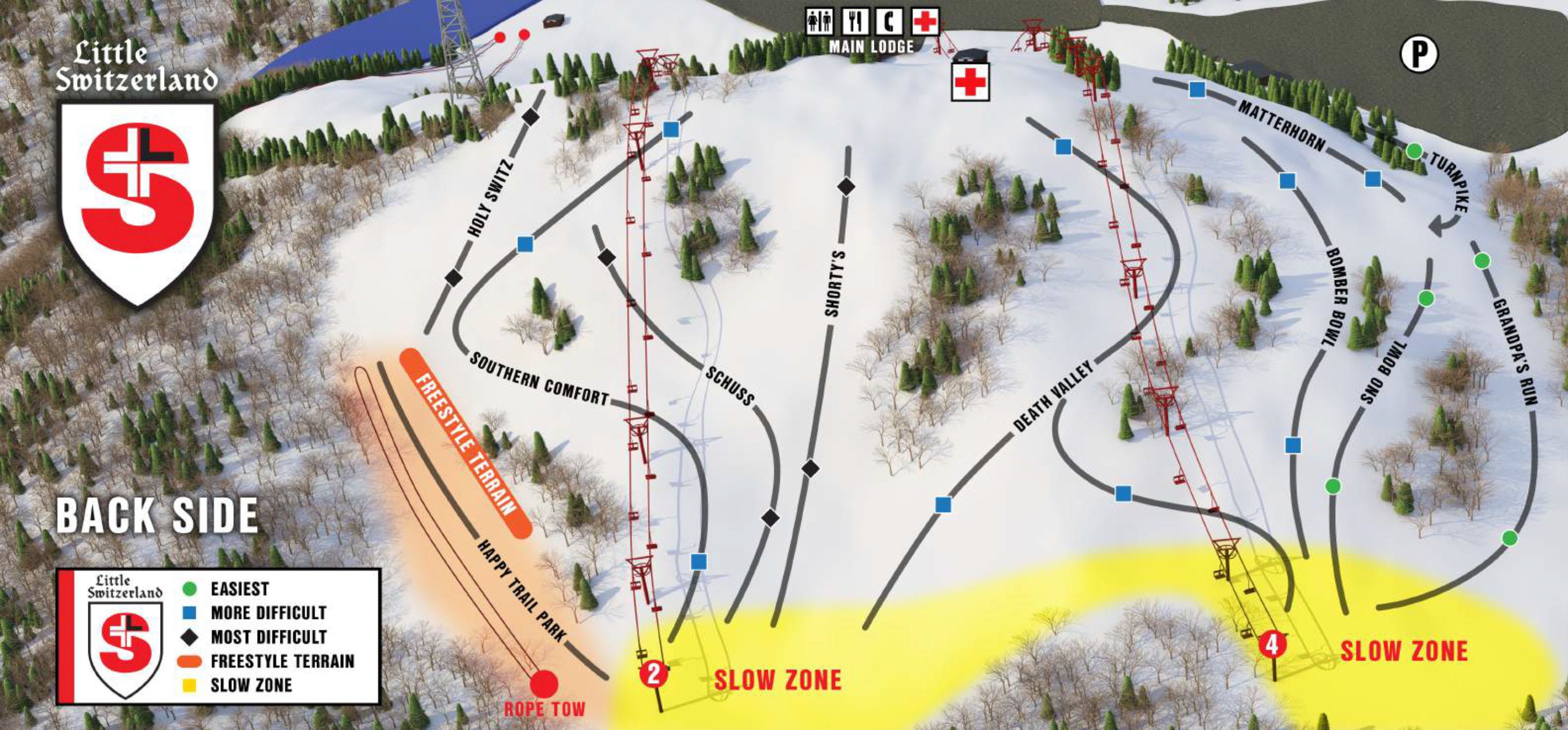
Stuart Winchester: Alright, Rick, let’s shift over to this awesome project you’ve been working on all summer. Okay, so here… this is Lyft Blog, shout out to Peter, he does a great job documenting these, and uh… this is, uh… I think this is Lyft… this is the backside, right?
00:30:15.000 --> 00:30:18.000
Rick Schmitz: This is the backside, yep, that’s the backside.
00:30:16.000 --> 00:30:18.000
Stuart Winchester: Okay, yeah.
00:30:18.000 --> 00:30:20.000
Stuart Winchester: So you have this up and over.
00:30:20.000 --> 00:30:36.000
Stuart Winchester: Riblet double that was built in 1964. Like I said, you brought the ski area back to life in 2011. So, I don’t know, somehow you brought this and its partner Lyft, which is right next door that we’ll talk about, back to life. So, you ran it for 15 years.
00:30:36.000 --> 00:30:39.000
Stuart Winchester: It was time to go. So tell us about.
00:30:39.000 --> 00:30:46.000
Stuart Winchester: This really unique machine, that’s two lifts but one lifts, and how you had to approach the replacement.
00:30:45.000 --> 00:31:01.000
Rick Schmitz: Yeah, so, you know, this was, obviously, of our three ski areas, this was the oldest lift that we had, obviously, in 1964. You know, we went through, you know, when we rebuilt the ski area, we used lift mechanics from.
00:30:55.000 --> 00:30:56.000
Stuart Winchester: Yeah, thank you.
00:31:01.000 --> 00:31:16.000
Rick Schmitz: At that time, it was Blackjack and Nordic Mountain that came down, and we had all kinds of help. And we took these lifts apart, top to bottom, completely rebuilt them. New drive systems, new motors, new everything, brought them up to current code.
00:31:16.000 --> 00:31:35.000
Rick Schmitz: Um, and made them operate, and this thing was a workhorse for us. This lift was great, you know, it was, um, you know, still a very safe lift, but it was in 1964. It was tired, and as you’re well aware, Rivlet doesn’t exist anymore, and so getting parts became harder and harder to do.
00:31:32.000 --> 00:31:33.000
Stuart Winchester: Yeah.
00:31:35.000 --> 00:31:51.000
Rick Schmitz: Um, so, you know, I think it was when I was on your pod, um, five years ago, I said, you know, that’s probably our first lift to go, and it’s within five to ten years, and we did it in five. Um, so it was, you know, something we’d always been thinking about, and we planned for.
00:31:51.000 --> 00:32:10.000
Rick Schmitz: Um, and when we got to the project and started looking at the engineering, we, we loved the up and over concept, and it’s great. You get two lifts for one, more or less. And we started to look at, you know, what that would be, and SkyTrak, who we, we ultimately ended up putting in two SkyTraks for this project.
00:32:01.000 --> 00:32:02.000
Stuart Winchester: Mmhm.
00:32:10.000 --> 00:32:24.000
Rick Schmitz: had sent us drawings on what an up-and-over lift would look like, and they thought it was kind of a fun engineering challenge. And as we looked at it, we’re like, this doesn’t work. And the reason it didn’t work was the unloads.
00:32:24.000 --> 00:32:40.000
Rick Schmitz: uh, to meet current code, um, we’re going to be very long and steep on a… on a quad chairlift that used to be a double. Um, they were going to be about 13 vertical feet of unload ramp, and our thought is dumping, you know, probably every 4 seconds from each direction.
00:32:31.000 --> 00:32:32.000
Stuart Winchester: Right.
00:32:40.000 --> 00:32:51.000
Rick Schmitz: um, unloading a quad chair, um, not 4-second, but the… about a 9-second chair spacing, but… so it would be every 4.5 seconds. People are going down a 13-foot…
00:32:47.000 --> 00:32:48.000
Stuart Winchester: Mmhm.
00:32:51.000 --> 00:33:01.000
Rick Schmitz: unload ramp, and we’re like, they’re just gonna pile up, and this lift’s gonna be stopped more than it’s running. We have two loads, two unloads. Um, we’re gonna hate this project, so…
00:32:57.000 --> 00:32:58.000
Stuart Winchester: Mmhm.
00:33:01.000 --> 00:33:17.000
Rick Schmitz: Unfortunately, you know, up and over was not going to work for this application. So we had to look at then, you know, splitting it. And that was, you know, it was a tough decision. It would have been over a seven-figure savings to build one lift, one longer lift instead of two.
00:33:17.000 --> 00:33:33.000
Rick Schmitz: Um, but we knew we had to do it to where it’s gonna be the right fit for Little Switzerland, and so we basically split that line, offset them, um, so just changed the alignment of both lifts a little bit, and put it in two quads simultaneously, um, turned out to be, uh.
00:33:33.000 --> 00:33:38.000
Rick Schmitz: It’s the right fit, and it’s going to be an awesome game changer.
00:33:37.000 --> 00:33:47.000
Stuart Winchester: So this is, uh, for those watching on YouTube at Storm Ski Journal or on StormSki.com, this is your current trail map. I don’t think you’ve updated this yet with the new lifts.
00:33:45.000 --> 00:33:54.000
Rick Schmitz: Oh, we have. Marketing, we don’t have it up yet. We have the new ones on there. I thought it was up. I should have checked that before we got on this call.
00:33:48.000 --> 00:33:50.000
Stuart Winchester: Oh.
00:33:53.000 --> 00:34:01.000
Stuart Winchester: Okay, if you want to send them to me real quick, I can pull them up here. But let’s talk about while we’re figuring that out.
00:33:57.000 --> 00:33:58.000
Rick Schmitz: Oh, boy.
00:34:01.000 --> 00:34:11.000
Stuart Winchester: You know, I read that these, on your blog, that these quads were a $4 million upgrade, or part of $4 million in upgrades.
00:34:12.000 --> 00:34:15.000
Stuart Winchester: That’s a lot of money, right? So…
00:34:16.000 --> 00:34:20.000
Stuart Winchester: So, we… one of the narratives I push back against all the time…
00:34:20.000 --> 00:34:31.000
Stuart Winchester: is that Vail and Altera are killing small ski areas. I actually think that they’ve been good for small ski areas because they’ve done so much.
00:34:31.000 --> 00:34:33.000
Stuart Winchester: to push away…
00:34:33.000 --> 00:34:40.000
Stuart Winchester: certain classes of skiers that that folks have started to look for alternatives.
00:34:40.000 --> 00:34:47.000
Stuart Winchester: You’re spending $4 million on two new lifts for a ski area that was a junkyard 15 years ago. That tells me you’re doing something right.
00:34:47.000 --> 00:35:02.000
Stuart Winchester: what is… I mean, how can you afford these new lifts? Because I think the assumption that, you know, the casual spectator says, oh, well, they all bought Wilmot and, you know, these little places have no chance, but that’s clearly not the case.
00:35:02.000 --> 00:35:23.000
Rick Schmitz: Yeah, if you’d asked me 10 years ago, are you going to put in new chair lifts? I would have said, yeah, that would be an awesome dream. And our businesses were in a very different point at that time. We were doing well, but never did we dream of having capital to do a project like this.
00:35:23.000 --> 00:35:31.000
Rick Schmitz: But what really, for us, how we’re able to do this is it’s never been —.
00:35:31.000 --> 00:35:47.000
Rick Schmitz: there’s never been a time where we’re not continually reinvesting almost everything we make back into the properties, and and the more you do that it it scales up, and you get a bigger return on investment on each one, and all of a sudden you have more capital to work with, you know. For us it was.
00:35:45.000 --> 00:35:47.000
Stuart Winchester: Mmhm.
00:35:47.000 --> 00:36:02.000
Rick Schmitz: for a small skier here, the most important thing is you have to make sure the lifts that you have are safe. And so that was our number one goal when we reopened Little Switzerland, to go through and make sure that what we had, although it’s old, to get them up to standards and to make sure that those lifts are.
00:36:02.000 --> 00:36:21.000
Rick Schmitz: are safe to ride. Like, that is the first place to spend money at a small ski area, and then the second place to spend money is snowmaking, and then the third, fourth, and fifth place to spend money is snowmaking. Um, and you just keep adding snowmaking. Investment at a small ski area is one of the toughest things to do, and I…
00:36:21.000 --> 00:36:38.000
Rick Schmitz: have a finance background, and it’s, you know, you try to build projects on return on investment, and it’s almost impossible to measure return on investment of, you know, adding new pipeline, and adding electrical, and adding more snow guns over here, and increasing pumping capacity.
00:36:38.000 --> 00:36:56.000
Rick Schmitz: Um, really, really hard to measure what that actual return on investment is. There’s so many variables involved, but snowmaking is where we spent all of our money. Um, and it’s also a hard thing to do because the customer doesn’t always realize snowmaking. Until before I was in the industry.
00:36:56.000 --> 00:37:11.000
Rick Schmitz: um, you know, as just a skier, I remember hearing about skieries that would say, oh yeah, we added a bunch of snowmaking this year, and I remember thinking, like, yeah, whatever, as long as there’s snow when I go there, right? That doesn’t mean a lot to me, and as scary as now, now that I’m on the other side, I’m like.
00:37:05.000 --> 00:37:06.000
Stuart Winchester: Right.
00:37:06.000 --> 00:37:08.000
Stuart Winchester: Yes.
00:37:11.000 --> 00:37:21.000
Rick Schmitz: we’re… we’re marketing all the time, we added the snowmaking, we added the snowmaking. Snow is an expectation of the customer, and they… they… they think it’s gonna be there, and… and they…
00:37:21.000 --> 00:37:44.000
Rick Schmitz: They want it to be there, and incremental changes to snowmaking infrastructure is not always the best marketing material. You know what I’ve come to realize, but snow is your product. Without it, you have nothing. The winters have gotten more and more challenging. I mean, we’re still sitting here right now in mid-November waiting to make snow, and everyone’s starting to get a little bit nervous. There’s not a lot of snowmaking weather in the forecast.
00:37:44.000 --> 00:38:05.000
Rick Schmitz: Um, but we know that because our snowmaking systems are to where they are, that we will be open in a matter of days once that weather turns, and that’s… it’s going to happen. It’s not a matter of if, it’s when. It will happen, and we’ll be open, and we’ll be, you know, um, flying out of the gate there. But snowmaking is… is the number one investment that leads to all the other investments, and so…
00:38:05.000 --> 00:38:21.000
Rick Schmitz: It took a point to where we got the snowmaking systems at all three hills to a point where we were comfortable with them, that then we could start to look at other projects, the ones that are better marketing projects. I’m sitting in Nordic Mountain’s new lodge we built last year, and that was a massive project.
00:38:21.000 --> 00:38:36.000
Rick Schmitz: That’s a huge customer-facing project that, you know, but we’ve spent way more than this lodge on snowmaking over the years, but this is the one that customers notice and realize. Chairlifts are also a huge customer-facing improvement.
00:38:36.000 --> 00:38:55.000
Rick Schmitz: and also operational, and it’s going to help a lot, but all that was built by snowmaking, and that is how you gain the capital. And so it was planning, and we knew that this lift project was coming, and so last year at Little Switzerland, we operate each hill independently, and so it’s not one capital fund that everything comes out of.
00:38:55.000 --> 00:39:11.000
Rick Schmitz: So each hill operates on its own, more or less. We will help each other and share resources with each other. But Switz, we turned down projects last year in anticipation of this project. We were saving up capital, and we’re going to go in and hit this project this year.
00:39:05.000 --> 00:39:06.000
Stuart Winchester: Okay.
00:39:11.000 --> 00:39:27.000
Rick Schmitz: And thankfully, it is a process that we’ve been able to do because all three of our areas are continuing to grow and we’re continuing to get more skiers. So we have to figure out ways to get them in there.
00:39:27.000 --> 00:39:31.000
Rick Schmitz: You know, can’t emphasize enough that snow is the number one thing that drives all of it.
00:39:31.000 --> 00:39:35.000
Stuart Winchester: Mm-hmm. It sounds, though, like…
00:39:35.000 --> 00:39:48.000
Stuart Winchester: you’re running a healthy business that’s able to afford these machines. And what strikes me about putting in two new quads is, yeah, there’s fewer towers, fewer chairs, and everything than you would need for.
00:39:48.000 --> 00:40:04.000
Stuart Winchester: Say, a 1500 vertical foot quad at Arapahoe Basin, but the machinery, I think, is probably the biggest, most expensive part of it. And, you know, what’s really interesting about talking to you and visiting your ski areas, Rick, is you’re always very forward-thinking on.
00:40:04.000 --> 00:40:16.000
Stuart Winchester: lifts. So, the way that you had this beginner ski area set up, and I didn’t realize it, the one far looker’s right, for folks not watching, on the front side of Little Switz, there’s an abandoned.
00:40:16.000 --> 00:40:30.000
Stuart Winchester: chair tower terminal up here. So, there used to be a chair, and actually, it would be a great hill for a chairlift, right? But maybe that’s not the best lift. So, just talk to us about how you think about lifts, and how you ultimately said, okay.
00:40:30.000 --> 00:40:41.000
Stuart Winchester: yeah, the expense for two quads, even though that’s gonna be a big price tag, is worth it, because those are the right lifts. Because you’re not… you’re someone who’s not afraid to use surface lifts.
00:40:41.000 --> 00:40:58.000
Rick Schmitz: Yeah, no, I mean, surface lifts are amazing in the Midwest, and I mean, rope toes and conveyors are, I mean, they’re where it’s at. So, yeah, the beginner area at Little Switz, I mean, that’s where I learned to ski at 4 years old, was they had a Borbig quad that came.
00:40:45.000 --> 00:40:46.000
Stuart Winchester: Mmhm.
00:40:54.000 --> 00:40:55.000
Stuart Winchester: Mmhm.
00:40:58.000 --> 00:41:13.000
Rick Schmitz: out of… we have a little building at the bottom there, and that building was actually the terminal of the quad chairlift, and that was a phenomenal beginner lift. If you talk to our… our instructors that have been around a while, back when that quad was in existence, like, that was an amazing.
00:41:03.000 --> 00:41:05.000
Stuart Winchester: Mmhm.
00:41:13.000 --> 00:41:32.000
Rick Schmitz: amazing lift. It was a great stepping stone from, hey, ride this, you know, really slow quad chair before you head over to the… to the faster doubles that were at Little Switzerland. It was a great chair, but what’s changed since then is the, you know, conveyor lifts and the prevalence of them, and in my opinion, there’s no better.
00:41:32.000 --> 00:41:52.000
Rick Schmitz: beginner lift than a conveyor lift. Um, you know, and that was, you know, I think we talked about this last time, like, when I had kids and realized the beginner experience, and they were still on rope toes, conveyor lifts can move a lot of people uphill, it’s less intimidating than a chair lift, and it is the right tool to teach people how to ski.
00:41:46.000 --> 00:41:48.000
Stuart Winchester: Mmhm.
00:41:52.000 --> 00:42:09.000
Rick Schmitz: And so we, you know, have gone from… when we reopened Little Switzerland and we’re on a shoestring budget, we had two handle tows in place there, because those cost very different than what a conveyor lift does. And so that was, you know, after snowmaking got to where it needed to be, those conveyor lifts were some of the earlier things to do.
00:41:59.000 --> 00:42:00.000
Stuart Winchester: Yeah. Okay.
00:42:01.000 --> 00:42:03.000
Stuart Winchester: Mmhm.
00:42:09.000 --> 00:42:20.000
Rick Schmitz: Um, kind of a stepping stone before you get into the cost of a… of a other chairlift, but yeah, so what you’re showing there is the, um, old return terminal of that four-way quad that’s up there.
00:42:21.000 --> 00:42:25.000
Stuart Winchester: Yeah, it’s really cool. And you see really long carpets.
00:42:25.000 --> 00:42:28.000
Stuart Winchester: And you have the terrain-based learning at the top with the little…
00:42:29.000 --> 00:42:32.000
Stuart Winchester: I don’t know, lose, shoot. It was a lot of fun.
00:42:30.000 --> 00:42:35.000
Rick Schmitz: Yep, the bank turns. The bank turns are amazing for teaching skiers. Yep.
00:42:34.000 --> 00:42:38.000
Stuart Winchester: Yeah, and I just… I thought as I skied around…
00:42:38.000 --> 00:42:55.000
Stuart Winchester: you have all these little surface toes, you have a rope toe tucked in over here, uh, then on the backside, you have one tucked in over here to the left of the lift, and you kind of put them all over the place. Did you ever consider a surface lift solution, maybe for the backside here, a bunch of surface lifts instead of an expensive quad?
00:42:55.000 --> 00:43:00.000
Stuart Winchester: I mean, ultimately, why was a quad the right thing, the right move, the right investment?
00:42:59.000 --> 00:43:17.000
Rick Schmitz: No, so the, I mean, the quad’s the right thing there, that, that backside of the, what was the 1-2 lift, um, so the backside we called 2, um, that was probably the busiest chair on the property, um, and so that one needed capacity, and so that little rope tow we put in.
00:43:04.000 --> 00:43:05.000
Stuart Winchester: Yeah. Yeah.
00:43:06.000 --> 00:43:07.000
Stuart Winchester: Mm-hmm.
00:43:17.000 --> 00:43:32.000
Rick Schmitz: Um, to the lookers left of that, in our Happy Trail Park, that is the busiest part of our entire ski hill. That’s our progression park that we put in to kind of separate, you know, the grounds from the rest of the terrain park, and then we found out that.
00:43:20.000 --> 00:43:22.000
Stuart Winchester: Okay.
00:43:31.000 --> 00:43:32.000
Stuart Winchester: Right.
00:43:32.000 --> 00:43:50.000
Rick Schmitz: everyone goes in that park, all park riders, and that park is absolutely slammed. We moved a ton of earth a couple years ago and made that park twice as big, and we have more plans for that as well, but that’s a huge, busy area, and when they’re done there, they need to get back on that chairlift and get back to the front.
00:43:50.000 --> 00:44:07.000
Rick Schmitz: So we have plans, though, to actually expand that park. And so it’s something we’re looking at. We don’t have anything final, but that Happy Trail Park at the back there, we’re going to move a lot more earth, and we’re actually going to change the slope.
00:43:55.000 --> 00:43:57.000
Stuart Winchester: Oh.
00:44:07.000 --> 00:44:21.000
Rick Schmitz: with a goal of potentially, and this isn’t for sure, but making it to where we could get that rope tow to go all the way, so you could actually ride a rope in the back to get back to the front of the property. Um, and that would really change skier flow a lot. You know, there’s… there’s…
00:44:14.000 --> 00:44:15.000
Stuart Winchester: Umm.
00:44:21.000 --> 00:44:37.000
Rick Schmitz: two types of skiers at Little Switzerland. There’s those that just want high-speed ropes, and they get annoyed that they have to sit on a chairlift, and they just want to rip around the entire hill. And then there’s the rest that just, you know, want to ride the chairlift, and they want that break.
00:44:26.000 --> 00:44:28.000
Stuart Winchester: Mmhm.
00:44:31.000 --> 00:44:33.000
Stuart Winchester: Yep.
00:44:37.000 --> 00:44:56.000
Rick Schmitz: And so, if we get that rope that goes up, and then also will provide an easier access to the back of the hill when you get off the new red quad off the front of the hill. So, yeah, so that’s one that we’re looking at closely. But yeah, we’re always looking at how can we shape Earth and move Earth.
00:44:43.000 --> 00:44:45.000
Stuart Winchester: Mmhm.
00:44:56.000 --> 00:45:07.000
Rick Schmitz: Um, rope toes move, despite putting these quad chairs in, those rope toes probably move twice as many people uphill per hour than those quads will. Um, they just… they’re people movers.
00:45:07.000 --> 00:45:24.000
Stuart Winchester: Unbelievable. The number you gave me before, I think, was 4,000 skiers an hour, which for the viewers, listeners, context, a quad generally would be set at 2,400. I’m not sure if that’s going to be the capacity of yours, but it’s incredible how fast you can move on a rope and how efficient it is.
00:45:24.000 --> 00:45:29.000
Rick Schmitz: Yeah, it is. It is. And you can get a lot of laps in. Yep.
00:45:27.000 --> 00:45:37.000
Stuart Winchester: Yeah. If I remember correctly, Rick, there’s a hill down here, but do you own that? Is there any chance that when you do that terrain, you can, you’re going to come down a little?
00:45:37.000 --> 00:45:53.000
Rick Schmitz: There, we don’t, we own not super far to the lookers left of that. There is, you know, potential for us to acquire some property there, and we’ve walked it, and we’ve looked at it, and is there some chance for terrain there?
00:45:44.000 --> 00:45:46.000
Stuart Winchester: Yeah.
00:45:53.000 --> 00:46:12.000
Rick Schmitz: Um, there might be, it’s something we gotta look at a little more closely, um, but, uh, can’t say for sure, but that, that, I mean, Little Switz is not a big hill, as you’ve been there, um, so there’s not a lot of places to expand. That would be the only one left that we could possibly get some more terrain in there, and it is something we’ve explored, for sure.
00:46:12.000 --> 00:46:28.000
Stuart Winchester: All right, let’s talk real quick. Luckily, the riblets are not gone. You still have a chance to ride them if you miss them. This is lifts three and four, same thing, up and over. Long-term thinking, Rick, are you going to try to get as many miles out of this guy as you can? Again, I have lift logs pictures up here.
00:46:28.000 --> 00:46:31.000
Stuart Winchester: Or are you already starting to think about?
00:46:31.000 --> 00:46:37.000
Stuart Winchester: The quads that you’re building to replace 1-2 is a sort of test case for what you would do with 3-4.
00:46:36.000 --> 00:46:57.000
Rick Schmitz: Yeah, we’re definitely thinking about that lift. Now that lift, it is 10 years newer than the 64 we took out. So it has more life in it. And part of the design of this, as I mentioned, riblet parts are hard to come by. By removing the 1/2 lift, we just gained a massive parts inventory.
00:46:43.000 --> 00:46:45.000
Stuart Winchester: Mmhm.
00:46:52.000 --> 00:46:53.000
Stuart Winchester: Yeah.
00:46:57.000 --> 00:47:12.000
Rick Schmitz: Um, for this entire chairlift. So we’re gonna be able to keep this one running, um, for… for a while. Um, you know, that said, um, to put it out there again, as I did last time, like, I would say in 5 to 10 years, we’ll be looking at replacing that lift as well.
00:47:12.000 --> 00:47:29.000
Rick Schmitz: Um, exactly how we do it, you know, kind of depends on some of the other factors. We’ve talked about, you know, the… the 3-4 lift, the 3 lift that loads from the front, is probably our least busy lift, because that actually is at the bottom of a train park that’s served redundantly by the rope. And so.
00:47:29.000 --> 00:47:45.000
Rick Schmitz: Very few people ride that chair. Um, so we talked about, you know, is it… we could just take that chair out and just put another lift to the back. Um, but if we do the terrain park expansion in the back, as we talked about, we’ve also talked about moving those front parks to a larger park in the back.
00:47:45.000 --> 00:47:46.000
Stuart Winchester: Mmhm.
00:47:45.000 --> 00:48:01.000
Rick Schmitz: Um, so there’s… there’s a lot of things that we’re constantly looking at. It’s one of the most fun things we do, um, all year, is we… is we ski around, and we’ll ski around with Mountain Ops, and… and my brother and I, and we’ll be like, well, what if we did this? And what if we… what if we put this over here? And.
00:48:01.000 --> 00:48:08.000
Rick Schmitz: Um, to do, and there’s, there’s no right answer. It’s, you know, literally being out there skiing it and seeing what’s, what’s the best way to do.
00:48:08.000 --> 00:48:20.000
Stuart Winchester: Yeah, it’s fun skiing around with you on your mountains. You hit all the airs, you ride all the lifts, it’s cool. So I also skied around Nordic with you, and this was your first ski area, so you’ve had the most time to sit with this one.
00:48:20.000 --> 00:48:27.000
Stuart Winchester: Just give you an opportunity real quick before we exit to tell us any improvements.
00:48:27.000 --> 00:48:30.000
Stuart Winchester: Bubbling for Nordic at the moment.
00:48:29.000 --> 00:48:45.000
Rick Schmitz: Um, yeah, I mean, we still, you know, after the lodge last year, we said we’re gonna take it easy this year, and then we, you know, had our second biggest capex year ever, um, this year there. I mean, some of the things, we paved a bunch of the parking lot, not all of it, but we.
00:48:45.000 --> 00:49:04.000
Rick Schmitz: we did, uh, put asphalt in on a lot of it instead of gravel or recycled asphalt. Um, so that’s a big improvement to the customer. Um, the other one we did is, um, we’re actually commissioning right now our brand new pump house. Um, you know, and again, that’s one of those things, it’s an expectation of the customer, they don’t realize, but.
00:49:04.000 --> 00:49:21.000
Rick Schmitz: Our pump house was — the pumps we had in there were fine. They worked great, but they were really old. And we knew that we were probably losing some efficiency in them. And we knew that the last time we had them rebuilt, they said, this is the last time you can rebuild these.
00:49:21.000 --> 00:49:39.000
Rick Schmitz: And, you know, the… I always say the pump house is the heart of your business. Like, literally, it pumps water through the pipeline, the veins of the hill, and if you don’t have a pump house, you don’t have a business. And so this was kind of a proactive, let’s get out in front of it and replace it and build a brand new pump house. So we moved it down closer to the pond.
00:49:39.000 --> 00:49:53.000
Rick Schmitz: Um, now our well water doesn’t dump right into the pumps, it dumps into the pond first, so our water will be colder. That’ll be an advantage, and then we increase pumping capacity by a third. We added a third pump from our two-pump system.
00:49:53.000 --> 00:50:10.000
Rick Schmitz: So we’re gonna move a lot more water. And then part of that decision was, as we looked at the Super El Nino year, which one of the only long-term weather patterns I look at generally are more challenging snowmaking years for the Midwest. And the little data we have, and I’m hoping this year proves us wrong, but in case it doesn’t, generally it’s…
00:50:10.000 --> 00:50:29.000
Rick Schmitz: short snowmaking windows where you gotta hit it hard and fast. And so, to get that 30% more pumping capacity, we’ll be able to run all the guns, um, pretty much at any temperature. I mean, generally, when we design our snowmaking system, you overgun, um, on purpose from your pumping capacity, so that when you are operating in marginal temperatures in the 20s.
00:50:23.000 --> 00:50:24.000
Stuart Winchester: Mm-hmm.
00:50:29.000 --> 00:50:44.000
Rick Schmitz: that you’re still flowing as much water as you possibly can, and then as you get really cold and really efficient, then you have to start to make decisions on, we don’t have enough water, and you select different runs, and what are going to be priority runs. Um, you know, Nordic’s in a spot now where we’ll be able to run.
00:50:44.000 --> 00:50:59.000
Rick Schmitz: pretty near everything all the time, which will get a lot of terrain open really, really quickly. So then that gets us to a point where we’ll be, you know, probably adding more guns in the future as well. Because, you know, as I mentioned, we do that snowmaking investment.
00:50:59.000 --> 00:51:14.000
Rick Schmitz: And that’s what we spent all our money on forever, but that investment never stops. Like, we always set capital aside. We added I think just one new gun at Nordic, a brand new TT. We put three of them under the new lift at Swiss. We put two of them at Crystal Ridge.
00:51:14.000 --> 00:51:24.000
Rick Schmitz: Um, you know, the snowmaking investment is ongoing forever, and it never will stop. If you do stop, you’re gonna get behind in it, and all of a sudden, you’re gonna have to play catch-up.
00:51:24.000 --> 00:51:27.000
Stuart Winchester: Yeah, I think that that was…
00:51:27.000 --> 00:51:38.000
Stuart Winchester: really what split the survivors from the dead in the Midwest, especially, because there were a lot of ski areas. Like, I always think of Sugarloaf up in Michigan. It was a great ski area.
00:51:38.000 --> 00:51:48.000
Stuart Winchester: But they just didn’t put the right infrastructure in long term to support those weather patterns. So how about Crystal? Anything going on here?
00:51:48.000 --> 00:52:04.000
Rick Schmitz: Yeah, so Crystal, as I mentioned, we put in two new TT guns there. We’ve made a few other customer improvements there. And the biggest thing was last year, Crystal, at this time, we were recovering from 1,000-year flood.
00:51:53.000 --> 00:51:54.000
Stuart Winchester: Yeah.
00:52:04.000 --> 00:52:26.000
Rick Schmitz: So last year Crystal’s Capex got accelerated pretty quickly. Because we were. We were forced to, because we we lost our entire pump house. We flooded out the lift shack and so last year Crystal got a brand new pump house. Which has been phenomenal and and a game changer. And again, it’s it’s the heart of the business. And so now.
00:52:04.000 --> 00:52:06.000
Stuart Winchester: Right.
00:52:10.000 --> 00:52:11.000
Stuart Winchester: Okay.
00:52:20.000 --> 00:52:22.000
Stuart Winchester: Okay.
00:52:26.000 --> 00:52:44.000
Rick Schmitz: We have a much more reliable, brand new, more volume, more pressure. And now we are actually filtering the water. The crystal draws from a little dirtier water source in a river at the base of the hill. And so now we actually were able to put a large bowl filter to pre-filter the water.
00:52:37.000 --> 00:52:38.000
Stuart Winchester: Mmhm.
00:52:44.000 --> 00:52:59.000
Rick Schmitz: before we get it up on the hill, so that’s a huge advantage. So, Crystal kind of had its year last year, where it got a lot of capex. We’re always looking at what’s next for Crystal, though. Um, you know, at some point, we want a bigger rental space, we need… we need a bigger skier services building, um…
00:52:59.000 --> 00:53:15.000
Rick Schmitz: Yeah, there’s always all kinds of fun stuff we’re looking at there, too. We’re looking at where can we fit in a beginner-type park, that ground park that we have at Switz at Crystal, because we know how important that is. So we’re always trying to figure out where’s the best spot to put that there.
00:53:15.000 --> 00:53:25.000
Rick Schmitz: not a huge property, so hard to find that. But, um, yeah, it’s… again, the capital investment back into the properties never stops. It’s…
00:53:25.000 --> 00:53:41.000
Rick Schmitz: It’s quite honestly the most fun part of the business is what can we do next? And our team knows it. Our team is on board with it. They’re always thinking about, hey, we were thinking this would be a really good investment for us. And it’s not a decision that it’s ever made by Mike and I or Bill and I at Nordic. It’s truly a team decision.
00:53:41.000 --> 00:53:57.000
Rick Schmitz: And when it comes down to it, we want the input from the mountain managers and operations that are on the hill, and we want to know what ski school thinks about, you know, what if we change and add a conveyor here or move this one there? It’s really a team effort for what changes at the hills, but we’re always changing.
00:53:58.000 --> 00:54:16.000
Stuart Winchester: And while we’re on the subject of Crystal, if people want to get a peek at it, you’re actually hosting Snowvana right next door this weekend. And unfortunately, I’m not coming this year. I did come last year and you had some cool things going on there. Any little snow sliding things or anything going on this year?
00:54:16.000 --> 00:54:34.000
Rick Schmitz: Yeah, we’re not doing a snow, uh, we’re not doing a, uh, dry slope this year, we did that last year, but yeah, Snowvana is this weekend, um, it is Friday, Saturday, Sunday, um, at the Mosh Center, which is essentially in the parking lot, more or less, of Crystal Ridge Ski Area, so anyone coming to Snowvana.
00:54:34.000 --> 00:54:50.000
Rick Schmitz: feel free to stop by, look around. We do have an open house on Saturday, um, of Crystal Ridge as well for our pass holders to come in, get their passes, um, and check things out. But, um, yeah, it is right there. Snowvana’s a great event. It’s a great hype event for the ski industry, um, to get.
00:54:50.000 --> 00:55:00.000
Rick Schmitz: Um, fired up, there’s a lot of good gear there. Um, there’s skierias from around the Midwest that are showing up. Um, I know that, you know, preliminary things are looking as…
00:55:00.000 --> 00:55:11.000
Rick Schmitz: looking really good. From what Doug tells me, numbers are really good, as this event’s going to grow a lot from last year. We want this to be kind of the go-to hype event for the Upper Midwest, is come here, get excited about skiing.
00:55:11.000 --> 00:55:25.000
Stuart Winchester: Yeah, and there’s, uh… I have a code that folks can use for a free ticket, and I plugged that in the beginning of the pod, so… and also included on the article that accompanies this pod on stormskiing.com. Alright, Rick, I’m not done spending your money.
00:55:25.000 --> 00:55:30.000
Stuart Winchester: Uh, here’s your next project. This is Snowstar, Illinois. Two quad chairs.
00:55:30.000 --> 00:55:44.000
Stuart Winchester: Two doubles. Uh, let me get some stats here. It’s, uh… 262-foot vertical drop, 28 acres, right in a metro area of 380,000 people. It’s the only ski area around.
00:55:44.000 --> 00:55:50.000
Stuart Winchester: The closest one is Chestnut, very nice area, right on the Mississippi. It’s a couple hours away.
00:55:50.000 --> 00:56:02.000
Stuart Winchester: this is… this is like a Schmitz special, and the owners have said it’s not opening this year. They haven’t been able to find the right buyer. Rick, I think you are the right buyer. It is right in your neighborhood. Uh, what do you say?
00:56:02.000 --> 00:56:18.000
Rick Schmitz: You know, it’s definitely an interesting property. It is a little, it might be a challenge to run that one. It’s a little farther than, you know, between the three of ours now, they’re two hours apart.
00:56:11.000 --> 00:56:13.000
Stuart Winchester: Mmhm.
00:56:17.000 --> 00:56:19.000
Stuart Winchester: Mmhm.
00:56:18.000 --> 00:56:32.000
Rick Schmitz: Um, but it is a very interesting property. It looks like, um, you know, I haven’t gone down and actually looked at it in person, and I may have to do that. On your advice, I may have to go just take a look and see what’s out there.
00:56:31.000 --> 00:56:38.000
Stuart Winchester: So LiftLog’s always full of these really cool little tidbits. So these double chairs…
00:56:38.000 --> 00:56:44.000
Stuart Winchester: actually came, used, these are Lift Blog’s pictures, from Ski Butler in Kentucky.
00:56:44.000 --> 00:56:58.000
Stuart Winchester: So the Kentucky ski area, the only one that was ever really viable, actually, those chairs live on right here, and you could own them, Rick, if you’re interested in owning four Borvigs.
00:56:52.000 --> 00:56:54.000
Rick Schmitz: Thank you.
00:56:57.000 --> 00:57:02.000
Rick Schmitz: And it’s a double-double, which is, uh, those are unique as well.
00:56:59.000 --> 00:57:00.000
Stuart Winchester: Is it?
00:57:01.000 --> 00:57:15.000
Stuart Winchester: Yeah, there, there, um, there used to be a ton in PA, but those are going out of business. And here’s one of the quads, and the other one is, again, these are all Lyft blogs pictures, is right next to it. So, uh, you know, I…
00:57:15.000 --> 00:57:17.000
Stuart Winchester: I think that…
00:57:17.000 --> 00:57:18.000
Stuart Winchester: as I see…
00:57:18.000 --> 00:57:26.000
Stuart Winchester: good operators. I think the multi-mountain model works really well, because you can take a guy…
00:57:26.000 --> 00:57:30.000
Stuart Winchester: like, one of your East Coast counterparts is John Schaefer, who, you know.
00:57:30.000 --> 00:57:46.000
Stuart Winchester: basically kind of modernized Berkshire East, which his father had bought a long time ago, then bought and fixed up Catamount, and then they got Berk, and now they’re taking on Smuggs, which is a great ski area with some really dated infrastructure. And, you know, as I’ve seen how.
00:57:46.000 --> 00:57:51.000
Stuart Winchester: how Charles Skinner and Midwest Family has been able to fix it, because Rib Mountain, when they bought it.
00:57:51.000 --> 00:57:59.000
Stuart Winchester: this dumpy little place, and they turn to Granite Peak, which is an amazing skier area. And you seem to have the magic touch where…
00:57:59.000 --> 00:58:04.000
Stuart Winchester: All of your ski areas were kind of failing ski areas, or failed when you got them.
00:58:04.000 --> 00:58:07.000
Stuart Winchester: And it seems as though.
00:58:07.000 --> 00:58:11.000
Stuart Winchester: uh, you would be the right man for the job here.
00:58:11.000 --> 00:58:29.000
Rick Schmitz: Well, I appreciate that, but it’s, you know, it’s certainly not me doing it. You know, our success is built around our teams, and it’s our people that do it. And so, I mean, that’s the number one goal, and that’s, you know, one of my personal goals is to build and develop the teams that are now running.
00:58:19.000 --> 00:58:21.000
Stuart Winchester: Mmhm.
00:58:22.000 --> 00:58:23.000
Stuart Winchester: Yeah, I’m sorry.
00:58:29.000 --> 00:58:46.000
Rick Schmitz: all of our ski areas, and they’re amazing, amazing people that, you know, share my passion for the industry and are doing it. And so, you know, for us to expand, it’s, you know, to grow that team and find the right people and put them in place. But, you know, I will… I always tell people I’m, you know, I always look.
00:58:46.000 --> 00:58:47.000
Stuart Winchester: Yeah.
00:58:46.000 --> 00:59:07.000
Rick Schmitz: I’m I’m always curious. You know, revitalizing the skier is one of the most fun things you can do. It’s also one of the most stressful and challenging things you can do. So you know, those are the things that I try to weigh and balance. But it is. I wouldn’t rule it out, but I wouldn’t say that it’s it’s something I’m actively pursuing right at this moment. But.
00:58:54.000 --> 00:58:55.000
Stuart Winchester: Yeah.
00:59:07.000 --> 00:59:25.000
Rick Schmitz: But I’m always looking, you know, it’s kind of like we’ve moved, um, recently, um, with my family, and even though we just moved and we love our house and it’s great, my wife still just always looks at the real estate, right? She just wants to know, and it’s just like a hobby of hers, and so when there’s carries that are for sale or closing, like, I’m always looking.
00:59:13.000 --> 00:59:15.000
Stuart Winchester: Mmhm.
00:59:25.000 --> 00:59:26.000
Stuart Winchester: Yah.
00:59:25.000 --> 00:59:28.000
Rick Schmitz: I’m always curious what’s out there.
00:59:27.000 --> 00:59:40.000
Stuart Winchester: You know what, uh, Everett Kircher did back when he bought Big Sky? He was a pilot, and he just bought a plane, and he would fly back and forth from Boyne Mountain to Montana all the time, so… so maybe that’s it, right? Maybe you just need to get yourself.
00:59:39.000 --> 00:59:51.000
Rick Schmitz: There we go. There we go. Yeah, but that would be at the expense of a scary improvement. I’d have to spend it on a plane instead of something that I could put at one of my scariest. So those are the decisions I make.
00:59:48.000 --> 00:59:49.000
Stuart Winchester: Yeah, I think so.
00:59:50.000 --> 01:00:10.000
Stuart Winchester: I could spend your money all day, man. All right, listen, Rick, I really appreciate it. I know you’ve got a ton going on with Snovana, with the season, with three ski areas, with this other skier in Illinois you’re about to buy. So I really appreciate you giving me time. And this is why I love the new pod. It’s a crime I haven’t had you on in four years because you’re one of the best guests. And I always appreciate your candor.
01:00:10.000 --> 01:00:14.000
Stuart Winchester: and insight. So thanks so much for this today, Rick. Really appreciate it.
01:00:13.000 --> 01:00:17.000
Rick Schmitz: No, appreciate it, Stuart. Anytime. Happy to be on.
Outro and reader reaction to Ikon’s recent additions
Stuart Winchester: Alright, that was Rick Schmitz, managing partner of the Schmitz Brothers franchise company. I don’t even know if that’s really what it’s called, or if that’s just what he told me, because I kept asking him what his company name was. Uh, but he runs out with his brothers, Rick’s awesome, he does a great job, so…
01:10:35.000 --> 01:10:41.000
Stuart Winchester: I can’t say it enough. One of the reasons I switched to a different format.
01:10:41.000 --> 01:10:46.000
Stuart Winchester: is so I could have guys like Rick on more often, because Rick is someone I probably talk to.
01:10:46.000 --> 01:11:01.000
Stuart Winchester: Couple dozen times a year, and he always has interesting things to say, and I hadn’t had him on the show since 2022, and there’s just no reason for that. All right, so some quick reader feedback, actually, on the article I posted yesterday about, this was a written article.
01:11:01.000 --> 01:11:14.000
Stuart Winchester: about Deer Valley returning to the Icon Base Pass, and Rick’s Mountains, Little Switz, Nordic, and Crystal Ridge joining the two-day tier of the Icon Pass, and…
01:11:14.000 --> 01:11:32.000
Stuart Winchester: Three more ski areas in Austria joining the Ischgl destination, Galtur, Koppel, and Sea. So Larry says, fascinating to see the Icon Pass resort coverage. I’m a pass holder at Deer Valley in Utah, but got an Icon last spring when the prices were low to ski the Cottonwoods and Snow Basin.
01:11:32.000 --> 01:11:45.000
Stuart Winchester: I didn’t know about the base versus full Icon Pass. Be aware that Deer Valley and Jackson require a reservation to use the Icon Pass, but that is understandable. It’s about managing the amount of clients on the mountain.
01:11:45.000 --> 01:11:51.000
Stuart Winchester: Thanks for that, Larry. Good advice. David says it’s truly amazing what Icon offers.
01:11:52.000 --> 01:11:53.000
Stuart Winchester: Excuse me.
01:11:56.000 --> 01:11:57.000
Stuart Winchester: Good morning.
01:11:57.000 --> 01:11:59.000
Stuart Winchester: Starting over, David says.
01:12:00.000 --> 01:12:03.000
Stuart Winchester: It is truly amazing what Iacon offers.
01:12:03.000 --> 01:12:05.000
Stuart Winchester: I all. Hmm.
01:12:10.000 --> 01:12:11.000
Stuart Winchester: Excuse me.
01:12:12.000 --> 01:12:22.000
Stuart Winchester: David says, it is truly amazing what Icon offers. I also carry the Epic Local to use here in Colorado, but maybe next season I’ll drop Epic. Now we just need a good snow season.
01:12:22.000 --> 01:12:33.000
Stuart Winchester: Fingers crossed, man. Rivet says, as long as Epic has its retired military pricing around $200, and ease of use, they own it, you can ski it, I will stick with them.
01:12:33.000 --> 01:12:44.000
Stuart Winchester: I look at Icon and get dizzy trying to figure out where and when and how many days I can ski. I learned to ski with Methuselah, so I’m old enough to ski free at plenty of areas anyway.
01:12:44.000 --> 01:12:59.000
Stuart Winchester: I usually have three or four local passes besides Epic and never go over $500 for all of them and have skied 154 mountains. I can say, been there, skied that enough for one lifetime. Love your podcast and reading what you write. Keep the good work. You are the only real ski journalist left.
01:12:59.000 --> 01:13:06.000
Stuart Winchester: Thank you for that compliment, and I do think there’s some other folks doing some really good stuff.
01:13:06.000 --> 01:13:19.000
Stuart Winchester: ski journalism, and I am trying to get as many of them as possible on the pod. Uh, but thanks for pointing out the military pass deal that Epic has. I don’t really cover that enough, but it is fantastic. So…
01:13:19.000 --> 01:13:30.000
Stuart Winchester: Thanks for that comment, Revit. Uh, thank you for your service on this Veterans Day that you made that comment. And, uh, thank you for being a paid subscriber to the Storm Skiing Journal and Podcast. Really appreciate it.
01:13:30.000 --> 01:13:37.000
Stuart Winchester: All right. That will be our show for today. Got some good stuff coming up for you.
01:13:37.000 --> 01:13:53.000
Stuart Winchester: Next week, I am scheduled to have Brian Norton, Loon Mountain President, back on the pod to discuss their next expansion. When they announced their first next expansion, I had him on right away. I was a little shy about asking him again, just because I like to be respectful of people’s time.
01:13:53.000 --> 01:13:59.000
Stuart Winchester: But I finally asked, and of course, he is gonna come on and do it. And…
01:13:59.000 --> 01:14:08.000
Stuart Winchester: I guess it’s Boeing Week, look at this! I didn’t plan this, but… Big Sky, President Troy Nedved. I haven’t had Troy on in a couple years, and he… he is gonna.
01:14:08.000 --> 01:14:27.000
Stuart Winchester: Man, that amazing new lift network they laid down, because I haven’t had him on since before Madison 8 and before the gondola, so we have a lot to talk about with Big Sky and just the growth of that mountain. And week after that, scheduled to have Todd Bennett, president of Deer Valley, to talk about their expansion. It’s the last expansion.
01:14:27.000 --> 01:14:43.000
Stuart Winchester: I have not covered yet on the pod this year. So, to get all those podcasts the moment they are live, please go to stormskiing.com and subscribe to the Storm Skiing Newsletter. Start with the free tier, and if you would like to interact with the podcast and read everything I write, which is most of what I write.
01:14:43.000 --> 01:14:54.000
Stuart Winchester: Everything below the paywall, you can upgrade to a paid subscription. That is the best way to support my mission of independent ski journalism. You can also go to the Storm store.
01:14:54.000 --> 01:15:02.000
Stuart Winchester: stormskiing.myshopify.com, pick up some merch. We got hats, hoodies, shirts, mugs, all kinds of stuff there. And…
01:15:02.000 --> 01:15:04.000
Stuart Winchester: Follow me.
01:15:04.000 --> 01:15:14.000
Stuart Winchester: on Instagram Tik Tok and YouTube at storm ski Journal till next time stay well stay safe I’m Stuart Winchester and I’ll talk to you again very soon.


