


Monarch is not supposed to make it. Monarch is not supposed to matter. Monarch is short. Monarch is small. Monarch has no snowmaking. Monarch’s lift fleet is a Mad Max fever dream of scavenged and patched-together machinery. Monarch is 21 miles from the nearest town and more than 100 miles from the nearest interstate. Monarch is not on the Epic or Ikon or Indy or Mountain Collective passes. Monarch has been independently owned and operated for 87 years. Among Colorado’s 27 chairlift-served ski areas, Monarch ranks 17th in skiable acreage and 23rd in vertical drop. Vail and Alterra, Epic and Ikon, I-70 and SLC airport access must be absolutely crushing this speck:
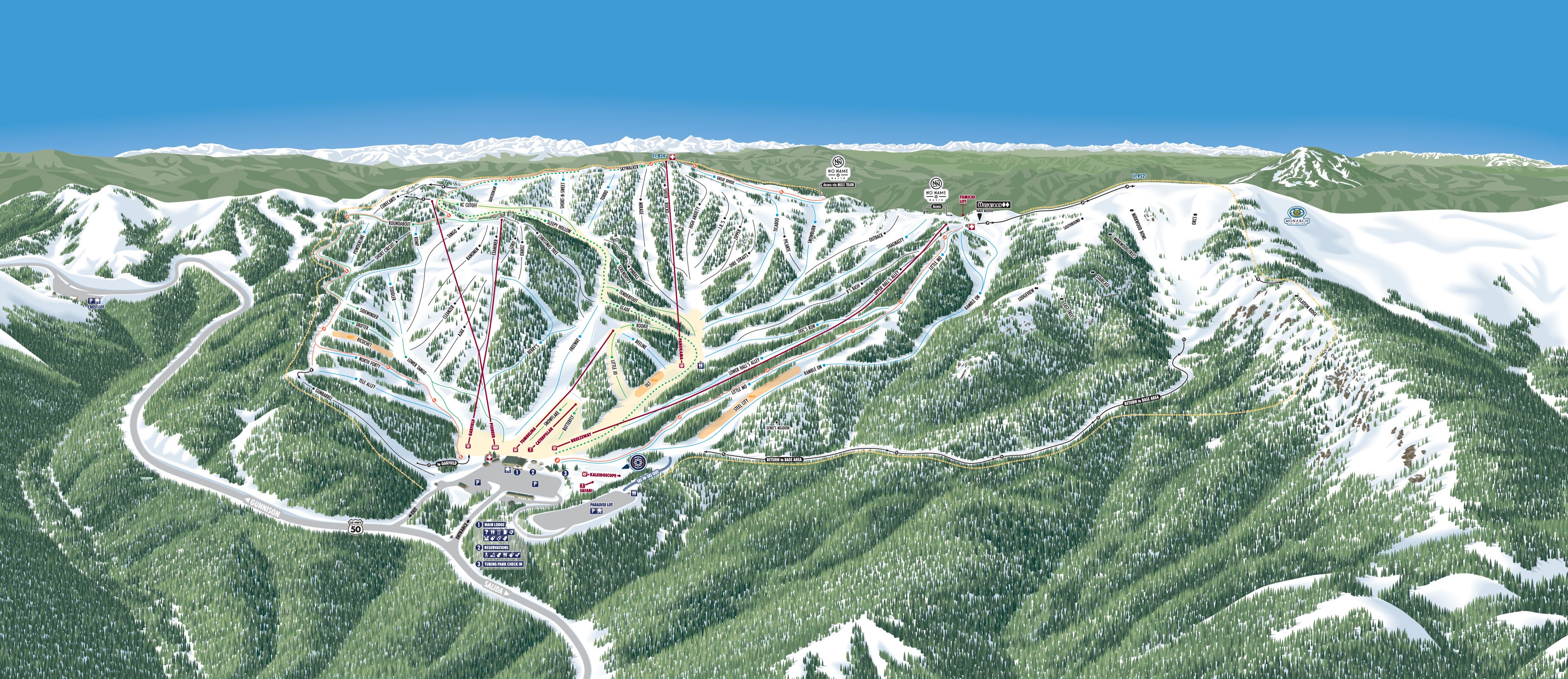
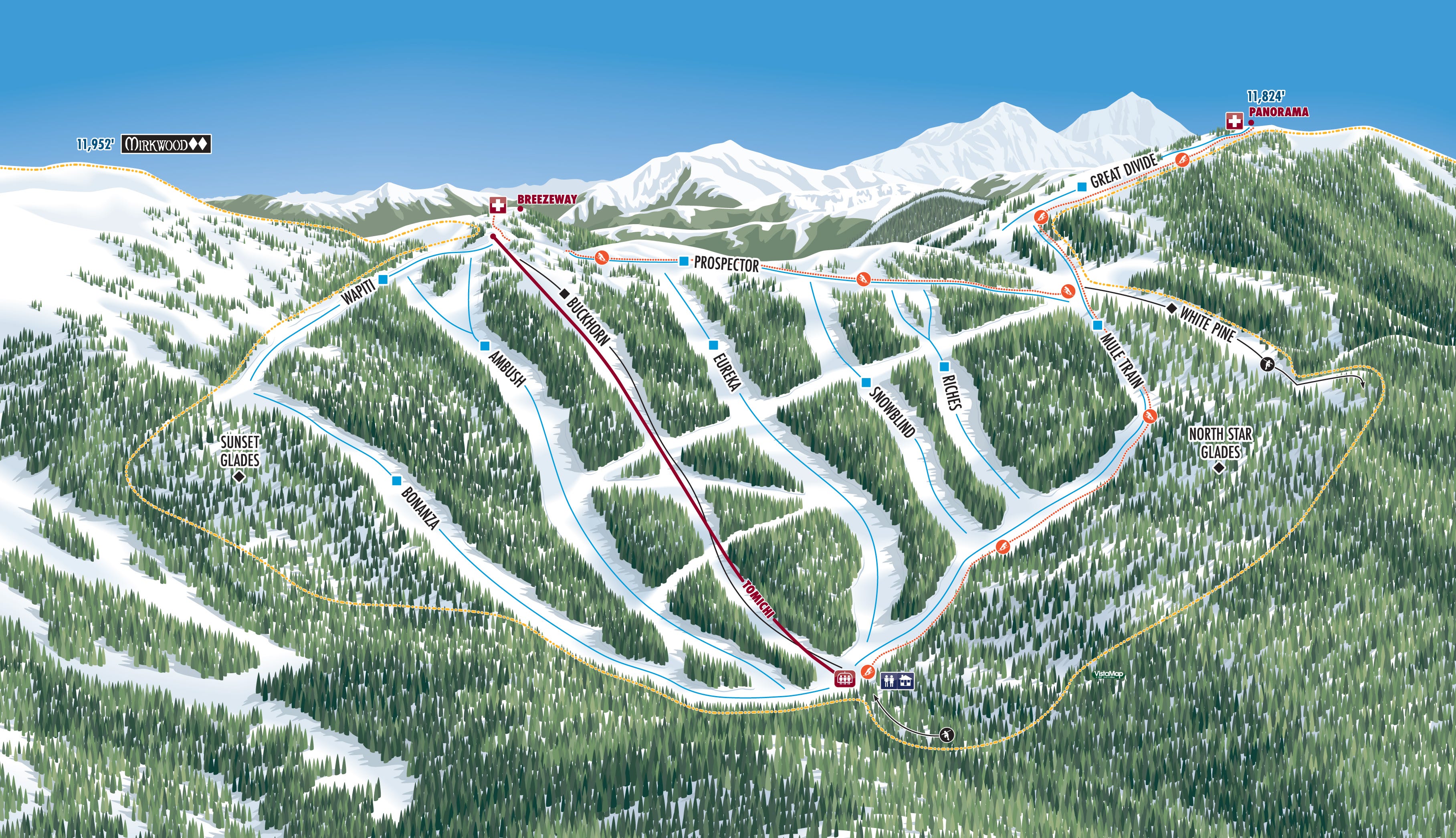
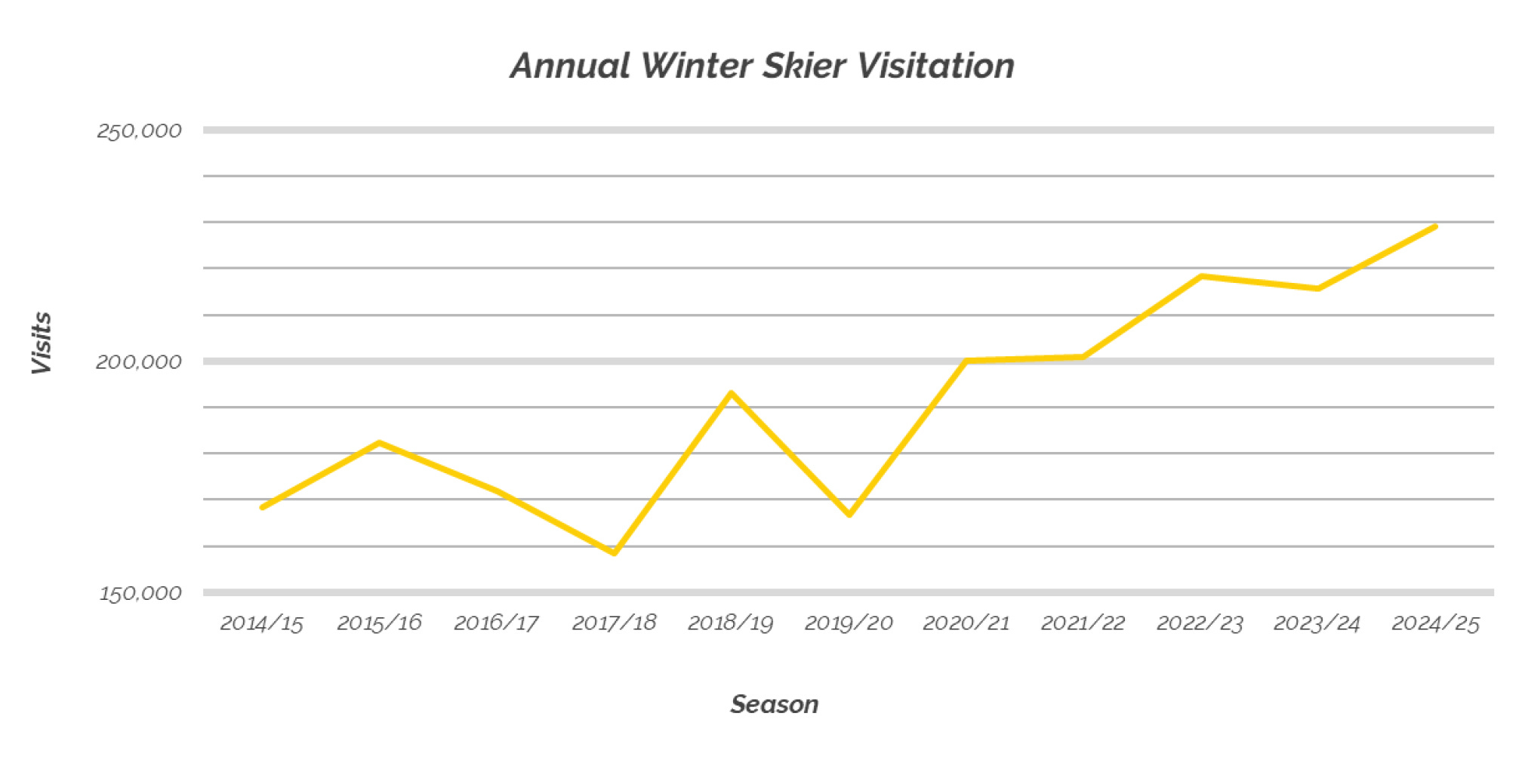
Yet, it doesn’t seem so. Monarch paid for its 377-acre, 2025 No Name expansion in cash (brand-new triple chair included). It’s no mystery where the money is coming from: an ever-growing number of skiers. Monarch’s 2025 master development plan (MDP), recently accepted by the U.S. Forest Service (USFS), documents a decadelong upswing in skier visits:
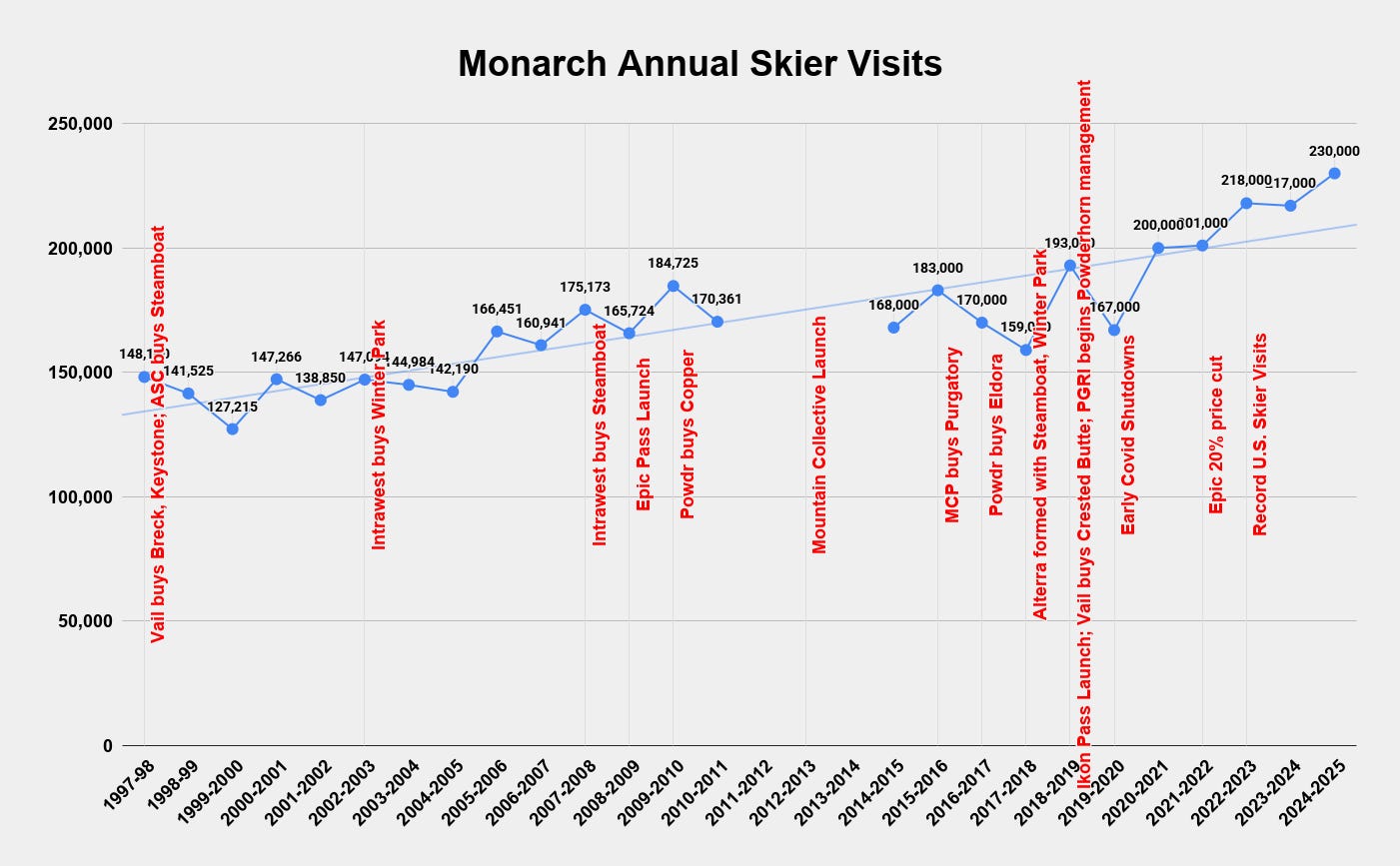
But Monarch has been growing for decades, even as Colorado evolved, with the advent of Interstate 70 and air travel, from rugged snowy hinterland into home base for nearly one in four of America’s annual skier visits. Even with a hokey-pokey fixed-grip lift fleet of four doubles, a triple, and a quad, Monarch has continued to grow more popular as its Colorado competitors built a combined 120 detachable chairlifts and joined the Epic and Ikon Passes en masse.
Monarch is not, however, mistaking resilience for a skier endorsement of stasis. The ski area’s MDP outlines an aggressive modernization that could replace five legacy fixed-grip lifts with detachable quads, add an additional high-speed quad from base to summit, consider (but probably not install) snowmaking, and expand base-area facilities:
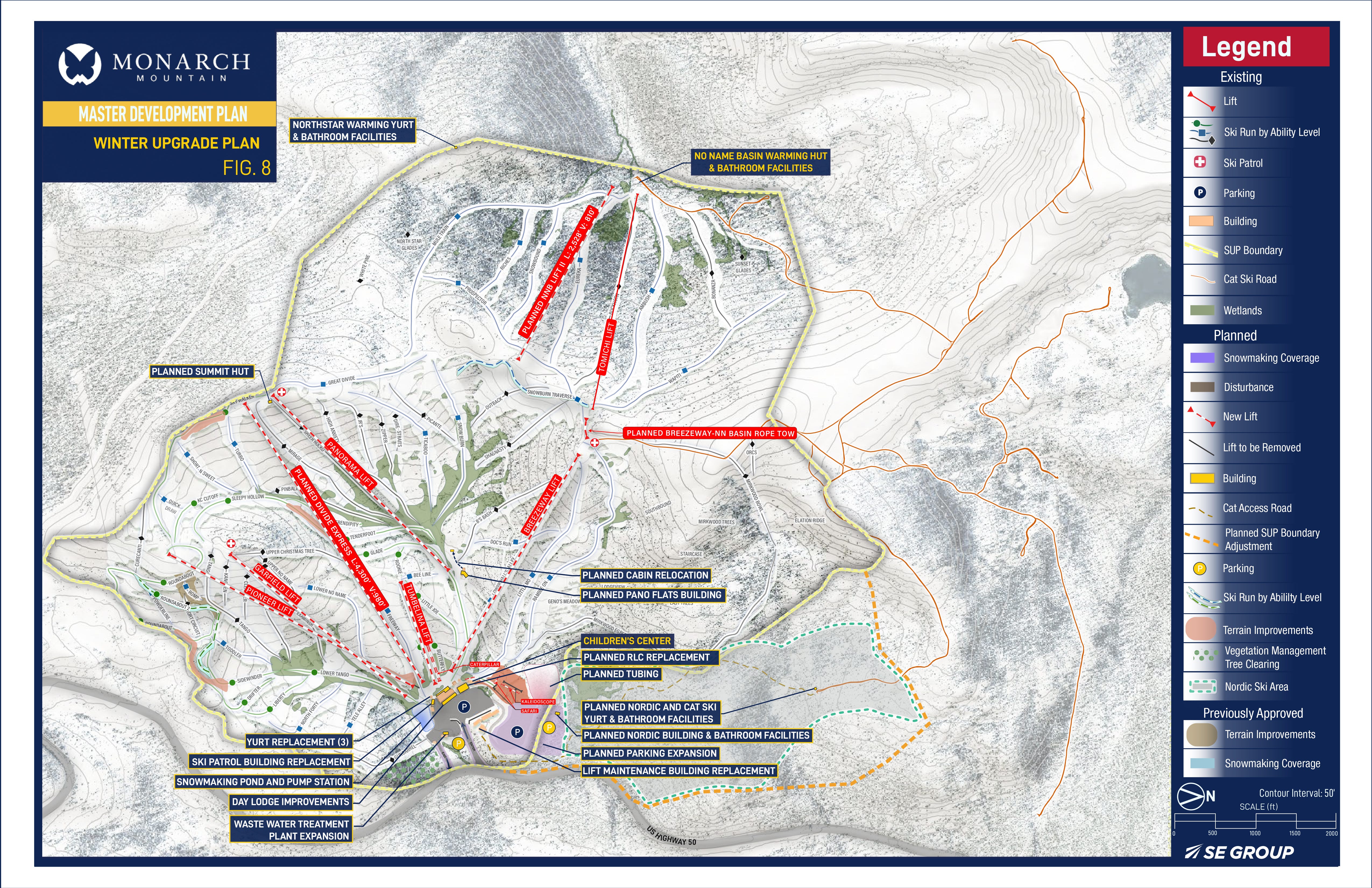
It’s an ambitious blueprint, nominally (and aspirationally), spread over three phases. Bureaucratic forever-approvals mean that these “accepted” plans must still undergo intensive U.S. Forest Service review at every subsequent planning and construction phase, and Monarch could decline to implement any or all of what it proposes here. Whether or not Monarch proceeds with any part of this plan, the intentions outlined here tell us quite a bit about the state of U.S. skiing. And what they tell us is that small ski areas, even those lodged into large and complex competitive markets dominated by name-brand tourist destinations and megapasses, can be successful. They want to – and have the ability to – modernize. To survive in the shadow of Breckenridge and Vail and Crested Butte, Monarch doesn’t need to compete with them so much as offer a palatable alternative to them.
There is another story encoded within Monarch’s masterplan, however, and it is one that is less favorable to American skiing’s long-term trajectory: There is no lodging onsite at Monarch. Every skier has to drive there every morning and drive away every night. Even as skier visits chug ever upward and the ski area plans for massive capacity increases fed by modern chairlifts, Monarch proposes parking lot expansions, but no housing or lodging of any kind. This is the broken part of American skiing: the part so enamored with the notion of skiing as a wilderness activity that it fences off development except that to service the day-skier. Too many of our ski areas – Monarch included – are islands in the sky that achieve remoteness only by shoving all the non-ski necessities of human existence dozens of miles down the road, with only (mostly) private cars to tether the two. USFS MDPs, which act as development blueprints for 122 U.S. ski areas that sit at least partially on Forest Service land and are supposed to be updated every decade, offer the most direct opportunity to reset long-term American ski area development from a car-centric enterprise to one anchoring – even encouraging – the founding and expansion of dense, human-centric communities. Instead, Monarch’s latest MDP echoes those of most USFS leases, prioritizing the temporary daytime storage of personal vehicles on public land over long-term community building, and through this arrangement entrenching an inefficient mode of existence that degrades the environment in the name of environmental preservation.
This gridlock and lack of imagination around land use is not Monarch’s fault, as USFS rules generally forbid housing or lodging developments. But Monarch’s masterplan is a convenient case study in the consequences of well-meaning regulations, accumulated over decades, that have locked the American mountain communities of the 2020s into a 1970s preservation framework; a set of rules that is very good at solving the problems of 50 years ago, but is incapable of meeting the challenges of today. What mountain communities need in 2026 is more latitude to reshape the built environment: lots of mixed-use, pedestrian-oriented construction that puts people closer to the things they need in order to reduce dependence on personal vehicles. What mountain communities have, instead, is a set of regulations and legal procedures that is very effective at delaying, stopping, or at the very least driving up the cost of development of any kind.
Let’s take a deeper look at Monarch’s latest MDP, and what the document tells us about the current state of lift-served skiing in America: