

Well this is pretty incredible: Loon plans to drop the ropes off its high western boundary for winter 2027-28, cracking open a 272-acre glade-skiing kingdom looker’s left off the North Peak Express Quad:
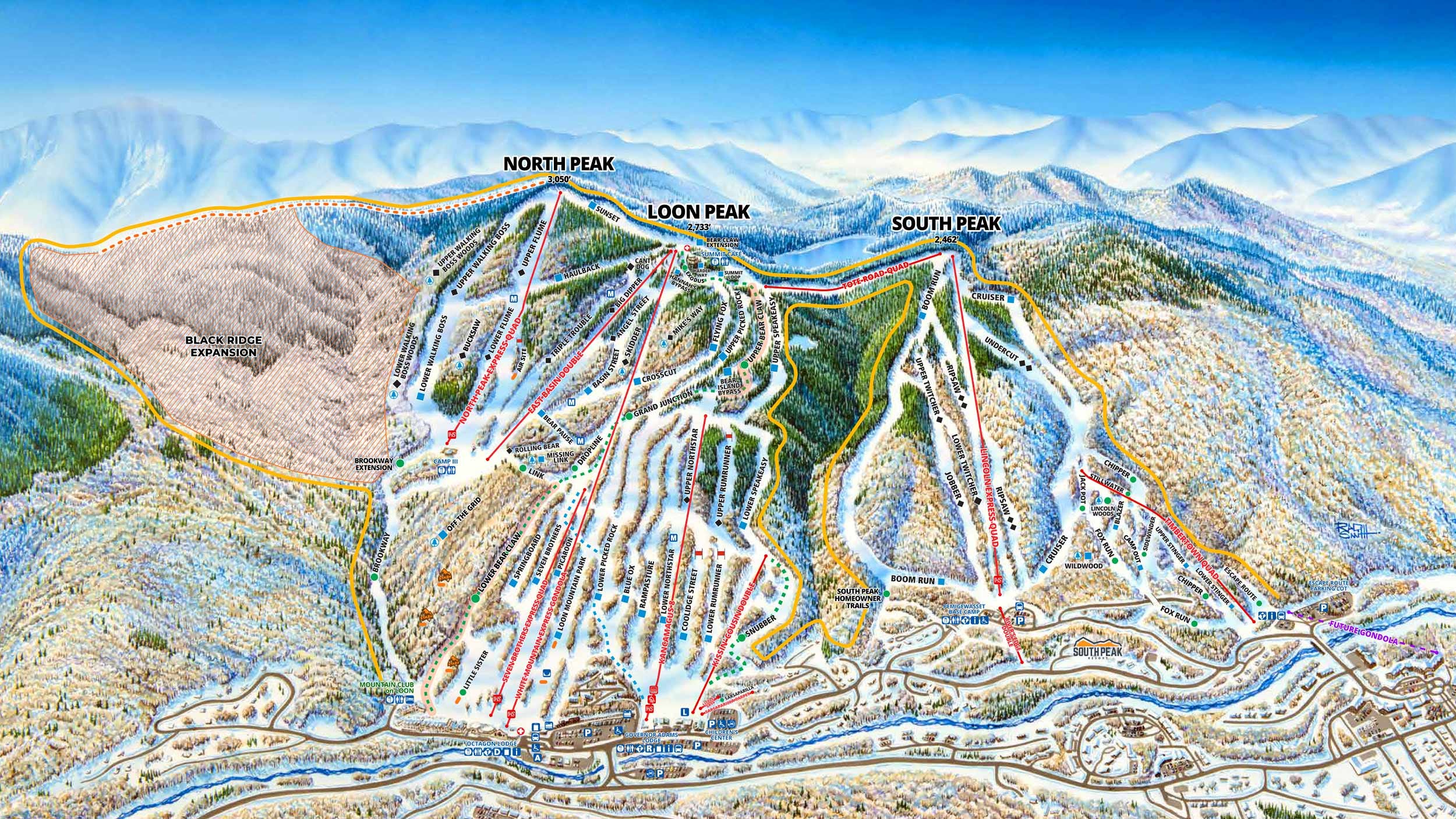
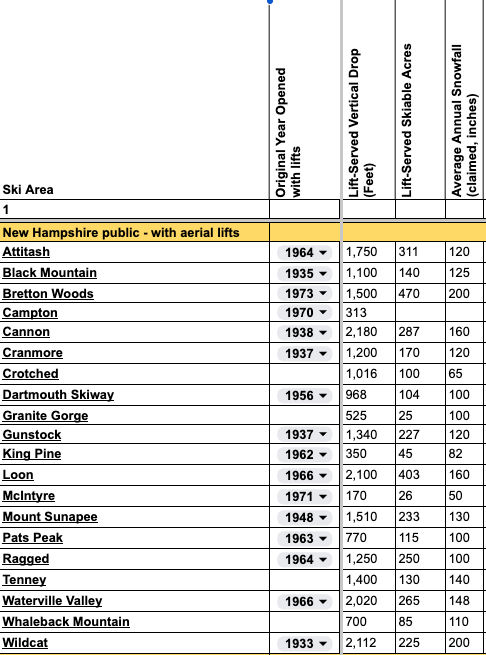
The Black Ridge expansion will pump Loon from 403 acres to 675, blowing past 470-acre Bretton Woods to make the Boyne-owned mountain the largest of New Hampshire’s 30 active ski areas. By itself, Black Ridge would have been the state’s third-largest ski area:
Black Ridge, in its purpose, design, and operation, will echo the massive Brackett Basin expansion opened at Loon sister resort Sugarloaf, Maine in 2011: no grooming, no snowmaking, no new lifts. It is the sort of freeride zone more typical of the West or the deep snowbelts in Northern Vermont or Michigan’s Upper Peninsula than more modestly snowy New Hampshire.
“Black Ridge isn’t for everyone, and that’s the point,” said Loon President and General Manager Brian Norton. “It’s a true rugged experience — natural and raw, unlike anything else we maintain at Loon today.”
Good. New Hampshire – New England in general – is strafed with enough overbuffed cord to repave the interstate highway system. As much as I appreciate that Hedge Fund Henry needs a place to ski and if he can’t ski something the whole industry implodes amidst crowds of ham-sandwich-packing coupon-clippers, the region also needs terrain for skiers whose idea of fun is more than Me Go Fast. The answer is glades.
Easy for me to say. The reason there aren’t more glades in New England is that, outside of that glorious Green Mountain snow pocket from Killington north to Jay Peak – where annual snowfall consistently stacks between 200 and 400 inches – the region’s snowfall is spotty. Even when deep storms sweep through, the low elevations (Loon’s base sits at just 860 feet), beg for freeze-thaw cycles to fossilize the snowpack. Loon claims a respectable 160 inches per winter, but how much total accumulations matter year-to-year depends heavily upon how many of those snowstorms are directly chased by Noah’s Ark-grade rainstorms.
Dense New England undergrowth also tends to complicate the let’s-open-glades-for-Boston-Bill-who’s-skiing-his-third-day-ever-but-thinks-he’s-a-natural-because-he-‘got down’-Upper-Walking-Boss-‘without falling’ equation. Meaning there is a lot of crap in the woods and someone needs to go in there and clear it out unless you’re waiting for a 17-foot snowstorm to open the terrain. Loon’s press release describes Black Ridge as “dense pine forests, steep gullies, and open hardwood glades,” while also stating a need to “prepare” the zone for commercial skiing while “maintaining the area’s natural character.” Skiers will be able to traverse “up to 1.25 miles” into the forest. As at Brackett Basin, “some hiking may be needed.” The reward is 1,350 vertical feet of raw White Mountain puzzle-plunge, lappable off of one lift. Done correctly, Black Ridge could echo some of New England’s other great edge-of-the-resort tree zones – Jay’s Timbuktu, Smuggs’ (unlisted) Back Bowls, or, depending on what’s back there, perhaps even Mad River Glen’s Paradise.
Credit to Boyne, though, for taking a let’s-hope-it-snows gamble on this one. Smaller New England ski areas – Berkshire East, Ragged, Black Mountain of Maine – have considerably boosted their stature as complete skier’s mountains by maintaining large glade networks that are accessible for just a portion of a typical winter. But however aspirational a trailmap is on any given day, the mere potential of that terrain variety matters a lot when a family or BroSquad is deciding where to SnoSportSki.
Up until now, glades have been one of Loon’s weakest points. The mountain has a few treed zones, totaling 35 acres. It’s not enough. In so many ways, Loon is spectacular. The ski area soars with one of the East’s greatest contiguous vertical drops, one of America’s best terrain parks, one of the world’s greatest snowmaking systems, and a chutes-and-ladders fleet of 14 lifts sprawling over three peaks and three base areas. The place is gorgeous from end to end, and North Peak summit views, in particular, dazzle. Boyne has already plugged the spectacular Kancamagus eight-pack into the heart of the resort (2021) and opened the 30-acre Timbertown expansion on South Peak (2023) that will one day connect to town via a planned pulse gondola across the river. Recent filings with the U.S. Forest Service – which owns much of the land that Loon operates on – suggest that Boyne is ready to replace the cramped, 2,000-vertical-foot, four-passenger White Mountain Gondola with a beefier 10-passenger model. And the steam train connecting the Octagon and Governor Adams lodges is one of the great novelties in American skiing. But so much of Loon is also: straight-down blue run beside another straight-down blue run beside seven more straight-down blue runs below some straight-down black runs, all ostensibly groomed but transformed into ice luges by Windshield-Wiper Wallace by 10:30 a.m. on a Saturday. More terrain variety will help.
That Loon will achieve that variety at a relatively low cost also sets a workable template for other big-but-a-bit-boring ski areas that want to vary things up. Boyne has spent hundreds of millions to upgrade its 11 ski areas over the past decade, turboboosting its snowmaking plants and building 36 new aerial lifts (30 percent of its fleet), including five eight-person chairlifts (the only such machines in America) across four mountains, and a new tram and gondola at once-creaky Big Sky. That’s all flashy and cool and fun, but it gets expensive. Fortunately, the company has balanced these sparkplug projects with more understated infrastructure where the mountain’s physical limits or traffic patterns demand it: brand-new triple chairs to reach toward the summits of rowdy Alpental, rebuilt detachable quads – rather than new machines – for Pleasant Mountain, Sugarloaf, and a lesser-trafficked corner of Big Sky. By tapping existing infrastructure to add a massive chunk of low-maintenance terrain at Loon, Boyne is quietly restating its commitment to creating well-balanced mountains even in places where skiers aren’t clamoring for them.
It’s also worth mentioning that Boyne has driven nearly every New England ski area expansion in the past decade and a half: Sugarloaf’s 600-acre Brackett Basin and Burnt Mountain expansions in the early 2010s; Sunday River’s two-lift (real-estate-focused, but still) Merrill Hill expansion in the first half of this decade; Sugarloaf’s 450-acre West Mountain expansion in 2023; and, on the opposite end of Loon, the 30-acre Timbertown expansion on South Peak, which aside from finally establishing true interesting green terrain at Loon, had the enormous resort-building impact of connecting isolated parking lots to the rest of the resort via chairlift.
Part of the reason Boyne has been able to build so much, so fast, is because relatively few of its ski areas operate on U.S. Forest Service land, considerably streamlining the permitting and public-comment periods that can, for example, push the timeline of an Aspen Mountain expansion past the two-decade mark. But Boyne is taking a smart strategy at Loon, where they do have to work with the Forest Service, by essentially determining how they can have the largest impact on the ski experience with the least amount of disturbance to the environment. “The resort is focused on maintaining the area’s natural character while preparing the glades for skiing and snowboarding, a reflection of its commitment to improving the on-mountain experience while respecting the natural habitats and landscape of the area,” reads Loon’s press release, emphasizing that Black Ridge is “a collaboration with the U.S. Forest Service.” Yes, long live the chipmunks, but three cheers to bringing more interesting ski terrain to the Northeast while they’re at it.
I’m attempting to chase Norton down to go a bit deeper on this expansion. Stand by.
Enjoyed the article, and I’m happy to see Loon opening up more terrain. My concern is that this ends up being more of a marketing tagline, “New Hampshire’s Largest Ski Area,” than truly sustainable ski terrain given the weather challenges you mentioned.
My contrarian view is that they would have been better off cutting a few more traditional trails out there and adding another lift to help pull traffic away from the rest of the mountain. As it stands, Loon has added more acreage that will probably appeal to a relatively small group of stronger skiers, while also giving them a great headline to market.
But I’m not sure it does much to solve Loon’s bigger problem, by 10:30 on a busy day, the mountain can feel incredibly crowded. More skiable acres are great, but I’d rather see expansion that helps spread people out and improves the experience across the whole mountain.
I think all ski areas should have to list any terrain acreage that requires hiking or excessive poling with an asterisk. Loon is joining Sugarloaf with a ridiculously inflated total acreage that about 2% of their guests will ever use. If I wanted to hike and ski I would not be going to a lift served ski area.
What’s the over/under on the number of days this hike to terrain will be open per year? 15 days probably, and for anyone using anything but rock skis it will probably be single digit days open.