


There’s always a trade-off, right? In skiing abroad? In Europe every ski area seems to run 85 lifts up a 9,000-foot vertical drop and lift tickets are cheaper than a pack of disposable hand-warmers, but it only snows 80 centimeters per year which I don’t know what that translates to in English but it’s probably about the equivalent of an off day in the Cottonwoods. Chile and Argentina can deliver August pow days in an alien-majestic high alpine but only after ascending access roads that make I-70 look like a Burger King drive-through and riding uphill on 3,000-vertical-foot surface lifts that resemble a 1950s TV antenna because frankly that’s probably what they built them from. Australia and New Zealand also offer our-summer skiing and at least they speak semi-intelligible English but it really doesn’t snow much and you have to ski on the left and it’s really just a whole exercise in mental discipline that Americans aren’t accustomed to in our travels abroad, which usually amounts to a six-hour cruise ship souvenir stopover in the Bahamas.
In Japan it snows a lot, everything is cheap, everyone is nice, and if you forget to pack your dog, you can buy one out of a vending machine. The tradeoffs: the ski areas aren’t that big, Japan is far away and confusing, and bureaucratic permitting layers often complicate what should be basic elements of the ski day, such as skiing glades. Also everyone skis on the left here too, which is surprising but easier than you would think so long as you remember to switch your poles to the proper hand.
Anyway the tradeoffs are worth it. When I say it snows a lot, I mean that it hasn’t stopped snowing in some parts of Japan since the invention of the mammal. It snows so much that when Commodore Perry opened Japan to contact with the outside world in 1854 and informed them that the Ice Age had ended 11,000 years ago, they didn’t believe him. It snows so much that Japanese reporters visiting Utah for the 2002 Olympics thought they’d accidentally landed in Florida.
It’s hard to say exactly how much it snows at Japan’s ski areas, which tend to report “snow depth” rather than North American’s preferred metric of new snow. But westerners who have insisted on quantifying it have produced some incomprehensible measurements: Arai Snow Resort in Japan’s Niigata prefecture averages 826 inches of snow per winter, according to the ski area’s Ikon Pass landing page. That’s 148 inches more than Mt. Baker, Washington, North America’s most reliably snowy ski area, and 300 inches more than Alta-Snowbird, arguably our continent’s most famous powder dump.
Arai is not some huge outlier. It doesn’t snow like the Christmas that gave Rudolph “Made Deer” status at every ski area in Japan, but average annual totals above 800 inches are not terribly uncommon. Of the 48 Japanese ski areas that have joined U.S.-based multimountain ski passes, we have reliable-ish annual snowfall estimates for 33 of them, and they average 428 inches per winter. The average in the western U.S., for reference, is 261 inches.
Which is probably why Ikon and Indy added a combined 10 ski areas across seven Japanese prefectures ahead of the 2025-26 ski season. Ikon threw in a couple of bonus resorts, one each in China and South Korea – the first in either nation to join a U.S.-based multimountain ski pass:
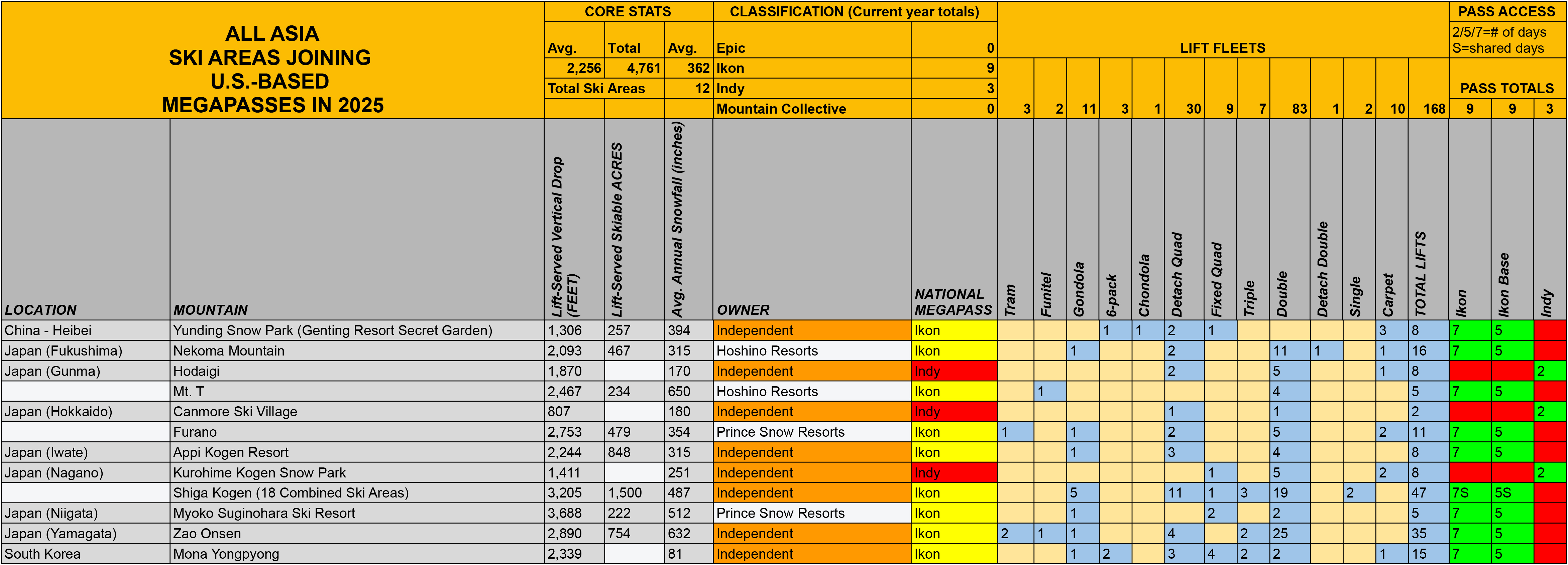
Here’s the full lineup of 48 Japanese ski areas that have joined Epic, Ikon, Indy, or Mountain Collective (Madarao Kogen, which is interlinked with Tangram Ski Circus, departed Indy for this winter after reportedly expressing interest in joining Ikon, which so far has not happened):

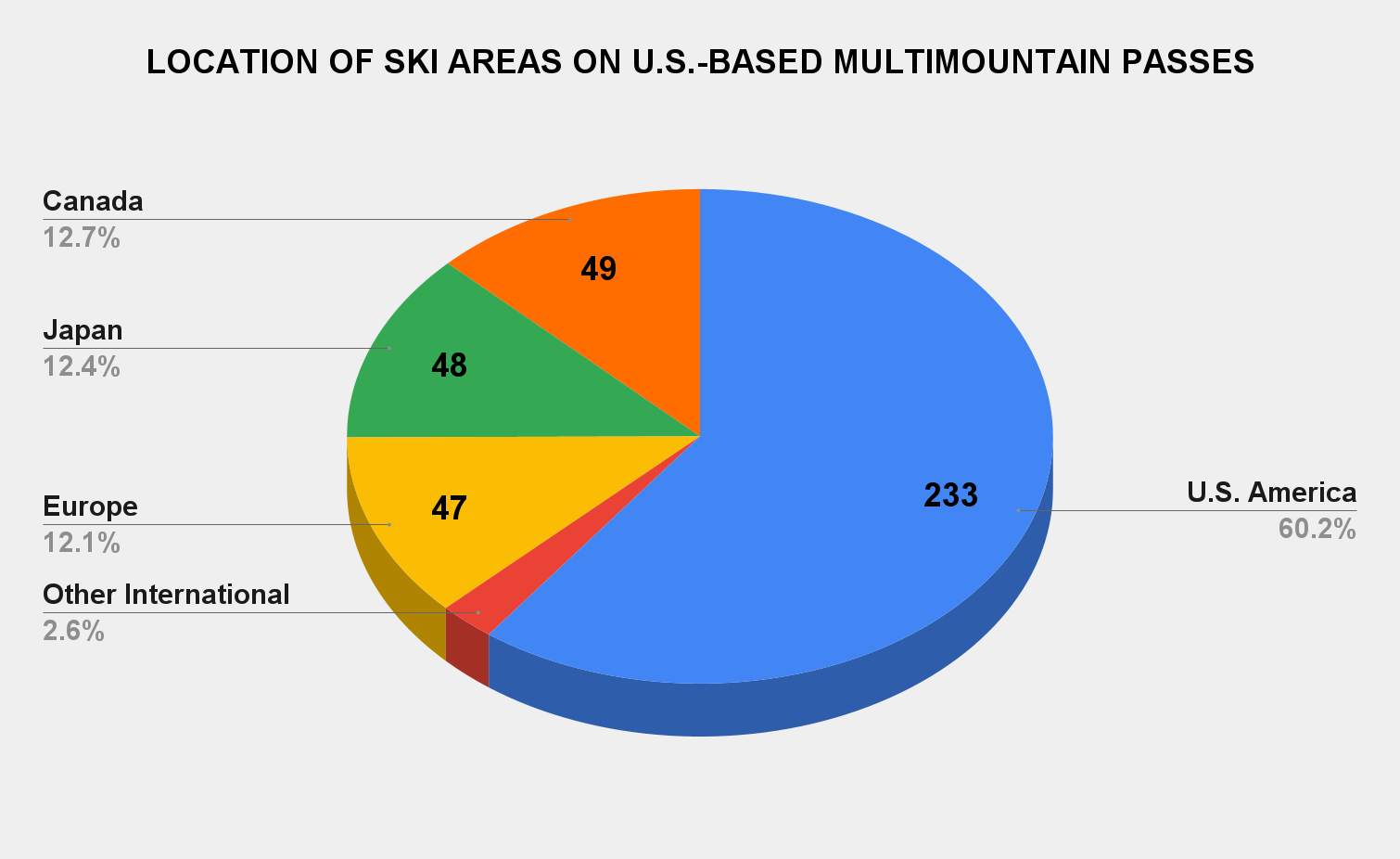
Indy announced its Japanese additions in August (though the initial release did not include Hodaigi), and Ikon followed in October. I needed a little time to step back and process these monsters before writing more in-depth analysis. The scale of U.S.-based pass membership has gone absolutely nuclear over the past couple of years, with 387 ski areas now members of the Epic, Ikon, or Indy passes. This includes 155 ski areas outside of the United States. As the trans-ocean ski resort rapidly evolves from novelty to feature of the passes that the majority of American skiers use to plan their winters, I feel compelled to better anchor these exotic ski areas’ collective presence in the context of local, national, and international ski scenes.
I’m going to split Ikon’s additions in China and South Korea into a separate post, as each nation’s ski story is complex, evolving, and deserving of a broader look. For today, let’s examine the nine Japanese ski areas calling to Ikon and Indy Pass holders this winter: